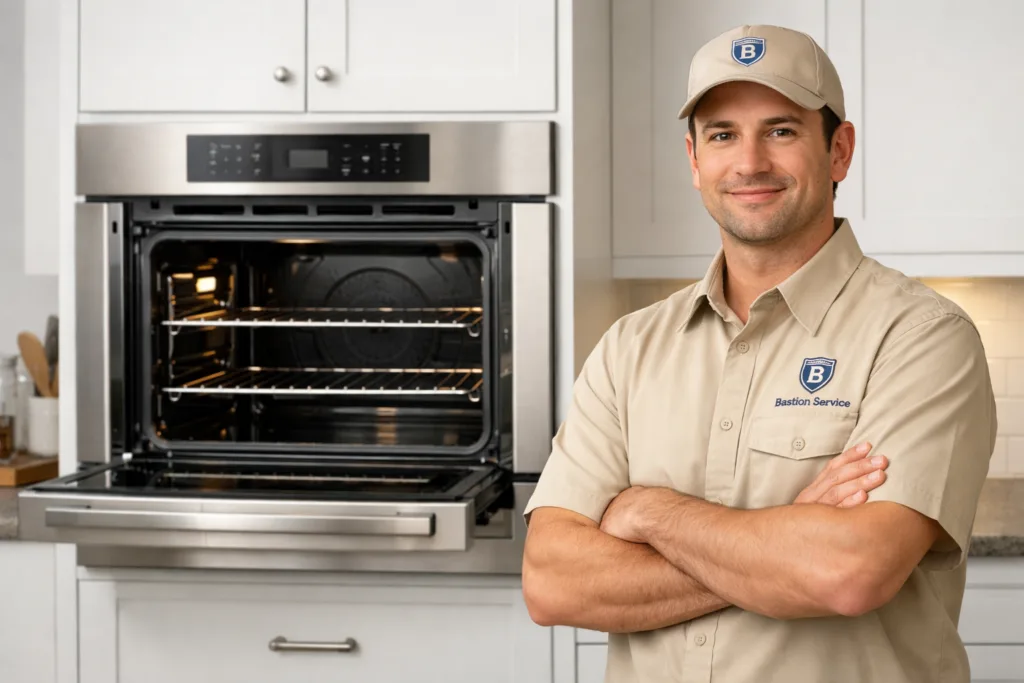
A Whirlpool wall oven that stops heating properly, drifts off temperature, shuts down during a cycle, or shows control problems can interrupt everyday cooking fast. The next step should be based on the actual symptom pattern, because similar complaints can come from different failed parts and not every repair starts in the same place.
Common Whirlpool wall oven symptoms and what they may indicate
Built-in wall ovens rely on several systems working together: heating components, temperature sensing, electronic controls, door safety parts, and power connections. When one of those systems starts to fail, the first sign is often inconsistent cooking rather than a complete shutdown.
Symptom-based testing matters because a slow-preheating oven, for example, might have a weak element, a sensor reading problem, a control fault, or an electrical connection issue. Replacing parts by guesswork can add cost without solving the original problem.
Oven not heating or taking too long to preheat
If the oven stays cold, heats only partway, or needs far longer than usual to reach temperature, the fault may involve the bake element, broil element, sensor, wiring, or control system. Some units still appear to run, but never reach the set temperature consistently enough for reliable baking or roasting.
Homeowners often first notice this when food comes out pale, cook times stretch longer than expected, or preheat seems to stall. When the issue repeats across multiple uses, it usually points to a repairable component problem rather than normal cooking variation.
Uneven baking or temperature swings
Hot spots, undercooked centers, and results that vary from one rack to another can point to sensor drift, element performance issues, calibration problems, or control irregularities. If one batch turns out fine and the next is noticeably off using the same settings, the oven may not be regulating heat the way it should.
This kind of problem is especially frustrating because the oven still works just well enough to create doubt. If pans, recipes, and rack positions have not changed but results keep changing, the appliance should be checked.
Oven running too hot or overheating
When a Whirlpool wall oven scorches food, overshoots the selected temperature, or seems unable to cycle heat normally, likely causes include a faulty temperature sensor, stuck relay, or electronic control issue. Continued use in this condition can put more stress on heating and control components.
Excess heat around the cabinet, unusually aggressive preheat behavior, or a burning smell during normal cooking should not be ignored. Those signs suggest the oven may not be controlling heat safely or accurately.
Display problems, error codes, or dead controls
Flashing codes, a blank display, buttons that stop responding, or intermittent power loss can come from control board faults, touchpad failures, latch-related errors, or incoming power issues. A reset may temporarily clear the symptom, but recurring errors usually mean the underlying problem is still present.
If the failure happens at a certain moment, such as during preheat, after reaching temperature, or when using self-clean, that timing can help narrow down the source of the problem.
Door not closing, locking, or unlocking properly
A wall oven door that does not close squarely, remains locked, or prevents the oven from starting may involve hinges, a latch motor, switches, or the control itself. Problems that begin right after self-clean are common because that cycle places extra heat stress on several components.
Forcing the door, repeating resets, or continuing to run the oven with a latch issue can sometimes make the repair more complicated. If the control does not recognize the door position correctly, the unit may block normal operation altogether.
When to stop using the oven and schedule service
Some problems stay relatively stable for a short time, while others can escalate quickly. A wall oven that cannot regulate temperature, shuts off mid-cycle, or repeatedly shows faults is more than a minor inconvenience when daily meal prep depends on it.
It is smart to stop using the oven and have it inspected if you notice:
- Repeated breaker trips
- A burning odor, sparking, or visible arcing
- Preheat times getting worse week by week
- Food consistently overcooking or undercooking at normal settings
- The display failing or controls becoming intermittent
- The door staying locked or refusing to latch correctly
- Error codes that return after power is reset
Because a wall oven is built into surrounding cabinetry, unresolved overheating or electrical issues are not something to monitor casually. Prompt service is usually the safer choice when the unit is behaving unpredictably.
What a proper Whirlpool wall oven diagnosis should include
A useful service visit should focus on how the oven is failing in real use, not just whether it turns on. That usually means checking heating response, temperature sensing, control behavior, door operation, error history, and the condition of the most likely failed components.
For Manhattan Beach homeowners, that matters because built-in appliances can be more involved to remove, access, and evaluate than freestanding units. The goal is to identify whether the issue is isolated to one repair path or whether multiple systems show wear at the same time.
Helpful observations before service can include:
- Whether the problem affects bake, broil, or both
- If preheat is slow every time or only sometimes
- Any specific error code shown on the display
- Whether the issue started after a power interruption or self-clean cycle
- If the oven shuts off at a certain temperature or time
Even small details can help separate a sensor issue from a control problem or a heating fault from a power-related one.
Repair or replace: how to think it through
Many Whirlpool wall oven problems are worth repairing when the failure is tied to a defined part such as an element, sensor, latch assembly, user interface, or control-related component. Repair becomes harder to justify when the oven has multiple major failures, a history of repeat breakdowns, or overall wear that affects long-term reliability.
In Manhattan Beach homes, replacement can also be more complicated than it sounds. Built-in dimensions, cabinet fit, trim compatibility, and electrical setup can all affect the decision. That is one reason many homeowners prefer to know exactly what failed before deciding between repair and replacement.
A good repair recommendation should answer three basic questions:
- What component or system has failed?
- Is the repair likely to restore normal everyday cooking performance?
- Does the overall condition of the wall oven make that repair worthwhile?
How these issues affect everyday cooking at home
Wall oven problems are not only technical issues; they show up as missed dinner timing, unreliable baking, and constant second-guessing in the kitchen. An oven that runs cool can ruin casseroles and baked goods. One that runs hot can burn sheet-pan meals and dry out roasts before the center is done. Intermittent shutoffs can turn routine cooking into a guessing game.
When the same symptom keeps coming back, it usually means the oven is not going to correct itself. Having the appliance evaluated while the issue is active gives the best chance of tracing the failure accurately and avoiding unnecessary parts replacement.
Local considerations for Manhattan Beach homeowners
In many Manhattan Beach kitchens, the wall oven is part of a built-in cooking layout that homeowners use daily. That makes reliable temperature control and consistent operation more important than simply getting the unit to power on. If the oven is central to weeknight meals, entertaining, or batch cooking, even a “small” fault can quickly become disruptive.
Early attention to temperature inconsistency, control glitches, or latch problems can help prevent a more involved breakdown later. In many cases, a targeted repair is most straightforward before added heat stress or repeat use causes secondary damage.
If your Whirlpool wall oven is no longer cooking evenly, preheating normally, or responding the way it should, the most sensible next step is to have the problem evaluated based on the exact symptoms you are seeing. That gives you a clearer decision on whether repair is practical and what it will take to restore normal use.