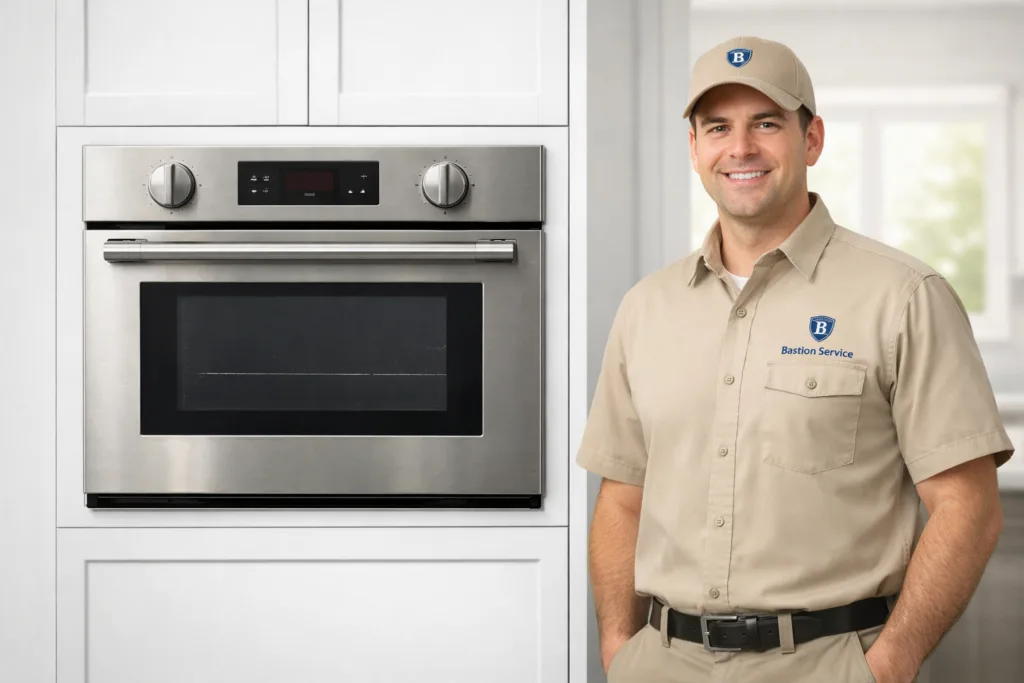
Wall ovens often fail in ways that seem straightforward at first but turn out to involve more than one possible cause. If a Wolf unit is baking unevenly, lagging during preheat, showing control problems, or not heating at all, the symptom alone does not always identify the failed part. What matters most is how the oven behaves across a full cycle, whether the issue is constant or intermittent, and whether other signs appear at the same time.
In Manhattan Beach homes, a built-in oven usually needs to work reliably for everyday cooking as well as heavier weekend use. When performance changes, homeowners are typically trying to answer three questions: what is actually failing, whether the problem is likely to spread, and whether repair is the sensible choice for the condition of the appliance.
What common Wolf wall oven symptoms usually point to
The oven powers on but does not heat
If the display responds normally but the cavity stays cold, the problem may involve a failed heating circuit, a sensor issue, a control fault, wiring trouble, or a power-related problem. This is one of the easiest symptoms to misread because the oven can appear functional from the outside while an internal component is no longer doing its job.
Food bakes unevenly or cooks differently from rack to rack
Uneven baking often shows up before a complete failure. Cookies may brown too fast on one side, casseroles may remain undercooked in the center, or repeat recipes may stop turning out the same way they used to. That pattern can be tied to inaccurate temperature sensing, weak heating performance, cycling problems, or airflow issues inside the oven cavity.
Preheat takes much longer than it should
Slow preheat usually means the oven is still heating, but not efficiently. One element may not be contributing properly, the control may not be energizing the heating system as expected, or the oven may be reading temperature incorrectly and extending the cycle. Long preheat times are worth addressing early because they often signal a developing problem rather than a one-time inconvenience.
Temperature rises too high or swings during cooking
When an oven runs hotter than the selected setting, cools too much before reheating, or cannot hold a steady temperature, cooking results become hard to trust. This can lead to scorched tops, pale centers, or dishes that need constant checking. In many cases, the issue traces back to a sensor or control problem rather than user settings.
Error codes, blank spots on the display, or unresponsive controls
Control-related symptoms can range from occasional keypad lag to repeated error messages or a display that flickers and resets. Some codes point to sensor or latch concerns, while others suggest communication or control board faults. The code itself is only part of the picture; the surrounding behavior usually tells more about whether the issue is isolated or recurring.
Door or latch problems interfere with normal use
If the door does not close properly, the latch will not engage, or the oven remains locked after a cycle, the appliance may be mechanically sound in one area and unusable in another. Door and latch issues can also affect heating performance, safety, and self-clean functions. Forcing the door or repeatedly retrying a stuck cycle can sometimes make the repair more involved.
Why symptom patterns matter more than a single complaint
One symptom can come from several different failures. For example, an oven that seems too cool may have a drifting sensor, a weak heating circuit, or a control issue that causes improper cycling. Likewise, an oven that shuts off during use might be dealing with overheating protection, an electrical connection problem, or a failing electronic control.
That is why the timing of the issue matters. Homeowners often notice details that help narrow the repair path, such as:
- The problem appears only after the oven has been on for a while
- The issue happens more often at higher temperatures
- Broil works, but bake does not
- The display remains normal even when heating stops
- The oven works some days and fails on others
- Error codes return after being cleared
These patterns help separate a straightforward component failure from a broader electrical or control problem.
When continued use can make the problem worse
Some wall oven issues are inconvenient but stable. Others can lead to added damage if the appliance keeps being used. It is smart to stop and schedule service if the oven is overheating, tripping a breaker, shutting down unpredictably, producing a burning smell, or showing repeated control failures. Even if the oven still cooks, those signs suggest the problem may not stay isolated.
Repeated use during a temperature-control problem can also create frustration that looks like a recipe issue rather than an appliance issue. If meals that normally turn out well suddenly require extra time, frequent rotation, or constant checking, the oven may no longer be regulating heat properly.
What homeowners can notice before booking service
You do not need to disassemble anything to gather useful information. A few simple observations can make a service visit more productive:
- Whether the oven reaches the set temperature at all
- Whether preheat is slower than it used to be
- If the problem affects bake, broil, or both
- Whether the issue happens every time or only occasionally
- If the display shows a code, reset, or partial response
- Whether the door closes and seals normally
It also helps to note whether the change happened suddenly or developed over time. A sudden no-heat condition often points in a different direction than gradual temperature drift or increasingly long preheat cycles.
Repair or replacement for a built-in Wolf wall oven
Many Wolf wall oven problems are still good repair candidates when the failure is limited to a specific system and the rest of the unit is in solid condition. Heating issues, sensor faults, some latch problems, and certain control-related failures can often be evaluated on their own rather than treated as a sign that the entire appliance is at the end of its life.
Replacement becomes a more serious consideration when multiple major issues appear close together, the electronics are failing in more than one way, or the oven has a pattern of recurring problems that reduce confidence in daily use. Because wall ovens are built into the kitchen, replacement is usually a larger decision than replacing a standard freestanding appliance.
The most useful repair decision comes after the actual fault is narrowed down. Once the source of the symptom is identified, it becomes much easier to judge whether the repair is reasonable for the oven’s overall condition and expected future use.
What good service should help you understand
A worthwhile service call should do more than name a part. It should explain why the oven is behaving the way it is, whether the symptom matches a single failure or a cluster of issues, and whether the recommended repair is likely to restore normal daily performance. For Manhattan Beach homeowners, that means getting information that supports a practical choice instead of guessing based on inconsistent baking, delayed heating, or intermittent errors.
When a Wolf wall oven begins acting unreliable, the goal is not just to get it running for one more cycle. It is to determine whether the appliance can return to stable, predictable cooking without continuing to create new problems in the background.