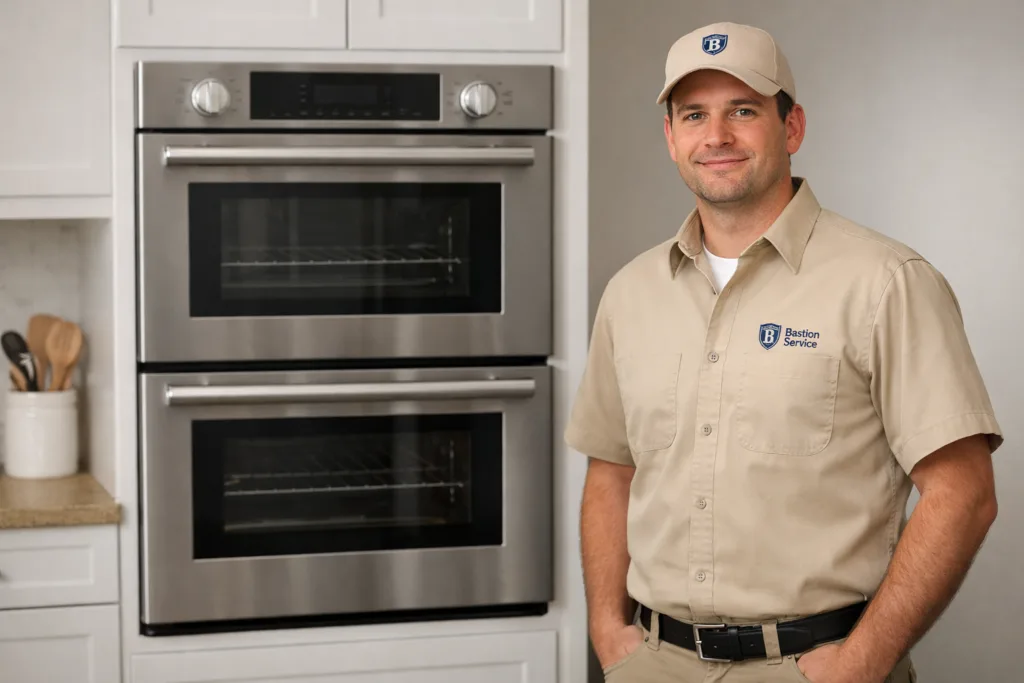
Cooking problems with a built-in oven tend to show up in small ways before they become major ones. A casserole that needs extra time, cookies that brown unevenly, or a preheat cycle that feels unusually long can all point to an underlying fault in a Thermador wall oven. Because several parts work together to create and regulate heat, the same symptom can come from more than one cause.
Common Thermador wall oven symptoms and what they can mean
Oven powers on but does not heat
If the display and lights work but the cavity never gets hot, the issue may involve the bake circuit, broil circuit, temperature sensor, relay, wiring, or main control. On some units, the oven can appear normal at the panel while still failing to send heat correctly. This is one of the clearest signs that the appliance needs inspection rather than trial-and-error part replacement.
Uneven baking or roasting
When food cooks faster on one rack, one side, or one corner, the problem is often related to temperature regulation. A weak element, inaccurate sensor reading, convection fan problem, or control issue can all lead to hot and cold spots. Homeowners usually notice this first with baked goods, but it can also affect roasting, reheating, and broiling results.
Slow preheat
A Thermador wall oven that eventually reaches the set temperature but takes much longer than before may have a heating component that is weakening rather than fully failed. Slow preheat can also come from sensor drift or control problems that make the oven underheat during the early stage of a cycle. The result is longer cook times and less predictable performance.
Temperature swings during cooking
Some cycling is normal, but wide swings are not. If the oven runs too hot, too cool, or seems inconsistent from one use to the next, the thermostat feedback system may not be reading or responding correctly. This can make recipes unreliable and may cause food to dry out, burn on the outside, or remain undercooked in the center.
Error codes, beeping, or a frozen display
Electronic faults should be interpreted with the full symptom pattern in mind. An error code may relate to sensor readings, latch function, communication between controls, or an intermittent electrical issue. Repeated beeping, blank sections of the display, or a panel that stops responding during a cycle often suggest a problem beyond simple user settings.
Door problems or issues after self-clean
If the door does not close tightly, heat can escape and cause poor cooking performance. If the door stays locked, will not latch, or the oven acts up after self-clean, the problem may involve the latch assembly, heat-stressed electronics, or associated control functions. Forcing the door or repeatedly resetting power can sometimes make the situation worse.
Why the symptom pattern matters
Two ovens can both seem to have a heating problem while needing very different repairs. One may have a failed sensor, while the other has a control board issue or a damaged heating circuit. Looking at when the problem started, whether it happens every cycle, and how the oven behaves during preheat and cooking helps narrow the fault much faster.
That matters for homeowners in Manhattan Beach because built-in ovens are not simple swap-out appliances. Cabinet fit, electrical configuration, and the cost of replacement all make it worth understanding whether the issue is isolated and repairable or part of a larger decline.
Signs the oven should not keep being used
Some problems are inconvenient. Others are a reason to stop using the appliance until it has been checked. It is best to pause use if you notice any of the following:
- The breaker trips when the oven starts or during a cook cycle
- There is a burning smell, visible sparking, or signs of overheating
- The control panel resets, flickers, or shuts off unexpectedly
- The oven is clearly running much hotter than the set temperature
- The door will not lock, unlock, or close securely
These symptoms can point to electrical or control-related faults that may worsen with continued operation.
What often causes poor cooking performance
Wall ovens depend on more than just an element getting hot. They also rely on accurate sensing, proper airflow, dependable relays, and stable power delivery. When one part falls out of spec, the oven may still run, but not correctly. Common repair categories include:
- Temperature sensor problems that cause inaccurate readings
- Bake or broil element failures, including partial failure
- Convection fan issues that disrupt heat circulation
- Door seal or latch problems that allow heat loss
- Control board or relay faults affecting heat output
- Wiring or connection issues that create intermittent behavior
Because these faults can overlap, the best repair path usually starts with testing the system that matches the symptom, rather than replacing the most obvious part first.
Repair versus replacement
Many Thermador wall oven problems are worth repairing when the fault is limited to a sensor, fan motor, latch assembly, heating component, or another single system and the rest of the appliance is in good condition. Built-in units often justify closer evaluation because replacement can involve more than the price of the oven itself.
Replacement becomes more likely when there are repeated electronic failures, multiple systems acting up at once, heavy wear inside the oven, or repair costs that no longer make sense compared with restoring reliable performance. Age matters, but the bigger question is whether the current problem is isolated or part of a broader pattern.
What homeowners usually want to know before scheduling service
Most people are trying to answer a few practical questions: Is the oven safe to use? Is the problem likely to get worse soon? Does the symptom point to a manageable repair or a larger issue? A useful service visit should answer those questions clearly and explain the next step in plain language.
For a Thermador wall oven in Manhattan Beach, that usually means focusing on the actual complaint in the kitchen: no heat, inconsistent temperature, long preheat, a stuck door, or a control problem that interrupts normal cooking. Once the failure pattern is identified, it becomes much easier to decide whether repair is the right move.