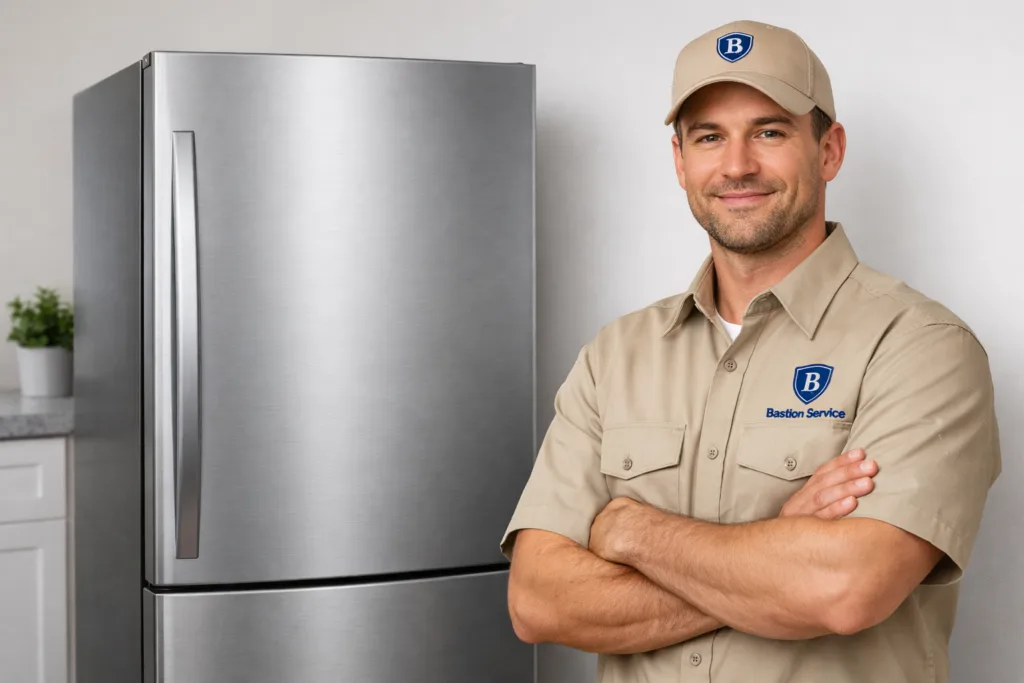
Freezer trouble is easiest to sort out when the symptoms are looked at as a pattern instead of as separate annoyances. A Kenmore unit that hums normally but does not freeze, one that develops thick frost every few days, and one that leaks after defrosting may all seem related, yet each points to a different repair path. For Santa Monica homeowners, that difference matters because the right fix depends on whether the issue starts with airflow, defrost components, door sealing, controls, or the cooling system itself.
Start with what the freezer is actually doing
A freezer usually gives clues before it stops working completely. Paying attention to those clues can help narrow down the likely cause and make service more efficient.
Food is cold, but not fully frozen
If frozen food turns soft, ice cream gets mushy, or ice production slows, the freezer may be losing temperature gradually. Common causes include poor interior airflow, a weak evaporator fan, dirty condenser coils, a sensor or thermostat issue, or a door gasket that allows warm air inside. In some cases, an overpacked cabinet can also reduce air movement and create uneven temperatures from shelf to shelf.
Frost keeps coming back
Heavy frost on the back panel, shelves, or around the door opening often suggests a defrost problem or a sealing problem. A failed defrost heater, control fault, or thermostat issue can let ice build up until airflow is blocked. A warped door gasket can create a similar result by pulling humid air into the cabinet. If frost returns quickly after manual defrosting, the underlying fault usually needs repair.
The freezer runs almost constantly
When a Kenmore freezer seems to run without taking a real break, it is often struggling to maintain its set temperature. Dirty coils, weak fans, leaking door seals, or declining sealed-system performance can all cause longer run times. Constant operation does not just affect performance. It can also add wear to the compressor and increase energy use.
Clicking, buzzing, or fan noise has changed
A steady hum is normal, but repeated clicking, loud buzzing, rattling, or a fan that suddenly sounds rough can indicate trouble. Start device problems, fan motor wear, ice contacting a fan blade, or vibration from loose mounting points are all possibilities. If the noise appears at the same time as warming or frost buildup, it is more likely tied to a repair issue than to normal operation.
Water appears inside or on the floor
Leaks can come from a blocked defrost drain, melting ice caused by temperature swings, or condensation from a door that is not sealing properly. In upright freezers, water can also appear after frost buildup partially melts and refreezes in the wrong places. When leaking and thawing happen together, food preservation becomes as important as the repair itself.
Symptoms that usually call for prompt service
Some freezer issues can wait a short time for observation, but others should be checked quickly. If the unit is no longer keeping food safely frozen, if the compressor clicks repeatedly without starting, if interior frost is blocking vents, or if the freezer trips a breaker, it is smart to stop guessing and have the problem evaluated.
Intermittent problems also deserve attention. A freezer that cools overnight but warms later in the day, or one that works for several days before struggling again, often has a failing electrical or control component. Those faults rarely fix themselves, and they can become harder on the appliance over time.
What homeowners can check before service
A few basic observations can help separate a simple use issue from a mechanical one:
- Check whether the door is closing fully without being pushed open by food bins or shelves.
- Look for gaps, tears, or stiffness in the door gasket.
- Notice where frost is collecting, such as on the back wall, near vents, or around the door frame.
- Listen for the interior fan and note whether it sounds normal.
- Think back to any recent power outage, breaker trip, or temperature setting change.
- See whether the cabinet is tightly packed enough to block airflow.
These observations do not replace diagnosis, but they often make the symptom pattern much clearer.
When continued use can make freezer damage worse
A freezer that is struggling should not always be left to keep running indefinitely. If airflow is blocked by ice, the fan and compressor may continue working under strain without restoring proper temperature. If the gasket is leaking, moisture keeps entering and feeding more frost buildup. If startup components are failing, repeated clicking and reset attempts can put extra stress on the system.
If food is already softening, moving it to a reliable cold storage option is usually the best first step. That prevents unnecessary food loss and reduces repeated door openings while the unit is being assessed.
Common repair paths for Kenmore freezer problems
Many Kenmore freezer issues are repairable, especially when the cabinet and insulation are in good condition. Depending on the fault, service may involve replacing a fan motor, thermostat, temperature sensor, start device, defrost component, drain-related part, or door gasket. These are different from major cooling-system problems, which tend to be more expensive and require closer cost evaluation.
The important point is that similar symptoms do not always lead to the same repair. A warm freezer can be caused by a failed fan, a heavy frost blockage, or a compressor-related issue. That is why symptom history matters as much as the current temperature reading.
Repair versus replacement considerations
Choosing between repair and replacement usually comes down to the scope of the failure, the age and condition of the appliance, and how likely it is to return to stable service after the work is done. Problems involving fans, controls, defrost parts, or gaskets are often more straightforward than sealed-system or compressor failures.
Replacement becomes more likely when the freezer has repeated major breakdowns, significant cabinet deterioration, rust that affects function, or a cooling-system failure with a cost that is difficult to justify. In many Santa Monica households, the decision is less about one single symptom and more about overall reliability going forward.
How symptom history helps with diagnosis
Small details often help identify the source of a freezer problem faster. It helps to note when the issue started, whether the freezer was recently left ajar, whether frost developed before or after the temperature changed, and whether unusual noise comes from the back, inside wall, or bottom of the unit. Even details like whether the interior light still works or whether the alarm has sounded can help narrow the cause.
For homeowners dealing with Kenmore Freezer Repair in Santa Monica, the goal is to identify why the freezer lost performance in the first place so the next step makes sense for the appliance and the household.