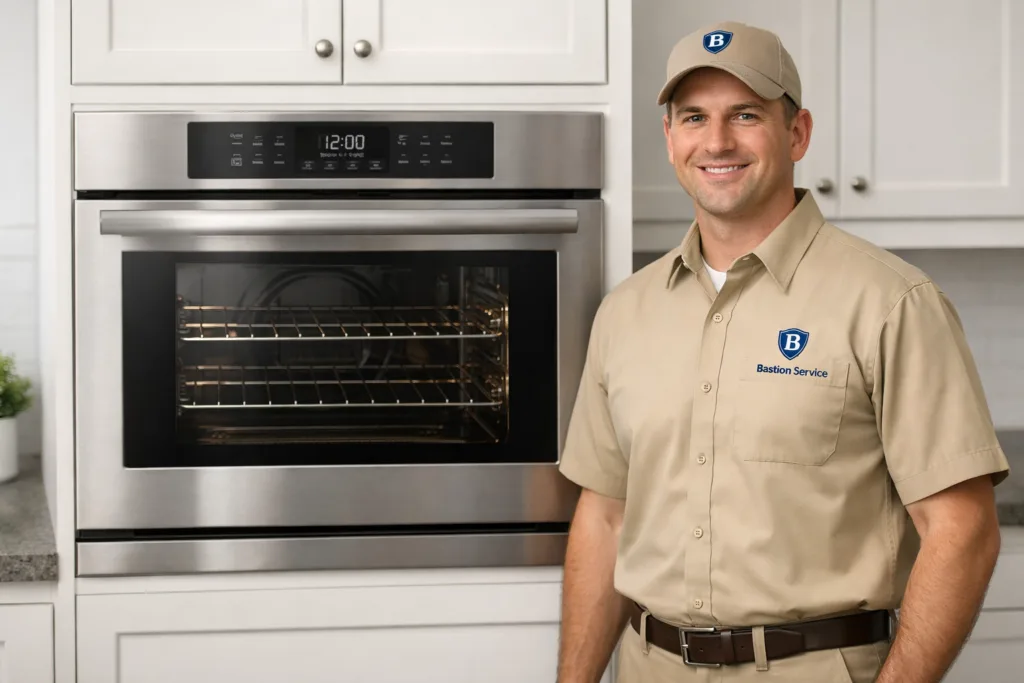
Common Frigidaire oven symptoms in Culver City homes

When an oven starts missing temperatures or acting inconsistently, the symptom you notice is not always the part that has failed. A Frigidaire oven may still power on, light up, and even begin preheating while struggling with a weak igniter, a bad sensor, a failing heating element, or an electronic control issue. Looking closely at how the problem appears during a normal cooking cycle usually helps narrow the repair path.
Homeowners in Culver City often first notice one of these patterns:
- Preheat takes much longer than it used to
- The oven says it is ready before it is actually hot enough
- Food bakes unevenly from rack to rack
- The oven shuts off unexpectedly or will not start
- Error codes appear on the display
- The door will not latch, unlock, or close properly
These problems can have overlapping causes, which is why symptom-based diagnosis matters more than guessing from one visible clue.
Not heating or heating too slowly
If the oven is not heating at all, only reaches a low temperature, or takes an unusually long time to preheat, the problem may involve the bake element, broil element, igniter, temperature sensor, control board, or power supply. Electric Frigidaire ovens can lose part of their heating ability even when the display appears normal. Gas models may have an igniter that glows but is too weak to open the gas valve consistently.
A slow-preheat complaint is especially important because it often shows up before a full no-heat failure. If dinner takes longer every week, or recipes suddenly need extra time without any change in settings, that is usually a sign the oven is not producing or regulating heat correctly.
Uneven baking and temperature swings
Uneven results are often blamed on cookware or rack placement, but persistent inconsistency usually points to the oven itself. One side may brown faster than the other, the top may overcook while the center stays underdone, or familiar recipes may suddenly become unreliable. In many cases, the issue involves inaccurate temperature sensing, cycling problems in the control system, poor element performance, or a door seal problem that lets heat escape.
If the oven seems normal on one day and disappointing on the next, that inconsistency can indicate a component that is weakening rather than completely failed. Catching that early may help avoid additional stress on related parts.
Oven will not turn on
When a Frigidaire oven will not start, it helps to separate display problems from heating problems. A dark control panel may point to incoming power, breaker, wiring, or control failure. If the display works but the oven does not begin a cycle, the fault may be tied to the heating circuit, safety circuit, latch system, or control commands not reaching the needed component.
This is also where homeowners sometimes lose time replacing the wrong part. An oven that appears dead may not have the same problem as one that lights up normally but never heats.
Door and self-clean issues
Door complaints often show up after self-clean, but not always. A Frigidaire oven may develop a stuck latch, a door that will not unlock, a control error related to the lock mechanism, or a door that no longer closes tightly enough to hold heat. Self-clean cycles can place added stress on lock assemblies, sensors, and electronic controls, especially in an older unit.
If the door is jammed or the latch feels forced, it is better not to keep cycling the controls or pulling on the door. That can turn a manageable repair into additional mechanical damage.
What different symptoms can suggest
While testing is still needed, certain symptoms often point in specific directions:
- Oven preheats but never reaches the set temperature: possible weak igniter, failing element, or inaccurate sensor input
- Food burns outside and stays raw inside: possible temperature calibration or cycling issue
- Only broil works or only bake works: possible failed element, relay, or related wiring problem
- Display works but no heat: possible control output, safety circuit, or ignition issue
- Error code after self-clean: possible latch, sensor, or control stress from high-heat cycle
- Intermittent operation: possible weakening component, loose connection, or electronic fault
These patterns do not replace diagnosis, but they do show why two ovens with the same headline complaint can need very different repairs.
When to stop using the oven
Some oven issues are mostly about convenience, but others should be addressed right away. It is best to stop using the appliance if you notice repeated breaker trips, visible sparking, overheating, scorching around controls, or a door that will not stay shut during operation. Continued use in those conditions can damage more parts and create safety concerns.
For gas models, a strong or persistent gas odor should never be treated as a routine repair issue. Stop using the oven, leave the area if needed, and contact the gas utility or emergency service before scheduling appliance work.
Even when the problem is less urgent, an oven that runs too cool can still create household problems. Undercooked meals, long cook times, and unreliable temperatures make the appliance hard to trust and often signal a fault that will not improve on its own.
Repair or replace?
For many households, repair makes sense when the problem is limited to a single failed component and the rest of the oven is in solid condition. Common examples include an igniter, heating element, sensor, door-latch part, or similar isolated failure. In those cases, restoring normal function is often more practical than replacing the whole appliance.
Replacement becomes a more serious consideration when there are multiple issues at once, extensive wiring damage, repeated control failures, or repair costs that start approaching the value of the oven. Age matters, but service history and overall condition matter just as much. A newer oven with chronic electronic problems can be a worse investment than an older one with a straightforward part failure.
What a service visit should help you understand
A worthwhile Frigidaire oven repair in Culver City should clarify more than whether the oven is broken. It should explain which system is failing, how that failure matches the symptoms you have been seeing, whether continued use could cause more damage, and whether the repair is likely to restore reliable cooking. That gives homeowners something more useful than a vague recommendation.
If your Frigidaire oven is heating unevenly, preheating slowly, failing to start, or showing door and control problems, the goal is to identify the real cause and choose the next step with confidence. In Culver City homes, that usually means focusing on the exact symptom pattern rather than treating every oven problem like the same repair.