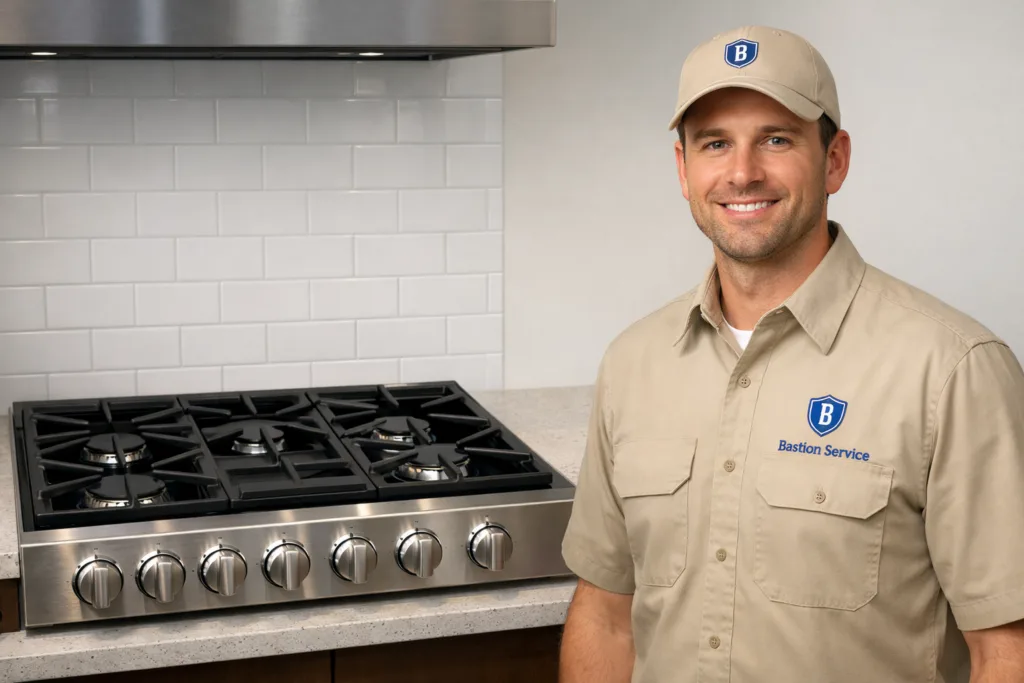
Cooktop problems rarely stay minor for long. One burner may start out slow to light, another may click after a spill, or a heating zone may stop responding to the knob setting. In a Culver City home, those symptoms matter because they affect both everyday cooking and safe operation. With Dacor equipment, the most useful approach is to match the repair path to the exact way the cooktop is failing.
Start with the symptom pattern
Two cooktops can appear to have the same problem while needing very different repairs. A burner that does not light could be dealing with a dirty cap and blocked ports, but it could also point to a worn ignition component, a switch issue, or a gas-flow problem. An electric cooking zone that heats weakly might have a failing element, a control fault, or damaged wiring below the surface.
That is why symptom-based diagnosis matters. It helps narrow down whether the trouble is isolated to one burner, tied to the control system, or connected to a broader electrical or gas-related issue inside the unit.
Signs the problem is likely in the ignition system
Gas Dacor cooktops often show ignition trouble in a few recognizable ways:
- Clicking continues after the burner is lit
- The burner clicks but never ignites
- One burner lights only occasionally while others work normally
- The spark appears weak or inconsistent
- The igniter reacts differently after cleaning or a boil-over
Sometimes the cause is simple contamination from grease or moisture. In other cases, the issue is deeper, such as a faulty igniter switch, spark module, or wiring fault. If the clicking is persistent, the problem usually will not correct itself with normal use.
Signs the issue may be burner-related
When the flame is uneven, low on one side, or unstable, attention usually turns to the burner assembly. Misaligned caps, clogged ports, and residue buildup can affect how gas reaches the flame ring. On sealed burner models, even a small obstruction can change how the burner lights and heats cookware.
Symptoms that often point in this direction include:
- Flame looks patchy or irregular
- Burner takes longer than usual to ignite
- Pan heating is inconsistent from one cooking session to the next
- One burner performs noticeably worse than the others
These problems are especially frustrating when recipes require steady heat. If flame shape or burner response has changed, continued use can also leave carbon buildup and make the issue harder to ignore later.
Electric Dacor cooktop problems often show up as heat control issues
On electric models, the complaint is often not total failure but poor control. A burner may stay too cool, run hotter than expected, cycle strangely, or stop reacting to setting changes. That can suggest a worn element, a failing infinite switch, a sensor or control issue, or a damaged connection beneath the top.
Watch for patterns like these:
- A heating zone works only on certain settings
- The burner takes much longer to reach cooking temperature
- Heat output rises and falls without matching the control setting
- The cooktop surface powers on, but one zone stays cold
Because electric cooktops rely on proper control communication and stable electrical connections, erratic behavior deserves attention sooner rather than later.
When a cooktop will not power on at all
A completely unresponsive cooktop is a different category of problem from a single bad burner. If the unit does not power on, possible causes can include a breaker issue, terminal block damage, failed controls, or an internal electrical fault. On some models, what appears to be a dead appliance can actually be traced to a specific failed component that interrupts normal operation.
If the cooktop has gone fully inactive, avoid repeated reset attempts and have the electrical side checked before assuming the appliance is beyond repair.
Cracked glass is not just cosmetic
For Dacor glass cooktops, a crack changes the decision-making process immediately. Surface damage can affect structural integrity, heating performance, and safe use. Even if the unit still appears to work, a crack can spread with heat and weight from cookware.
Minor scratching and normal wear are one thing. A true crack, impact damage, or a section of glass that feels unstable is different. In many cases, this becomes a repair-versus-replacement discussion based on the exact damage, the model, and the condition of the rest of the cooktop.
When to stop using the cooktop
Some symptoms are inconvenient. Others are warning signs. It is smart to stop using the appliance and arrange service if you notice:
- Persistent clicking that does not stop
- A burner that fails unpredictably during use
- Controls that do not match the selected setting
- Sparking, burning smells, or visible heat damage
- A cracked glass surface
- A strong or ongoing gas odor
If there is a strong gas smell, do not continue troubleshooting the appliance yourself. Leave the area if necessary and contact the gas utility or emergency service first. Appliance repair comes after the immediate safety concern is addressed.
Why delaying repair can make the problem worse
Homeowners sometimes keep using the same problematic burner because the rest of the cooktop still works. The risk is that repeated use under faulty conditions can add wear elsewhere. An ignition fault can strain the spark system. A loose electrical connection can create heat damage at terminals. A control problem can lead to overheating or unreliable cycling that affects cookware and neighboring components.
When a cooktop starts behaving differently, early service is often less complicated than waiting for a small fault to become a larger one.
Repair or replacement depends on the failure, not just the age
Many Dacor cooktop issues are repairable when the failure is limited to one burner system, an igniter, a switch, a control component, or a surface-level electrical issue. Replacement becomes more likely when the glass is severely damaged, multiple systems are failing at once, internal damage is extensive, or the cost and parts situation no longer support a reasonable repair.
For homeowners in Culver City, the real question is usually whether the cooktop can be restored to normal daily use without sinking money into a unit with broader decline. That answer depends on the failed part, the overall condition of the appliance, and how widespread the symptoms are.
What a useful service visit should help you determine
Most people want the same things from a repair appointment: is the cooktop safe to use, what component is actually failing, and is the fix worthwhile? Those answers are especially important with brand-specific cooking equipment where replacing the wrong part can waste time and money.
Whether the problem is one burner that will not light, repeated clicking, uneven heat, an unresponsive control, or visible surface damage, the next step should leave you with a practical repair plan based on the condition of the appliance rather than guesswork.