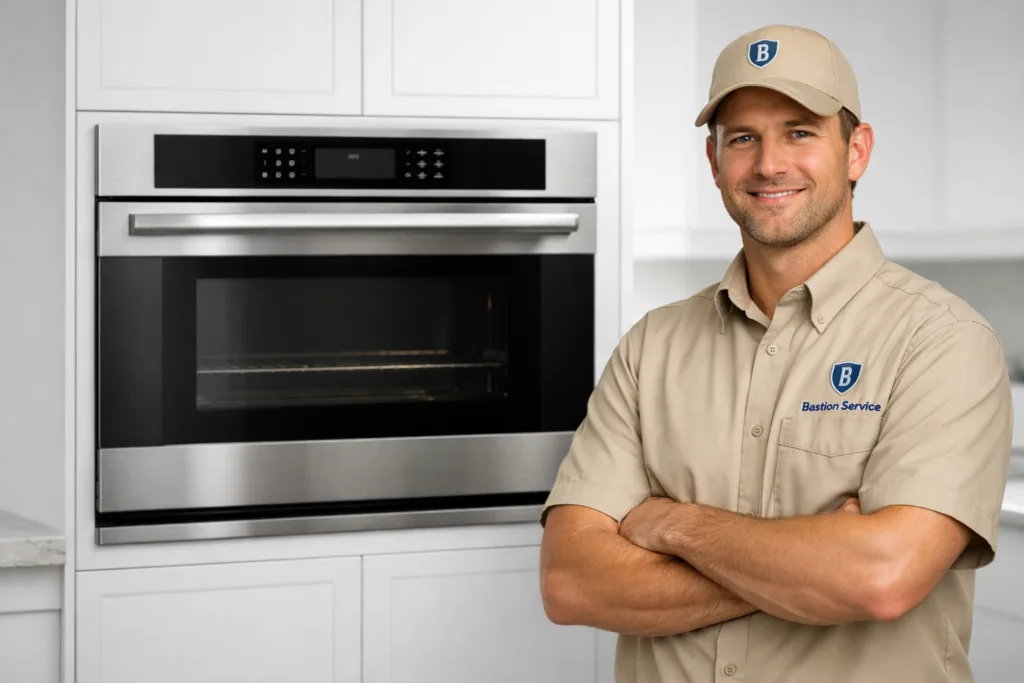
Common JennAir wall oven problems in West Los Angeles homes

JennAir wall ovens are built for daily cooking, but when one starts missing temperature, shutting down mid-cycle, or behaving unpredictably, the symptom alone does not tell the whole story. Two ovens can appear to have the same problem while failing for completely different reasons, which is why symptom-based troubleshooting matters.
Oven not heating or taking too long to preheat
If the display powers on but the cavity stays cool, the issue may involve the bake element, broil element, temperature sensor, relay, wiring, or electronic control. Some ovens still appear normal on the panel while one part of the heating circuit is no longer working. In everyday use, this often shows up as very slow preheat, food that never finishes on time, or recipes that need repeated extra minutes.
Slow preheat can also point to a partial heating failure rather than a complete one. For example, the oven may still warm up, but not with the balance or power it needs for normal baking performance.
Uneven baking, hot spots, or temperature swings
When cookies brown on one side, casseroles stay cool in the center, or roasted foods finish unevenly from rack to rack, the oven may not be regulating temperature correctly. Possible causes include a faulty sensor, convection fan issue, control problem, or a heating component that cycles incorrectly.
Temperature instability is especially frustrating because it can seem inconsistent from one meal to the next. Homeowners often first notice it with baking, where even small temperature errors become obvious in the final result.
Error codes, beeping, or unresponsive controls
A flashing display, repeated beeping, or buttons that stop responding can point to control board faults, touch panel problems, door lock issues, or power supply interruptions. In some cases the oven may reset itself, lose settings, or refuse to start certain functions even though other features still work.
These symptoms are important because they may involve more than one system at the same time. A panel problem can overlap with latch errors, sensor faults, or intermittent power issues inside the unit.
Door latch, hinge, and self-clean problems
If the door will not close properly, will not lock, or stays locked after a cycle, the repair may involve the latch assembly, hinges, alignment, or control logic. Problems that appear during or after self-clean are common because high heat can expose weaker electrical or mechanical parts.
Forcing the door, canceling and restarting cycles repeatedly, or continuing to run self-clean after a latch problem appears can make the situation worse. A door issue is not always just a door issue; it can affect heating performance and safety as well.
Breaker trips or loss of power during operation
A wall oven that trips the breaker, shuts off during preheat, or loses power while cooking should be checked before further use. This can indicate a shorted element, damaged wiring, terminal problem, or a control-related electrical fault. Because these appliances run on high voltage, repeated electrical symptoms deserve prompt attention.
Visible sparking, a burning smell, or heat around controls or wiring areas are stronger warning signs than routine performance problems. In those cases, stopping use is the safest next step.
Why accurate diagnosis matters with a JennAir wall oven
Wall oven symptoms overlap more than most homeowners expect. An oven that will not hold temperature could need a sensor, a heating component, a fan-related repair, or an electronic control fix. Replacing parts based on guesswork often leads to extra cost without solving the original problem.
That matters even more with built-in appliances in West Los Angeles homes, where installation access, cabinet fit, and electrical configuration can affect both diagnosis and repair time. The most useful service approach identifies the failed component, checks for related damage, and determines whether the oven can be restored to reliable household use without unnecessary work.
Signs the problem is getting worse
Some JennAir wall oven issues begin as occasional annoyances and gradually become more disruptive. A slight temperature miss can turn into long preheat times. An intermittent error code can become a hard failure. A latch issue that happens only during self-clean can eventually affect normal baking cycles.
Scheduling service makes sense when you notice patterns like these:
- preheat is taking much longer than it used to
- food bakes unevenly even when recipes and cookware have not changed
- the oven shuts off before the cooking cycle is complete
- the display flashes, resets, or shows recurring fault codes
- the door does not lock or unlock correctly
- the breaker trips more than once during oven use
Intermittent problems are still real problems. They usually become easier to identify when described by pattern: what mode you were using, whether the issue starts during preheat or later in the cycle, and whether it happens every time or only occasionally.
Repair or replacement: what usually makes sense
Repair is often worthwhile when the failure is limited to a specific part such as a sensor, element, fan motor, latch assembly, or isolated control-related component and the rest of the oven is in good condition. For many built-in wall ovens, restoring the existing unit is simpler than changing cabinet fit or replacing a matched kitchen appliance unnecessarily.
Replacement becomes more likely when there are multiple major failures, recurring electronic issues, or repair costs that do not make sense relative to the oven’s age and overall condition. The key is knowing whether the problem is contained or part of a larger pattern inside the appliance.
What homeowners should do before service
You do not need to disassemble the oven or try to diagnose electrical parts yourself, but a few observations can make the service visit more productive. Note the exact symptom, whether the problem happens in bake, broil, or convection modes, and whether an error code appears. If the oven still powers on, compare the set temperature to actual cooking results rather than relying only on the display.
It also helps to avoid repeated testing if the unit is tripping the breaker, producing unusual odors, or shutting down unexpectedly. Continued operation under those conditions can increase damage to heating or control components.
What a service visit should clarify
A useful wall oven repair visit should answer a few practical questions: what failed, whether other components were affected, whether continued use is safe, and whether the recommended repair is likely to restore normal performance. That gives you a realistic basis for deciding how to proceed instead of replacing parts one by one.
For households in West Los Angeles, that kind of evaluation is especially helpful when the oven is used regularly and small performance changes quickly turn into daily frustration. Whether the issue is poor heating, unstable temperature, or control trouble, the right next step starts with identifying the actual fault rather than guessing from the symptom.