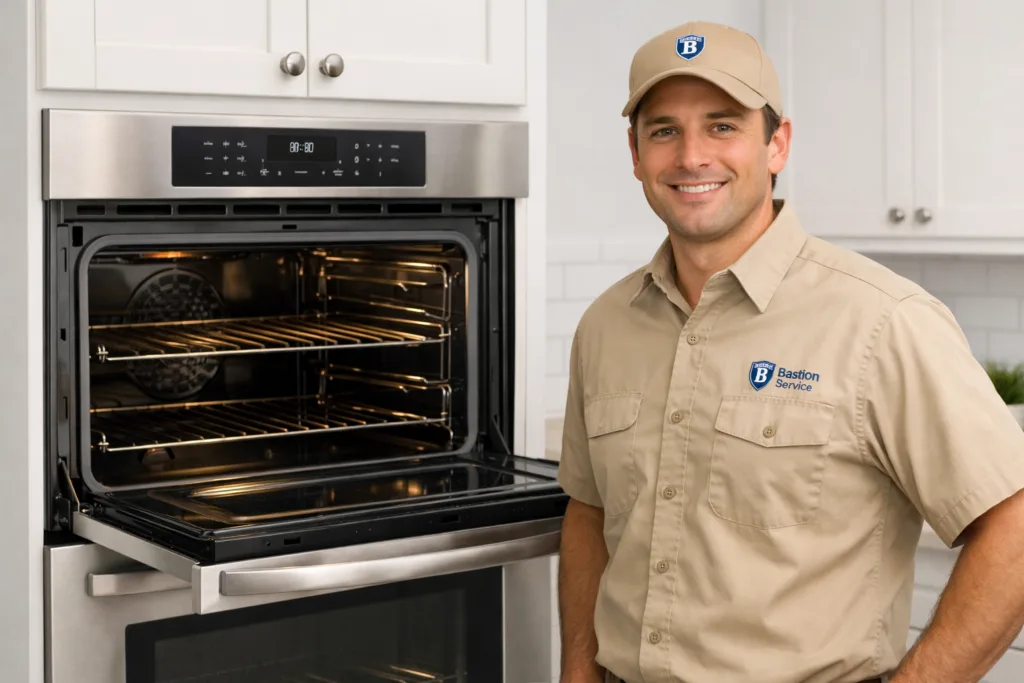
Temperature problems, power loss, and control errors in a built-in oven often sound similar at first, but the repair path can be very different depending on what the oven is actually doing. A Frigidaire wall oven that preheats slowly may have a different failure than one that overheats, shuts off mid-cycle, or shows a door lock error during self-clean.
For homeowners in West Los Angeles, the most useful approach is to match the symptom pattern to the likely system involved. That helps separate a simple single-part failure from a larger electrical or control problem and makes it easier to decide whether repair is the right next step.
What Frigidaire Wall Oven Problems Usually Mean
Most wall oven issues fall into a few categories: heating performance, sensor accuracy, power supply, control response, and door or latch function. Because these systems work together, one failing part can create symptoms that look unrelated.
- Weak or no heat can point to a bake element, broil element, temperature sensor, relay, or wiring problem.
- Uneven baking often involves sensor drift, poor element cycling, or temperature calibration issues.
- Blank display or no power may involve supply voltage, internal connections, fuse protection, or the main control.
- Error codes and touchpad issues can indicate communication faults, sensor problems, or failing electronic controls.
- Door lock trouble is commonly tied to the latch motor, switch, alignment, or control logic.
That is why guessing at parts based on one symptom alone often leads to repeat problems.
Common Heating Symptoms and Likely Causes
Oven not heating at all
If the cavity stays cold after a bake or broil cycle starts, the fault may be in the heating circuit rather than the control panel itself. A failed bake element, a broken broil element, a damaged connection, or a control that is not sending power to the element can all produce the same complaint.
In some cases, the display appears normal and the oven accepts settings, but no actual heat is produced. That difference matters because it helps narrow the issue to the parts responsible for creating heat rather than basic power to the appliance.
Slow preheating
Slow preheat is a common complaint with Frigidaire wall ovens. Sometimes the oven still reaches temperature eventually, but only after much longer than normal. This can happen when one heating element is weakening, when the temperature sensor is reading incorrectly, or when the control is not cycling heat properly.
Homeowners usually notice this first with everyday cooking: frozen foods take longer, recipes run behind schedule, and the oven seems to struggle more on higher settings.
Oven heats, but not to the selected temperature
If the display says 350 degrees but cooking results suggest a lower actual temperature, the problem may be calibration-related or sensor-related. A drifting sensor can cause the control to stop heating too early or continue heating too long. The result is undercooked meals, inconsistent baking, or recipes that only work when manually adjusted.
Overheating or temperature swings
An oven that runs too hot, burns food unexpectedly, or fluctuates from one cycle to the next should not be ignored. Overheating can involve a sensor fault, relay failure, or control issue that prevents the oven from regulating heat correctly. This is especially important when food burns quickly or the oven exterior seems hotter than normal during use.
Uneven Baking and Hot Spots
Not every oven problem is obvious during preheat. Many Frigidaire wall ovens show trouble through baking results first. One rack browns faster than another, the back of a dish cooks more quickly than the front, or cookies finish unevenly on the same sheet.
These symptoms can come from:
- a sensor that is no longer reading accurately
- an element that cycles inconsistently
- poor heat distribution inside the cavity
- a door that is not sealing tightly
- control behavior that causes unstable temperatures
When this pattern continues across multiple recipes, it usually means the oven needs more than a simple setting adjustment.
Power and Display Problems
Wall oven will not turn on
A fully unresponsive wall oven can indicate a supply problem, but it can also mean the appliance is receiving partial power while a key internal component has failed. Because built-in ovens operate on higher-voltage circuits, a dead display should be evaluated carefully rather than treated like a minor countertop appliance reset.
Display works, but oven will not start
If the clock, light, or touch controls appear normal but bake functions do not start, the problem may be more isolated. Control relays, sensor feedback, latch status, or safety-related faults can prevent the oven from beginning a heating cycle even when the interface appears active.
Flickering panel or inconsistent controls
Intermittent displays, delayed button response, or settings that cancel without warning often suggest a control or communication issue. These problems may start as occasional annoyances and then become more frequent, especially when heat and normal kitchen use place repeated stress on the electronics.
Error Codes and What They Often Indicate
Fault codes on a Frigidaire wall oven can be useful, but they do not always identify the exact failed part by themselves. In many cases, a code points to a system that needs to be checked rather than giving a final answer.
Recurring codes often involve:
- temperature sensor faults
- runaway temperature conditions
- door lock or latch errors
- control communication issues
- keypad or user interface failures
If the same code returns after clearing it, or if the oven stops mid-cycle and displays an error repeatedly, the underlying cause usually needs repair rather than repeated resets.
Door, Hinge, and Lock Problems
A wall oven door does more than open and close. It also helps maintain proper cooking temperature and supports safe operation during normal use and self-clean cycles.
Door not closing tightly
If the door sits unevenly, feels loose, or allows heat to escape, cooking performance can suffer. Worn hinges, a damaged seal, or alignment issues can all contribute to poor heat retention and inconsistent results.
Door locked shut
When the door remains locked after cleaning or displays a latch-related error, the issue may involve the lock motor, switch position, or control logic. Forcing the mechanism can make the problem worse and may damage parts that were still repairable.
Door will not lock for self-clean
If the self-clean cycle will not begin because the oven cannot confirm the lock position, the problem may be mechanical or electronic. Since self-clean places heavy stress on several components, an oven that already has latch or sensor issues may show them more clearly during that cycle.
When to Stop Using the Oven
Some symptoms are inconvenient but manageable for a short time, while others mean the oven should be turned off until it is checked. Stop using the unit if you notice:
- burning smells that do not fade quickly
- visible sparking
- tripped power during operation
- extreme overheating
- shutoffs in the middle of normal cooking
- a damaged or unreadable control display
These signs can indicate electrical trouble or unsafe temperature control, especially in a built-in appliance that is used regularly.
Repair or Replace: How to Think About the Decision
Many Frigidaire wall oven problems are worth repairing when the issue is limited to a heating element, sensor, latch component, or another specific part and the rest of the appliance is in good shape. That is often the case when the oven has been cooking well until one clear symptom appeared.
Replacement becomes more likely when there are multiple major faults, recurring electronic failures, severe interior wear, or a repair cost that does not make sense for the oven’s age and condition. The right choice depends on whether the repair is likely to restore reliable everyday use rather than temporarily reduce one symptom.
Helpful Details to Note Before Service
If the oven still powers on, a few observations can make diagnosis faster and more accurate. Try to note:
- whether bake, broil, or both are affected
- how long preheat takes compared with normal
- whether the problem happens every time or only occasionally
- any error code shown on the display
- whether the issue began after self-cleaning or a power interruption
- whether the door is closing and locking normally
Those details often reveal whether the likely fault is mechanical, electrical, or control-related.
What West Los Angeles Homeowners Can Expect From a Focused Repair Visit
For a built-in oven, the goal is not just to get it running for the moment, but to identify why the symptom started and whether the fix is likely to hold. A good service plan should determine whether the problem is isolated to one failed part, whether other related components have been stressed, and whether the repair makes sense for the appliance overall.
For West Los Angeles households that rely on a wall oven for daily cooking, that kind of practical repair guidance helps avoid repeat service calls and makes the repair-or-replace decision easier when the symptoms are no longer minor.