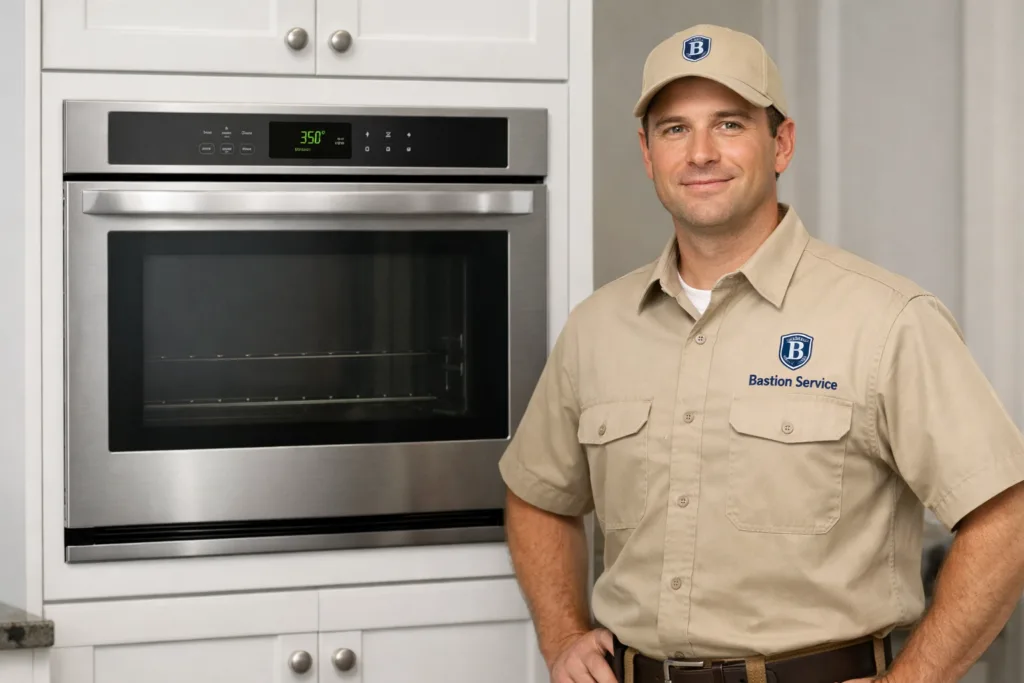
Common Whirlpool wall oven problems and what they often point to
Not heating at all

If a Whirlpool wall oven powers on but never starts cooking, the cause may be a failed bake element, broil element, thermal cutoff, sensor, relay, or electronic control issue. On some built-in models, one heating circuit fails while the display still appears normal, which can make the problem seem smaller than it is.
Heating, but not enough
An oven that gets warm but never reaches the set temperature often has a weak element, inaccurate temperature sensor, or control problem affecting how long the heat stays on. This is one of the most frustrating symptom patterns because the oven still appears usable while meals take longer and results become inconsistent.
Uneven baking or roasting
When one rack browns faster than another, or food comes out burnt on the edges and undercooked in the middle, the issue may involve cycling problems, sensor drift, airflow limitations, or uneven element performance. In many cases, the complaint is not a total loss of heat but poor temperature stability throughout the cooking cycle.
Slow preheat
Long preheat times are commonly linked to a weakening bake or broil element, but they can also be tied to sensor readings that are off just enough to interfere with normal operation. If preheating keeps getting slower, the oven is usually signaling a component that is no longer performing the way it should.
Error codes, beeping, or an unresponsive display
Repeated beeping, flashing codes, or controls that stop responding can indicate keypad failure, communication faults, sensor trouble, or a failing control board. With Whirlpool wall ovens, electronic symptoms should be interpreted carefully because one visible code does not always identify the only failed part.
Door latch or self-clean problems
If the door will not lock, will not unlock, or seems out of alignment, the issue may involve the latch motor, switch, hinges, or control logic. Problems that appear during or after self-clean are especially common because high heat can expose parts that were already wearing out.
Why symptom-based diagnosis matters
Wall ovens are built into cabinetry, connected to dedicated power, and controlled by multiple components working together. That means one symptom can have several possible causes. An oven that is not heating may need an element, but it may also have a sensor issue or a control that is no longer sending power correctly.
A good service decision starts with the actual failure pattern: whether the problem is constant or intermittent, whether broil still works, whether preheat completes, whether the display shows codes, and whether the oven shuts off mid-cycle. That kind of troubleshooting helps determine whether the repair is straightforward or whether several systems need attention.
Signs the oven should be checked sooner rather than later
- Preheat times are noticeably longer than before
- Temperatures swing enough to affect everyday cooking
- The oven shuts off during baking or roasting
- Error codes keep returning after being cleared
- The control panel works intermittently
- The door will not latch or unlock properly
- The appliance trips power or behaves erratically
These problems do not always mean a major repair, but they usually do mean the oven is no longer operating normally. Addressing the issue early can help prevent extra strain on boards, wiring, and heating components.
What different symptom patterns can reveal
When bake fails but broil still works
This often suggests a failed bake element or a control problem affecting that circuit. Homeowners sometimes notice this only after casseroles, cookies, or sheet-pan meals begin taking much longer than usual.
When the oven overshoots or undershoots temperature
If meals come out too dark one day and undercooked the next, the sensor may be reading inaccurately, the control may be mismanaging heat cycles, or calibration may have drifted beyond what a simple setting adjustment can correct.
When the problem is intermittent
An oven that works normally for a week and then stops heating, flashes a code, or resets itself can be harder to pin down without testing. Intermittent problems are often related to electronic controls, relays, wiring connections, or heat-sensitive components that fail only under certain conditions.
When the issue starts after self-clean
Self-clean cycles create extreme temperatures. If the oven stops heating, locks shut, or begins showing control faults afterward, the problem may involve a latch assembly, thermal protection component, sensor, or board stressed by that heat exposure.
When continued use can make the repair bigger
It is usually best to stop using the oven if it trips the breaker, gives off a burning smell, shuts off unpredictably, or shows repeated fault codes. Continuing to run a wall oven under those conditions can increase damage to wiring, controls, or adjacent components.
Even when the appliance still operates, ongoing temperature problems can lead to more wear. A weak element or control that struggles to maintain heat may force longer cycles and create additional stress inside the unit.
Repair or replacement: how homeowners usually weigh the decision
Repair is often the practical choice when the issue is isolated to a part such as a heating element, sensor, latch assembly, switch, or another defined component, and the rest of the oven is in solid condition. Built-in wall ovens also tend to be worth a closer look before replacing because replacement can involve fit, trim, electrical, and cabinet considerations.
Replacement becomes more likely when the oven has multiple failing systems, recurring electronic problems, major age-related wear, or a repair path that no longer makes sense compared with the condition of the appliance overall. The most useful answer usually comes after testing confirms whether the problem is a single fault or part of a broader pattern.
What to notice before service is scheduled
If possible, it helps to note whether the oven fails during preheat or later in the cycle, whether broil works, whether the display shows an error, and whether the problem happens every time or only occasionally. Those details can make diagnosis faster and more accurate.
For many households in Brentwood, the main concern is simple: can the oven be used safely, and is the repair likely to restore reliable cooking? A symptom-focused inspection gives a practical repair plan based on what the oven is actually doing, not guesswork.
Whirlpool wall oven repair for everyday cooking problems in Brentwood
Whether the problem shows up as uneven baking, slow preheat, temperature swings, or control trouble, built-in ovens benefit from being evaluated according to the exact way they are failing. That approach helps narrow down the cause, avoid unnecessary parts replacement, and give homeowners in Brentwood a clearer path forward.