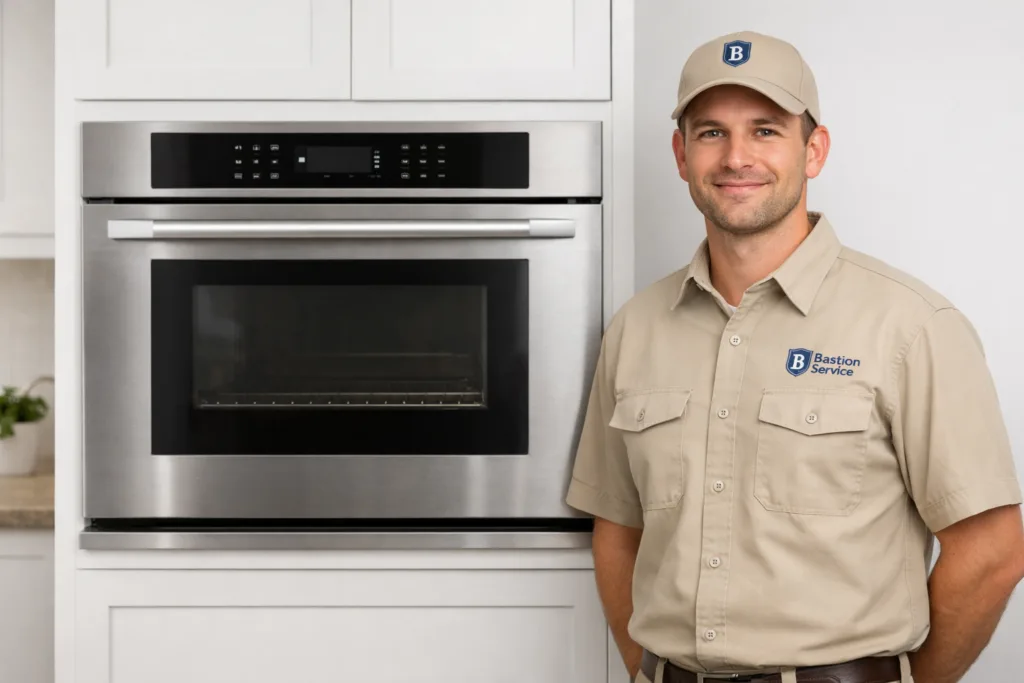
Built-in wall ovens can be frustrating to troubleshoot because one symptom often points to several possible failures. A Thermador unit that preheats slowly, cooks unevenly, or flashes an error may have a heating problem, a sensor issue, a control fault, or a power-related problem behind the cabinet. The most useful first step is identifying the pattern of failure before assuming a specific part is bad.
Common Thermador wall oven symptoms and what they can mean
Not heating at all
If the display powers on but the oven cavity stays cold, the issue may involve the bake element circuit, broil circuit, temperature sensor, control board, thermal protection component, or wiring connection. In some cases, a homeowner hears the unit click as if it is starting, but no heat is produced. That usually means the oven is trying to begin a cycle but cannot deliver power correctly to the heating system.
Slow preheat
Slow preheat is often one of the earliest signs that something is weakening rather than failing all at once. A partially failed element, inaccurate sensor reading, control relay problem, or airflow issue can all increase preheat time. If a Thermador wall oven in Brentwood takes much longer than it used to reach the selected temperature, that change should not be ignored just because the oven eventually gets hot.
Uneven baking or roasting
Food that browns too much on one side, stays pale in the center, or needs extra time even when recipes have not changed may point to inconsistent heat distribution. This can happen when one heating circuit is not cycling correctly, the sensor is reading inaccurately, or convection-related components are not performing as they should. Uneven results are often treated like a cooking issue at first, but repeated inconsistency usually means the appliance itself needs attention.
Temperature swings
Some temperature movement during cycling is normal, but wide swings are not. If the oven overshoots, drops too low, or alternates between burning and undercooking, possible causes include a drifting sensor, control board issue, relay problem, or calibration-related fault. When a premium wall oven becomes unpredictable, daily cooking becomes guesswork, and the problem rarely improves on its own.
Error codes, beeping, or unresponsive controls
Control panel symptoms can show up as flashing displays, repeated beeping, frozen buttons, or error messages that return after power is reset. These problems may come from the user interface, main control, wiring harness, or incoming power condition. If the panel becomes unreliable during operation, it is best not to keep restarting the oven and hoping the issue clears.
Door lock problems and self-clean shutdowns
When the door will not lock, will not unlock, or the oven stops working after a self-clean cycle, the failure may involve the latch mechanism, control board stress, safety thermostat, or heat-damaged components. Self-clean can expose already weakened parts because of the high temperatures involved. A door that stays locked or a wall oven that shuts down after self-clean usually needs direct inspection rather than repeated resets.
Why the same symptom can have different causes
Wall oven systems rely on several parts working together: controls, sensors, heating circuits, fans, relays, and safety components. Because of that, the same complaint can come from very different failures. An oven that is not reaching temperature might have a weak bake circuit, but it could also have a sensor sending the wrong reading or a control not sustaining power long enough to hold heat.
This is why replacing parts based only on the visible symptom often leads to wasted time and money. Accurate diagnosis matters more on a built-in appliance where access is more involved and repair decisions should be made carefully.
Signs the problem is getting more serious
- Preheat times keep getting longer from week to week
- Recipes that used to work now come out undercooked or overdone
- The display resets, flickers, or loses response mid-cycle
- The oven shuts off before cooking is complete
- The door remains locked after use
- The appliance trips power or shows intermittent loss of operation
These patterns suggest more than minor inconvenience. If electrical parts are overheating, relays are sticking, or temperature control is becoming unstable, continued use can increase damage or create safety concerns.
When to stop using the oven and schedule service
It is smart to pause use if the oven will not regulate temperature, turns on and off unpredictably, displays recurring error codes, smells unusually hot, trips a breaker, or fails to shut down normally. A built-in unit that behaves erratically should not be trusted for unattended cooking. In Brentwood homes, this is especially important when the appliance is integrated into cabinetry and poor heat control can affect more than just the meal.
Repair or replace?
Many Thermador wall oven problems are repairable when the failure is limited to a sensor, latch component, fan motor, heating circuit issue, or identifiable control-related part. Repair becomes harder to justify when multiple major components have failed, parts are no longer practical to source, or the oven has a long pattern of repeated breakdowns.
The better decision usually depends on three things:
- How isolated the failure is
- The overall condition of the appliance
- Whether the repair is likely to restore reliable everyday performance
For homeowners weighing Thermador Wall Oven Repair in Brentwood, the goal is not just getting the oven to turn back on. It is knowing whether the repair path makes sense for regular household use going forward.
What a service visit should clarify
A worthwhile service visit should identify which system is failing, explain why the symptom is happening, and outline whether the repair is straightforward or more extensive. That matters with premium built-in ovens because the visible complaint rarely tells the whole story. A proper assessment helps you decide whether to proceed with repair, stop using the appliance for safety, or compare the cost of service against replacement with real information instead of guesswork.