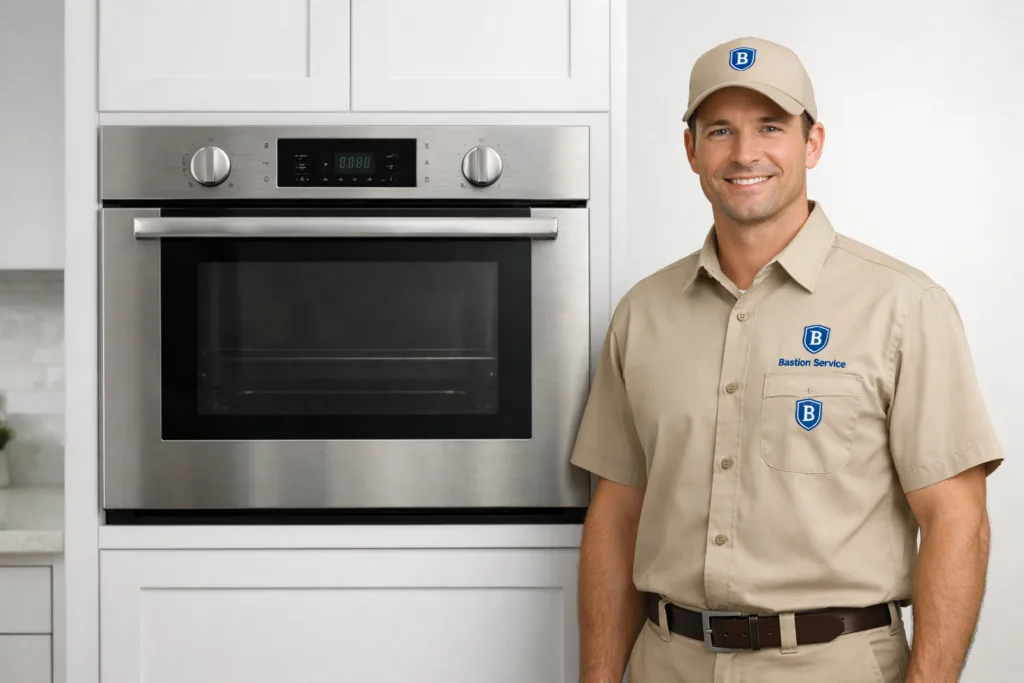
Built-in wall ovens tend to fail in ways that look similar on the surface but come from very different causes. A Bosch unit that will not heat, overshoots temperature, or flashes an error may have a failed heating component, a sensor problem, a door-latch issue, or an electronic control fault. On a built-in appliance, that distinction matters because access, testing, and repair value are different than they are on a freestanding range.
Common Bosch Wall Oven Problems Homeowners Notice
Most service calls start with a cooking result that has changed. Meals take longer, preheat feels unusually slow, or the oven stops responding when it should be running normally. Paying attention to the exact symptom often helps narrow the repair path.
Oven not heating
If the display powers on but the cavity stays cool, the problem may involve the bake system, broil system, thermal protection, wiring, or control relays. Some ovens partially heat, which can make the failure less obvious at first. You might notice food staying pale, longer cook times, or a preheat cycle that never seems to finish.
Slow preheat
A Bosch wall oven that eventually heats but takes much longer than usual may not be using both heating circuits correctly. Weak element performance, inaccurate temperature feedback, or control problems can all create a slow-preheat complaint. This symptom is easy to ignore for a while, but it often gets worse rather than better.
Uneven baking
When one tray browns faster than another or the back of the oven cooks differently from the front, the issue may involve temperature regulation, convection performance, or inconsistent heat delivery. Homeowners often first notice this with cookies, casseroles, or baked goods that used to come out reliably. Uneven results do not always mean the oven needs replacement, but they do usually mean something in the heating system needs attention.
Temperature swings or overheating
If the oven seems too hot, not hot enough, or unpredictable from one cycle to the next, the sensor and control system become primary suspects. Temperature complaints can also show up as scorched bottoms, undercooked centers, or recipes that suddenly need manual adjustment. In many cases, what looks like a calibration issue is actually a failing component affecting how the oven reads and maintains heat.
Controls not responding
Touch controls, selector functions, and electronic displays can fail in full or in part. A Bosch wall oven may beep, freeze, reset, or ignore commands even when power is present. That can point to a user-interface issue, a control-board fault, or a problem related to communication between components.
Error codes and locking issues
Error messages are useful, but they do not always identify one simple failed part. A repeated fault code may be connected to heat sensing, door locking, control communication, or another protective shutdown. If the door will not unlock after a self-clean cycle, or if the oven refuses to start because it thinks the latch is not in the right position, service is usually the fastest way to sort out the failure without adding more stress to the mechanism.
Why Symptom Patterns Matter
Two ovens can show the same complaint and need completely different repairs. For example, “not heating” could mean no heat at all, weak heat, intermittent heat, or heat in only one mode. “Uneven baking” might come from poor sensor feedback, a hidden heating problem, or a convection-related issue. Looking at when the failure started, whether it affects bake and broil equally, and whether it happens every cycle helps point testing in the right direction.
This is especially useful in Brentwood homes where the wall oven is integrated into the kitchen layout and replacement decisions are not always simple. A careful diagnosis can show whether the problem is isolated and repairable or whether several issues are developing at once.
Problems That Often Show Up After Self-Clean
Self-clean cycles place heavy thermal stress on oven components. On some Bosch wall ovens, problems appear immediately afterward or within the next few uses. Common post-self-clean complaints include:
- The door stays locked or will not lock properly
- The oven will not start after the cycle ends
- The display shows an error or becomes unresponsive
- Heating performance changes noticeably
- The unit seems dead even though power is available
If a new problem begins right after self-clean, that timing is worth mentioning during service. It can help narrow the likely failure path faster.
When to Stop Using the Oven
Some issues are inconvenient but manageable for a short time. Others are a sign to stop using the appliance until it is checked.
- A burning electrical smell from the control area or wiring
- Repeated tripping, shutoffs, or sudden resets during cooking
- Severe overheating or food burning unexpectedly at normal settings
- A door that will not close, seal, latch, or unlock correctly
- Persistent fault codes that return after clearing
Continuing to run the oven under these conditions can make the original problem worse and may create additional damage to controls, wiring, or latch components.
Repair or Replace?
Many Bosch wall oven problems are repairable, particularly when the issue is limited to a sensor, heating component, latch assembly, switch, or electronic control function. Repair is often the better choice when the oven fits the existing cabinetry well, the rest of the appliance is in solid condition, and the failure is confined to one system.
Replacement becomes more likely when there are multiple major faults, repeated electronic failures, or overall wear that makes further investment hard to justify. With a built-in oven, replacement also involves cabinet fit, electrical setup, and finish matching, so homeowners in Brentwood often benefit from understanding the exact fault before making that decision.
Helpful Details to Note Before Service
A few observations can make troubleshooting more efficient. Before the visit, it helps to note:
- Whether the problem affects bake, broil, convection, or every mode
- If the issue started suddenly or gradually
- Whether it began after a power outage or self-clean cycle
- Any error code shown on the display
- Whether the oven heats at all, heats slowly, or overheats
- If the unit shuts off during cooking or will not accept commands
These details do not replace testing, but they do help connect the symptom to the most likely systems involved.
What Brentwood Homeowners Usually Want to Know
In most cases, the immediate question is not just what failed, but whether the repair makes sense for the appliance and the household. A wall oven that still looks good in the kitchen but no longer cooks reliably may be worth fixing if the fault is contained. On the other hand, a unit with recurring issues may call for a broader conversation about long-term value. The most useful first step is one thorough assessment based on the symptoms the oven is actually showing now.