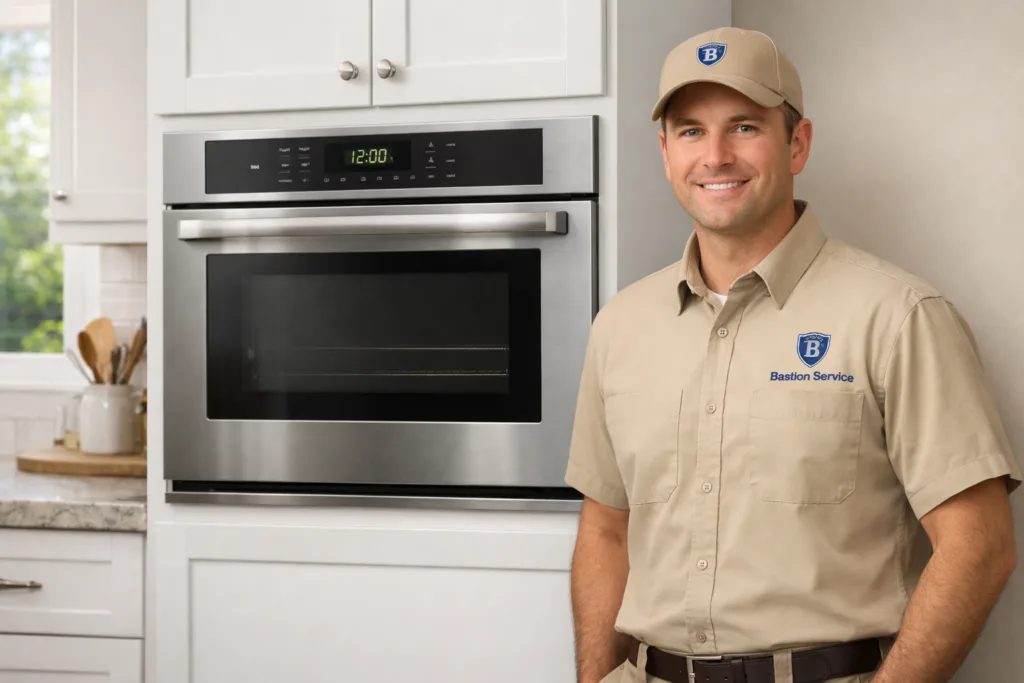
Wall oven problems often start with small changes in cooking results before they turn into a complete loss of heat. A casserole that needs extra time, cookies that brown unevenly, or a unit that seems to preheat forever can all point to a developing issue inside the oven. In Brentwood homes, the most useful next step is to narrow the symptom down to the component or system that is actually failing instead of assuming every temperature problem means the same repair.
Common wall oven symptoms and what they can mean
If the oven is running but food is not cooking the way it used to, the problem may involve heat production, temperature sensing, airflow, or control timing. Similar symptoms can come from very different faults, which is why the pattern matters.
Slow preheat or failure to reach temperature
A wall oven that takes much longer than normal to preheat may have a weak bake element, a failing broil element that is no longer assisting during preheat, a bad igniter on a gas unit, or a sensor sending the wrong temperature reading to the control. In some cases, the display shows that preheat is complete even though the cavity is still too cool for normal baking. That often leads to longer cook times and inconsistent results from one rack position to another. For broader built-in cavity heating concerns that are not limited to a wall-mounted installation, Oven Repair in Brentwood may be relevant.
Uneven baking and temperature swings
Uneven cooking is one of the clearest signs that something is off. If the back of a pan browns faster than the front, one rack cooks well while another lags behind, or recipes that used to be reliable start coming out underdone, the oven may have a sensor issue, calibration drift, or a heating component cycling incorrectly. Temperature swings can also happen when the control board has trouble reading or regulating heat over the full cooking cycle.
Oven will not heat at all
When the control panel lights up but there is no heat, the failure may be isolated to the bake circuit, broil circuit, wiring, relay, or safety-related component. If the unit is completely dead, the diagnosis changes and may involve incoming power, a fuse, the control, or a connection problem in the built-in installation. A breaker trip during operation should always be taken seriously because it can point to a short, overload, or damaged electrical part.
Built-in wall oven issues that are easy to overlook
Wall ovens have some service concerns that do not show up the same way on freestanding cooking appliances. Because the unit is installed into cabinetry, heat retention, door alignment, and electrical access all matter.
Door, latch, and seal problems
If the door does not close tightly, heat can escape and cause long cook times, poor browning, and hot spots. A worn gasket, hinge issue, or latch problem can also interfere with self-clean operation. In some cases, homeowners first notice the issue because the kitchen gets hotter than usual during baking or because the oven seems to run constantly trying to hold temperature.
Control and display faults
Modern wall ovens rely heavily on electronic controls. A blank display, intermittent buttons, random beeping, error codes, or settings that do not respond properly may indicate a user interface problem, a failing main control, or wiring trouble between components. These issues are especially frustrating because the oven may appear to have power while still being unable to heat, cycle correctly, or complete a cooking program.
How related cooking-appliance symptoms differ
Not every cooking complaint belongs to the wall oven itself. If the trouble is limited to the surface burners above a separate cooking area, that points away from the built-in oven cavity and more toward Cooktop Repair in Brentwood. If both the top burners and oven performance are affected on a combined appliance, the issue may align more closely with Range Repair in Brentwood. If the household is dealing with traditional burner and oven performance concerns on a freestanding unit, Stove Repair in Brentwood may be the better comparison.
When to stop using the wall oven
It is best to stop using the unit if you notice a burning odor that does not fade, visible sparking, repeated breaker trips, smoke from inside the cavity that is not food-related, or a door that will not latch or unlock properly. Continued use under those conditions can increase the chance of electrical damage and may make the final repair more involved.
You should also schedule service sooner rather than later if preheat times keep getting longer, the oven overshoots or undershoots temperature, or recipes fail unpredictably from one use to the next. Even if the oven still operates, drifting performance usually means a part is weakening rather than improving on its own.
Repair versus replacement
Repair is often worthwhile when the problem is tied to a serviceable part such as a sensor, igniter, heating element, latch assembly, fan motor, or control component and the rest of the oven is in solid condition. Built-in wall ovens are also different from simple plug-in appliances because cabinet fit, electrical configuration, and replacement size can all affect the cost and complexity of changing the unit out.
Replacement becomes more likely when there are multiple active failures, recurring electronic problems, severe internal heat damage, or repair costs that approach the value of keeping the existing oven. For many homeowners, the deciding factor is whether the repair is expected to restore normal everyday cooking without ongoing reliability concerns.
What homeowners in Brentwood should pay attention to before service
Before scheduling repair, it helps to note whether the oven fails during preheat, only at higher temperatures, only in bake mode, or during self-clean. Error codes, unusual noises, fan behavior, and whether the broil function still works can all help narrow the issue faster. If certain dishes consistently cook poorly while others seem normal, that detail can also be useful because it may point to uneven heat distribution rather than a full heating failure.
A wall oven is one of the most used kitchen appliances in many households, so even a minor issue can quickly interrupt daily routines. The goal is not just to get the unit running again, but to restore steady, predictable cooking performance for normal family use.