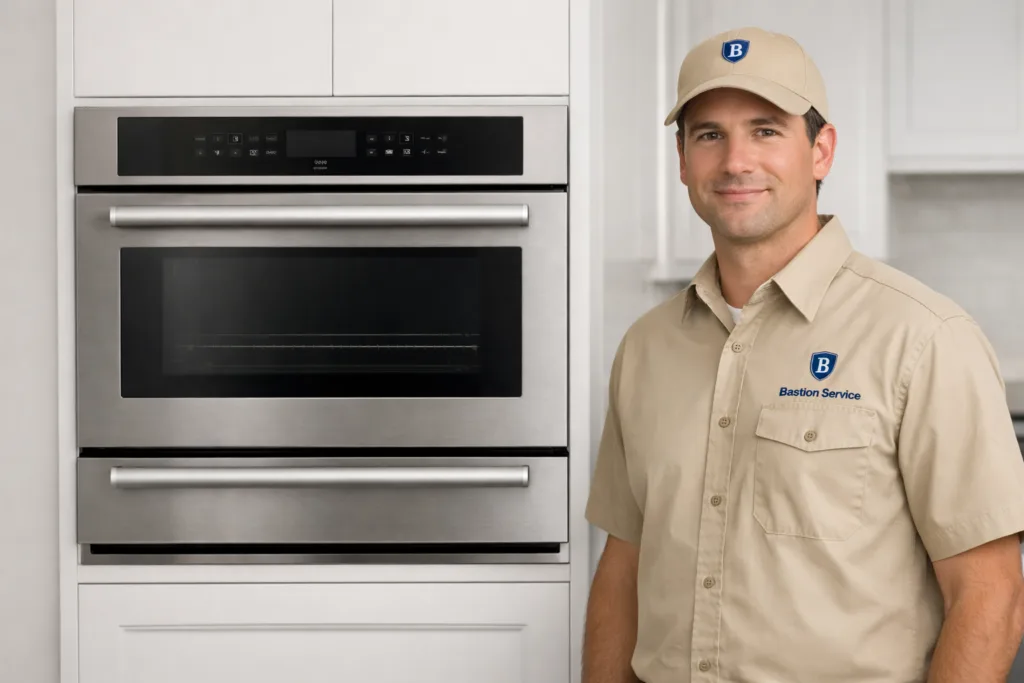
Cooking problems with a wall oven usually show up before the unit fully fails. You might notice cookies browning too fast on one side, casseroles taking longer than normal, or a preheat cycle that seems to drag on well past the set time. With Dacor models, those symptoms can come from several different causes, so the most useful next step is matching the repair to the exact behavior of the oven.
Common Dacor wall oven symptoms in Brentwood homes
Many service calls start with a complaint that sounds simple at first: the oven is “off.” In practice, that can mean no heat at all, weak heat, unstable temperature, or heat that only fails in one cooking mode. Paying attention to how the problem shows up often points the diagnosis in the right direction.
Oven not heating
If the oven powers on but does not heat, the issue may involve a failed bake element, broil element, temperature sensor, relay, wiring fault, or electronic control problem. In some cases, the display appears normal even though the heating circuit is not operating correctly.
This symptom matters because a complete no-heat condition is different from an oven that eventually gets warm but never reaches the selected temperature. The repair path is not always the same.
Slow preheat
A Dacor wall oven that takes too long to preheat may still be producing heat, but not at the level it should. Weak element performance, inaccurate sensor feedback, or a control issue can all lead to longer preheat times. Some homeowners first notice this when weekday meals begin taking noticeably longer, even though the oven seems to be working.
Uneven baking or roasting
When one rack cooks faster than another, or food browns unevenly from front to back, the problem may involve temperature regulation, convection performance, door sealing, or partial heating failure. Uneven results are especially frustrating because the oven can appear functional while producing poor cooking results every time it is used.
Temperature swings
An oven that runs too hot, too cool, or fluctuates unpredictably may have a sensor drifting out of range, a calibration issue, or a control board that is not cycling heat correctly. If recipes that used to be reliable suddenly start undercooking or burning, temperature instability is often the real issue.
Control and display problems
Blank screens, touchpads that stop responding, random beeping, resets during cooking, and recurring error codes usually point to an electronic problem rather than a basic heating fault. Depending on the model, the issue could involve the user interface, main control, power supply, or wiring connections between components.
What different symptom patterns can mean
Two ovens can show what sounds like the same problem and still need very different repairs. Looking at when the failure happens is often more revealing than the symptom alone.
- Fails during preheat: often tied to heating performance, sensor feedback, or control response.
- Works on broil but not bake: may point to a bake circuit or bake element issue.
- Heats at first, then drops off: can suggest intermittent controls, relays, or heat-related electrical failure.
- Problem started after self-clean: may involve latch components, control stress, or heat-damaged electronics.
- Error code appears only sometimes: may indicate an intermittent sensor, communication, or wiring fault.
This is why part-swapping based on a guess often leads to wasted expense. The same “not heating right” complaint can trace back to entirely different components.
Door, latch, and self-clean issues
Door-related problems are easy to overlook, but they can affect both performance and safety. If the door does not close tightly, heat escapes and temperature consistency suffers. If the latch will not engage or release properly, the oven may refuse to operate as expected.
Self-clean cycles can also expose existing weaknesses. A door that stays locked after cleaning, a control panel that starts acting erratically, or an oven that no longer heats correctly afterward may indicate a latch problem or heat stress affecting nearby electronic parts. If that happens, it is best not to force the door or continue repeated restart attempts.
When to stop using the oven and schedule service
Some issues mainly affect cooking quality. Others can get worse with continued use. It makes sense to stop using the wall oven and have it checked if you notice any of the following:
- The oven overheats or burns food at normal settings
- The display shuts off or resets during operation
- Recurring error codes interrupt cooking
- The oven trips power repeatedly
- The door will not lock, unlock, or seal properly
- There is a burning smell, visible scorching, or signs of overheating near the controls
Electrical symptoms and overheating deserve prompt attention. Continuing to run the unit can increase damage to controls, wiring, or insulation.
Why model-specific diagnosis matters for Dacor wall ovens
Dacor wall ovens use model-specific electronic controls, sensors, and cooking functions. That matters because what looks like a simple temperature complaint in one unit may actually be a board issue in another. In built-in appliances, access, fit, and configuration also affect how repairs are approached.
A careful diagnosis should account for whether the issue affects bake, broil, convection, or multiple modes; whether it happens consistently or intermittently; and whether the symptom changes once the oven has been running for a while. That kind of testing gives homeowners in Brentwood a much better basis for deciding whether repair is the right move.
Repair or replace: how to think through the decision
Wall ovens are not always replaced as easily as standard freestanding appliances. Cabinet fit, trim alignment, electrical compatibility, and installation limitations can all influence the decision. Because of that, repair is often worth considering when the problem is isolated and the rest of the oven is in solid condition.
Repair is commonly reasonable when the failure is limited to a sensor, heating element, fan motor, latch assembly, or a confirmed electronic component in an otherwise reliable unit. Replacement becomes more attractive when there are repeated major control failures, extensive heat damage, or several expensive issues showing up close together.
The key is understanding the actual fault rather than reacting only to the inconvenience of the symptom.
Helpful details to note before service
If you are arranging Dacor Wall Oven Repair in Brentwood, a few observations can make the problem easier to identify:
- Whether the issue happens on bake, broil, convection, or all modes
- Whether the oven reaches temperature and then falls off
- Whether the problem began after a self-clean cycle
- Any error code shown on the display
- Whether the symptom is constant or intermittent
- If the oven seems too hot, too cool, or uneven across racks
Those details help separate a heating problem from a sensor, latch, or control issue. For homeowners in Brentwood, that usually leads to faster answers and a more informed repair decision.