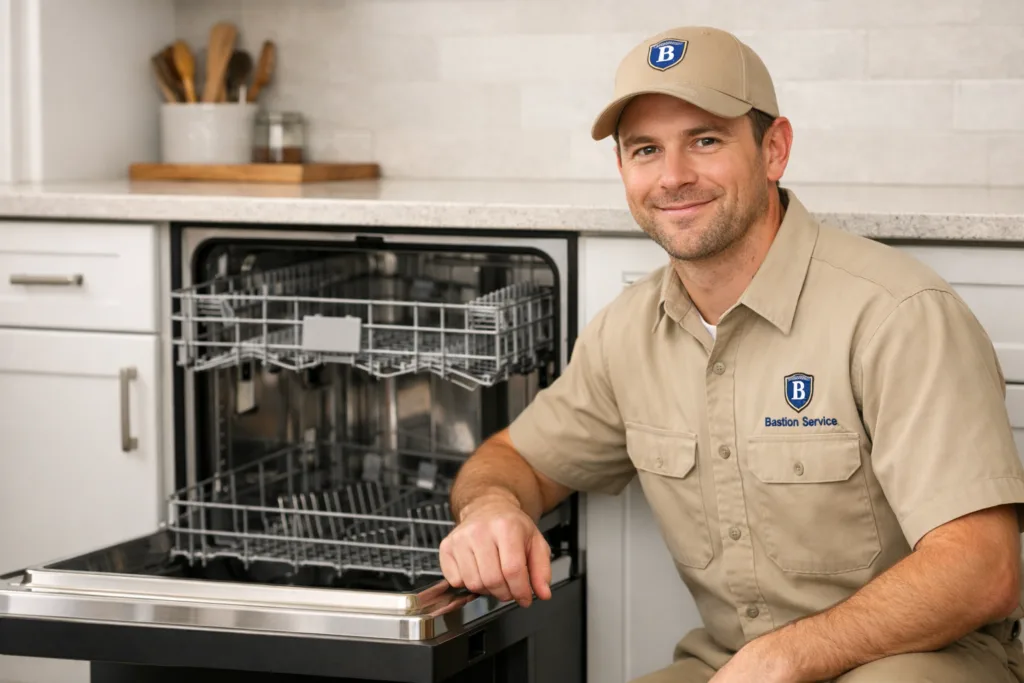
Common Whirlpool dishwasher problems in Brentwood homes

Whirlpool dishwashers usually give clues before a complete failure. A change in sound, longer cycle times, water left in the tub, or dishes that no longer come out clean can all point to a specific system that needs attention. The most useful approach is to look at the full symptom pattern instead of assuming one bad part is responsible.
Standing water after the cycle
If water is still sitting at the bottom when the cycle ends, the problem may involve the filter area, drain hose, drain pump, sink-side blockage, or an interruption earlier in the cycle. In some cases, the dishwasher appears to have a drain issue when it actually stopped mid-program and never reached a full drain sequence.
Signs that help narrow it down include whether the unit hums when it should be draining, whether the water level changes at all, and whether the problem happens every time or only on certain cycles.
Cloudy glasses or food left on dishes
Poor wash performance is often tied to water flow. Spray arms can become restricted, filters can collect debris, detergent may not dispense correctly, or the machine may not be filling to the proper level. Hard water film can also make it seem like the dishwasher is not cleaning well when the root issue is a combination of buildup and rinse performance.
If the top rack is affected more than the bottom, or if only heavily soiled items come out dirty, that pattern can help separate loading issues from a circulation or spray problem.
Leaking onto the floor
A leak during wash or drain should be addressed quickly. Whirlpool dishwasher leaks may come from the door seal, lower door area, internal hoses, pump seals, loose connections, overfilling, or excess suds caused by the wrong soap. Even a small recurring leak can damage flooring, trim, or nearby cabinetry over time.
If the leak appears only at the beginning of the cycle, only during draining, or only when the door is opened after washing, that timing is often helpful in identifying the source.
Unit will not start or stops partway through
When the controls respond but the dishwasher does not actually run, likely causes can include a door latch problem, filling issue, drain fault, control board failure, or user interface trouble. If it starts and then quits at the same point each time, the machine may be failing during a specific function such as filling, heating, or draining.
Intermittent operation matters too. A dishwasher that works some days and not others can still have a failing latch, control response issue, or electrical connection problem.
Noise, odor, or weak drying
Buzzing, grinding, rattling, or unusual humming may point to debris in the pump area, spray arm contact, motor wear, or internal component strain. A burning or electrical smell should be taken seriously and checked before the unit is used again.
If dishes come out wet long after they used to dry normally, the issue may involve heating performance, rinse aid use, venting, cycle selection, or control timing. Weak drying is not always just a heater problem, so the full cycle behavior matters.
Why symptom patterns matter on Whirlpool dishwashers
Two dishwashers can show the same complaint and need different repairs. One Whirlpool unit may leave water behind because of a clogged path, while another has a drain pump that is receiving power but not moving water. A machine that seems completely dead may still have power available but fail to start because the door is not registering as closed.
That is why effective troubleshooting starts with what the dishwasher is doing step by step: filling or not filling, washing weakly or normally, draining fully or partially, heating properly or not at all. A symptom-based explanation is often more useful than a guess about parts.
When to stop using the dishwasher
Some issues are mostly inconvenient. Others can lead to water damage or electrical risk if the appliance keeps running.
- Stop using it right away if you notice leaking, a burning smell, repeated breaker trips, smoke, or a door that will not latch securely.
- Schedule service soon if cycles are getting longer, cleaning has dropped off, the unit is making new noises, or it drains inconsistently.
- Avoid repeated test runs when the symptom is getting worse, especially with standing water or leaking, since extra cycles can make the repair more involved.
What Brentwood homeowners can check before service
A few observations can make diagnosis faster and more accurate. You do not need to disassemble anything, but it helps to note what happens during a normal attempt to run the machine.
- Does the dishwasher fill with water at the beginning of the cycle?
- Do you hear the spray action change as the wash begins?
- Is the problem present on every cycle or only certain settings?
- Does water remain in the tub at the end?
- Are dishes on one rack affected more than the other?
- Does the leak appear from the front, underneath, or near the drain stage?
- Are there flashing lights or control panel behavior that seems unusual?
These details often help separate a drain restriction, wash-system issue, filling problem, control fault, or seal-related leak.
Repair versus replacement
Many Whirlpool dishwasher problems are repairable when the appliance is otherwise in solid condition. Drain issues, pump-related faults, inlet valve problems, latch failures, dispenser problems, and many leak sources can often be addressed without replacing the entire unit.
Replacement becomes a more realistic option when the dishwasher has multiple failing systems, major interior wear, recurring leak damage, or repair costs that are too close to the value of the appliance. Age matters, but so do overall condition, rack and tub wear, and whether the current issue is isolated or part of a larger pattern.
What a focused repair visit should clarify
For homeowners in Brentwood, the goal is not just getting the dishwasher running for one cycle. It is understanding what failed, whether the repair is likely to hold up, and whether continued investment in the machine makes sense. That includes checking the affected system, confirming the cause of the symptom, and ruling out related issues that could make the same problem return.
When a Whirlpool dishwasher is acting up, the best next step is usually a practical repair plan based on how the machine is actually behaving in the home, not on trial-and-error part replacement.