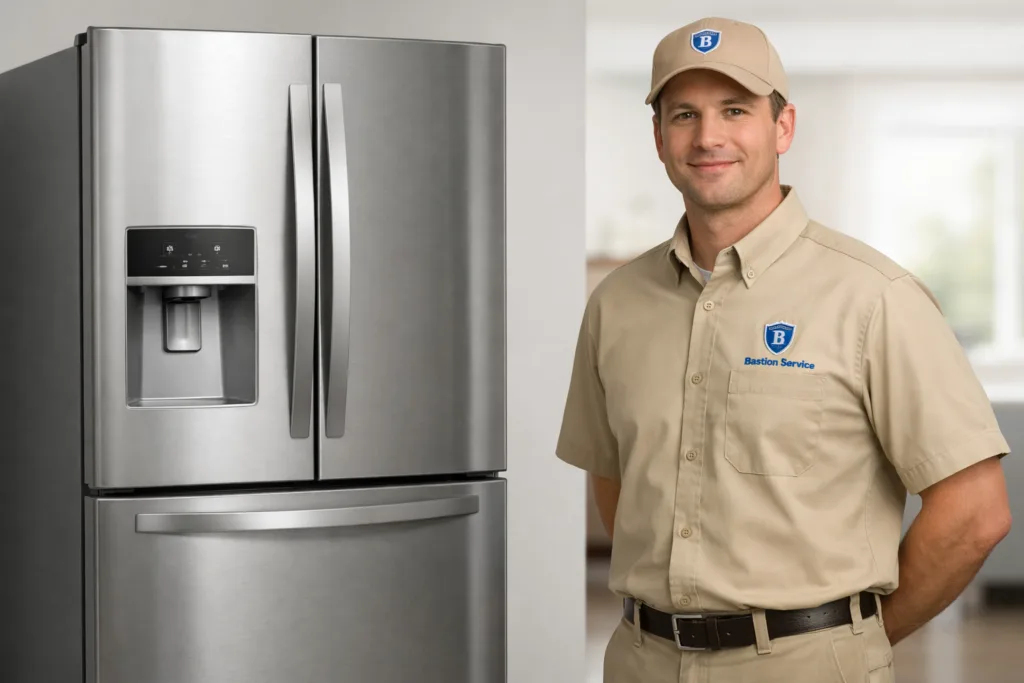
A Whirlpool freezer that warms up, frosts over, leaks, or runs louder than usual can put a week’s worth of groceries at risk fast. In many Brentwood homes, the next best step is to look closely at the symptom pattern before assuming the problem is major. The same “not freezing” complaint can come from a bad door seal, blocked airflow, a defrost issue, a fan problem, or a control failure.
Common Whirlpool Freezer Problems Homeowners Notice First
Most freezer problems do not begin with a complete shutdown. They usually start with small warning signs: softer frozen food, frost on packages, unusual fan sounds, longer run times, or water showing up near the appliance. Paying attention to what changed first can help narrow down the likely cause.
Freezer not freezing hard enough
If food is staying cold but not fully frozen, the freezer may have an airflow restriction, an evaporator fan issue, a door that is not sealing tightly, or a developing defrost problem. Sometimes the back of the compartment stays colder than the front, which often points to circulation trouble rather than total cooling loss.
If everything in the cabinet is warming at once, the issue may be broader. That can include control problems, start and run component trouble, or reduced cooling performance from the sealed system. A freezer in this condition should be checked promptly, especially if food is beginning to soften.
Frost buildup on walls, shelves, or food packages
Excess frost usually means moisture is entering the compartment or ice is not being cleared properly during the defrost cycle. A worn gasket, a door left slightly open, warped shelving that prevents full closure, or a failed defrost component can all create the same visible result.
Heavy frost behind interior panels is especially important because it can block airflow over the evaporator. When that happens, the freezer may seem cold in one area and warm in another, and the fan may begin sounding different as ice builds around it.
Water leaks or ice near the bottom
A Whirlpool freezer can leak when defrost water cannot drain where it should. Instead of moving away properly, the water may refreeze, pool inside the cabinet, or show up on the floor. Homeowners sometimes notice a sheet of ice on the bottom first and assume it is just spillover, when it may actually point to a drain or defrost-related problem.
Recurring leaks matter because they can damage nearby flooring and usually indicate that the underlying issue is still active.
Constant running or longer cycles
When a freezer seems to run almost nonstop, it is usually trying to recover from air loss, poor airflow, dirty condenser conditions, frost restriction, or a temperature-control issue. This does not always mean the compressor is failing, but it does mean the appliance is working harder than normal.
If the unit is running constantly while cooling remains weak, the problem should not be ignored. Extended strain can make performance worse over time.
Buzzing, clicking, rattling, or fan noise
New noises help separate minor issues from more urgent ones. A fan hitting ice can create scraping or ticking sounds. Clicking may point to starting trouble or a control-related issue. Rattling can come from vibration, loose panels, or components working harder because the freezer is not regulating temperature well.
Noises that appear together with warming, frost, or leaking are usually more meaningful than noise alone.
What the Symptom Pattern Can Reveal
Freezer diagnosis is most effective when the full pattern is considered instead of focusing on one complaint in isolation. For example:
- Warm temperatures plus heavy frost often suggest airflow restriction or a defrost failure.
- Soft food plus a visibly open or loose door may point to gasket wear, alignment issues, or blocked closure.
- Water under the freezer plus interior ice can indicate a drain problem or melting from abnormal frost buildup.
- Loud fan noise plus uneven cooling may mean ice is interfering with circulation.
- Constant running with little cooling improvement may require a more serious system evaluation.
This is why guessing with parts rarely saves time or money. Different failures can look alike from the outside.
When to Stop Waiting and Schedule Service
Some freezer issues can be watched briefly, but others call for quick action. If food is softening, frost keeps returning, or water is reaching the floor, the problem has moved beyond a minor inconvenience.
You should schedule service promptly when:
- Frozen food is no longer staying fully solid.
- Frost returns soon after being cleared.
- The door does not close or seal consistently.
- There is repeated leaking or ice at the bottom of the cabinet.
- The freezer starts making new clicking, grinding, or scraping sounds.
- The unit runs almost continuously without normal temperature recovery.
In a household setting, waiting too long can lead to spoiled food, extra strain on components, and more difficult repair conditions.
Simple Checks You Can Make Before Service
There are a few safe observations homeowners in Brentwood can make before a technician arrives. These do not replace service, but they can help clarify what is happening.
- Make sure the door is closing fully and not blocked by food packages or bins.
- Look for gaps, tears, or looseness in the door gasket.
- Check whether frost is light and localized or heavy and widespread.
- Notice whether the freezer is warm everywhere or only in certain sections.
- Listen for fan noise that changes when the door opens or closes.
- Watch for water collecting inside, underneath, or near the base.
Avoid chipping at ice with sharp tools or forcing frozen panels apart. That can damage liners, hidden coils, and internal components.
Repair or Replace: What Usually Decides It
The decision often comes down to the freezer’s age, its overall condition, the type of failure, and whether the repair is likely to restore stable performance. Problems such as a gasket issue, fan failure, drain blockage, or defrost component fault are often more straightforward than homeowners expect.
On the other hand, if the diagnosis points to a major cooling-system problem in an older appliance with a history of poor performance, replacement may make more sense. The right choice depends less on the visible symptom and more on what failed, what it will take to correct it, and what reliability to expect afterward.
Helpful Steps While Waiting for a Visit
If your Whirlpool freezer is struggling, open the door as little as possible to hold temperature. Group frozen items together to help them retain cold longer, and move highly perishable items if the food has started to soften. If the seal looks compromised, avoid overloading the door area until the appliance is inspected.
When the problem involves leaks, place a towel near the base to protect flooring, but do not assume the moisture is harmless condensation. Repeated water or recurring ice usually means the freezer needs attention.
For many Brentwood households, the real value of service is not just fixing a part. It is understanding whether the problem is isolated and repairable or a sign that the appliance is nearing the end of practical use. Once the cause is identified, the next step becomes much easier to judge.