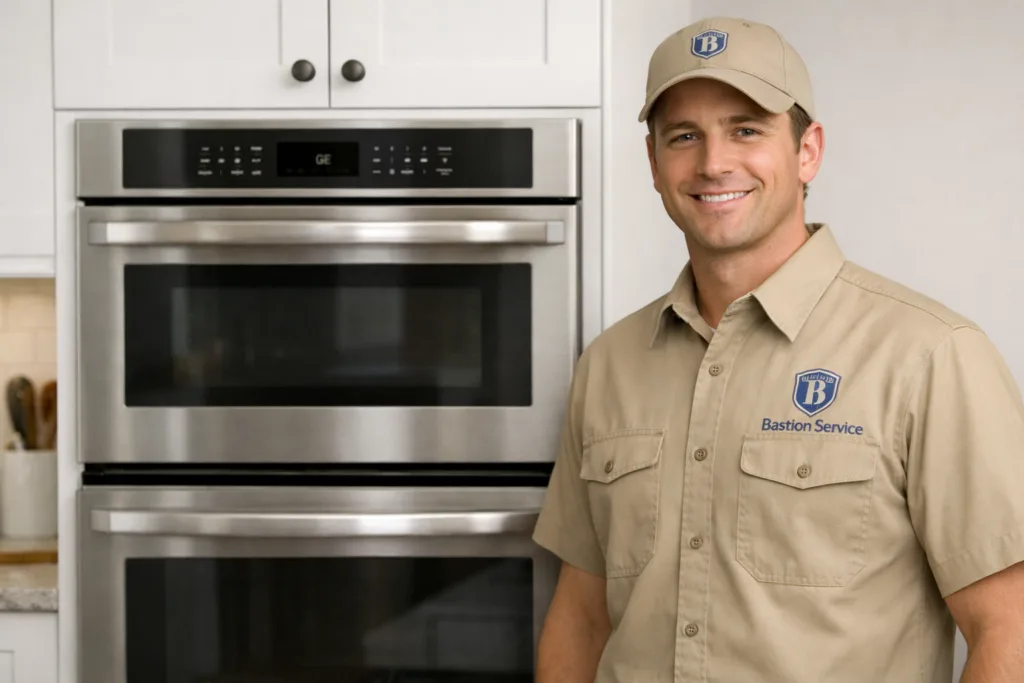
Wall oven problems tend to show up in everyday cooking first. A roast that takes much longer than usual, cookies that brown unevenly, or a control panel that starts beeping for no obvious reason often points to a specific failure path inside the oven rather than a random glitch. With GE units, the same symptom can come from different components, so the most useful next step is to match the repair approach to what the oven is actually doing.
What common GE wall oven symptoms usually mean
A wall oven can still appear to power on while failing in one part of the heating or control system. In Brentwood homes, that often shows up as poor baking performance, long preheat times, inconsistent temperatures, or a display that cuts in and out during use. Paying attention to the exact pattern helps separate a heating problem from a sensor issue, power problem, or control fault.
Not heating at all
If the oven turns on but never gets hot, possible causes include a failed bake element, a bad broil element, a temperature sensor problem, a relay failure on the control board, or wiring damage. In some cases, one heating circuit fails while the rest of the oven still appears normal, which can make the issue seem less serious than it is. An oven that lights up but cannot produce heat is usually a repair issue rather than a simple settings problem.
Slow preheat or weak heating
When preheat stretches well beyond normal or food keeps coming out underdone, the oven may be heating with reduced output. A weakened element, inaccurate sensor reading, or control problem can all lead to this kind of performance drop. Some homeowners first notice it with meals that suddenly need extra cooking time even though the temperature setting has not changed.
Uneven baking and temperature swings
Hot spots, one-sided browning, and unpredictable baking results often suggest trouble with temperature regulation. If one rack cooks faster than another or the same recipe behaves differently from one use to the next, the oven may not be reading cavity temperature correctly or may not be cycling the heating elements as it should. These issues are especially noticeable in baking, where even small temperature differences affect results.
Display, keypad, and control issues
A blank screen, unresponsive buttons, flashing display, or constant beeping typically points to the control side of the appliance. Sometimes the panel fails only after the oven has been on for a while, which can indicate a heat-related electronic problem. Intermittent resets, lost settings, and error messages that come and go are also signs that the unit should be evaluated before it becomes completely unusable.
Door lock and self-clean problems
GE wall ovens can also develop latch and lock issues, especially around self-clean use. A door that will not unlock, a lock motor that keeps cycling, or an oven that stops working normally after a cleaning cycle may involve the latch assembly, switches, or heat-stressed controls. Forcing the door open or continuing to run repeated cycles can make the repair more involved.
Symptoms that suggest you should stop using the oven
Some wall oven problems are mostly about convenience, while others can affect safety or cause broader damage if ignored. It is smart to stop using the oven and arrange service if you notice any of the following:
- Burning smells that do not go away quickly
- Sparking or visible arcing
- Breaker trips during preheat or baking
- The oven shutting off in the middle of a cycle
- Cabinets or surrounding surfaces getting unusually hot
- The oven temperature rising far above the set point
- A door that will not close, latch, or unlock properly
Problems like these usually mean the issue goes beyond normal wear and should be checked before the oven is used again.
How specific cooking complaints help narrow the problem
Homeowners often describe the problem in cooking terms rather than technical ones, and that is often the most helpful place to start. A few examples:
- “Everything is taking longer to cook” can point to weak heat output or sensor drift.
- “The top browns but the middle stays underdone” may suggest uneven heat distribution or a partial heating failure.
- “Preheat says it is done, but the oven still feels cool” can indicate inaccurate temperature sensing or control issues.
- “It works some days and not others” often fits an intermittent control, connection, or power fault.
- “It started acting up after self-clean” can be a clue that heat exposure affected the latch system or electronics.
Those symptom details matter because they make it easier to tell whether the likely repair is isolated and straightforward or part of a larger electrical or control problem.
Repair or replace: what usually makes sense
Whether repair is worthwhile depends on the failed part, the condition of the oven overall, and whether the issue appears isolated or recurring. Many GE wall oven problems come down to a sensor, element, latch component, or control-related fault that can make repair a reasonable choice if the appliance is otherwise in good shape.
Replacement becomes more likely when multiple problems are stacked together, when there is extensive wear, or when control and wiring issues overlap in an older unit. For Brentwood households trying to decide, the key question is not just whether the oven can be fixed, but whether the repair path is proportionate to the condition and expected life of the appliance.
What to note before a service visit
If you are scheduling GE wall oven service in Brentwood, a few details can make the appointment more productive. Try to note:
- Whether the problem happens in bake, broil, or both
- If the oven heats at all or stays completely cold
- Whether preheat is unusually slow
- Any error code shown on the display
- Whether the issue began after a self-clean cycle
- If the problem is constant or only happens occasionally
- Whether the breaker has tripped or the display has reset
Even simple observations like “the top gets hot but the bottom does not” or “the display goes blank after 20 minutes” can help identify the likely fault faster.
Why symptom-based repair matters for wall ovens
Built-in ovens are more involved than freestanding units because access, ventilation, trim fit, and cabinet installation all affect how the appliance is tested and repaired. That makes it even more important not to guess at parts. A symptom-based diagnosis helps avoid unnecessary replacement of components that are not actually causing the problem and gives homeowners a better sense of whether the repair is likely to restore normal cooking performance.
For households in Brentwood, the goal is usually straightforward: get the oven heating correctly, keep temperatures stable, and restore reliable daily use without turning a manageable fault into a larger one by waiting too long.