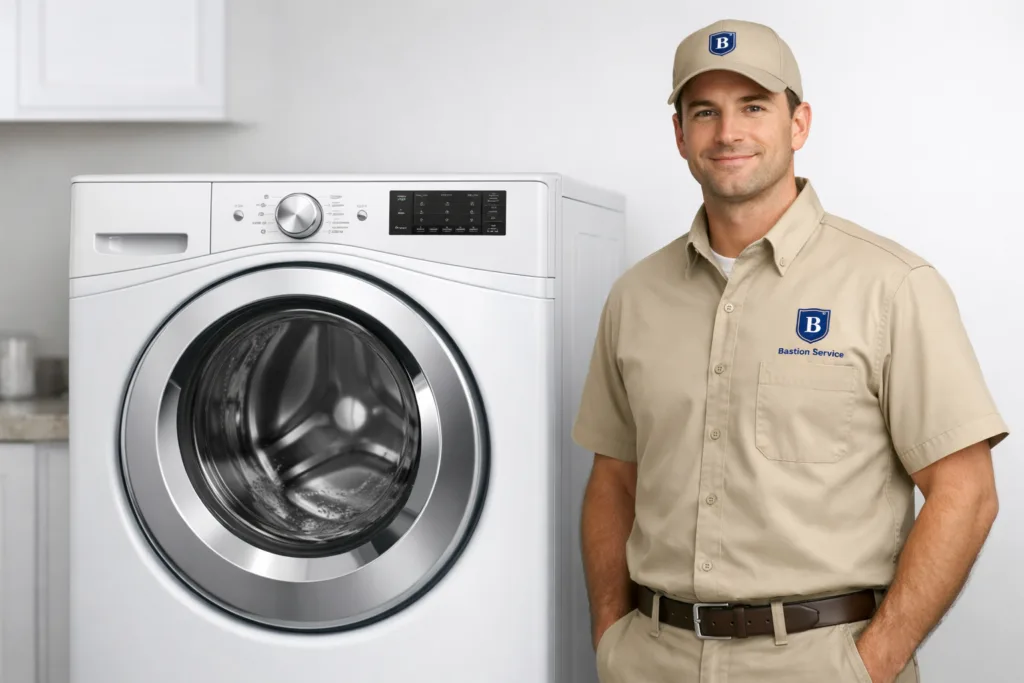
Washer problems are easiest to solve when the symptom is tied to the exact point in the cycle where it happens. A Whirlpool unit that fills normally but never starts washing suggests a different repair path than one that drains slowly, shakes hard in spin, or stops with the door locked. Looking at the pattern first helps narrow whether the issue is in the drain system, suspension, water inlet components, drive parts, or controls.
Common Whirlpool washer problems and what they may mean
Washer will not start
If the display lights up but the cycle will not begin, the problem may involve the lid lock or door latch, the control interface, or a power-related issue. Sometimes the washer appears ready but will not move forward because it does not detect that the door is secured. On other calls, the cause is less obvious and may involve the main control or a wiring fault.
Washer fills but does not agitate or spin
When water enters normally and the tub then sits still, the washer may have a drive-system problem. Depending on the Whirlpool model, that can point to the motor, belt, actuator, clutch, shift mechanism, or an electronic control issue. A machine in this condition often leaves heavy, soaked laundry behind and usually will not improve with repeated restart attempts.
Washer will not drain
Standing water at the end of the cycle often means the drain pump is obstructed, the hose is restricted, or the pump itself has failed. Coins, lint, small garments, and other debris are common causes. If the washer hums during drain or stops before spin, the problem may be in the drain path rather than the wash system.
Washer is leaking
The timing of a leak matters. Water appearing during fill may point to inlet hoses, a valve issue, or oversudsing. Water showing up later in the cycle may come from the drain system, tub components, door boot, or internal hose connections. A leak that only happens during spin can suggest movement-related stress or drainage problems.
Washer shakes, bangs, or walks
Excessive vibration usually means more than a simple noisy load. Worn suspension parts, uneven flooring, overloaded cycles, or shipping hardware left in place can all cause the machine to move hard during spin. Front-load and top-load Whirlpool washers behave differently here, so the repair approach depends on the design and the exact type of movement.
Washer is noisy in a new way
Grinding, scraping, roaring, or repeated clicking often points to parts under strain. The source may be the pump, bearings, drive components, or foreign objects caught where they should not be. A washer that has suddenly become much louder should be checked sooner rather than later, because continuing to run it can spread wear to nearby parts.
Symptoms that help narrow the repair path
A few details can make diagnosis much more accurate. If the washer stops before rinsing, that suggests something different than a unit that reaches rinse but fails in final spin. If it only acts up with towels or bedding, load balance may be part of the issue. If it fails on every cycle regardless of size, the fault is more likely mechanical or electrical.
- Stops early in the cycle: often tied to latch, sensing, or control issues.
- Leaves clothes wetter than usual: commonly related to draining, spinning, or balance detection.
- Fills too slowly or not at all: may involve inlet valves, supply hoses, screens, or water supply conditions.
- Shows inconsistent behavior: intermittent wiring or control faults become more likely.
- Produces a hot or burning smell: can indicate motor strain, belt problems, or electrical failure and should not be ignored.
Why diagnosis matters on Whirlpool washer repairs
Different failures can produce nearly identical complaints. A no-spin problem might come from an unbalanced load, a bad lock assembly, worn suspension, a failed actuator, or a control issue. A leak may be caused by a loose external hose or by a more involved internal failure. Replacing parts too early can waste money while the original problem remains.
This matters even more with intermittent problems. If the washer completes one load and then fails on the next, the pattern can help separate a recurring mechanical fault from a control or sensor issue. Error codes, noises, cycle stage, and load type all add useful clues.
When to stop using the washer
Some washer problems are more than an inconvenience. It is usually best to stop using the machine if it is leaking onto the floor, making metal-on-metal noises, tripping power, locking up with water inside, or giving off a hot smell. Continued use can damage flooring, strain the pump, wear out suspension parts, or turn a moderate repair into a larger one.
If the unit is only showing mild performance changes, such as slower draining or occasional balance issues, early service can still be worthwhile. Small symptoms often show up before a complete breakdown.
Repair or replace?
Many Whirlpool washer issues are repairable, especially when the fault is limited to a pump, valve, latch, hose, suspension component, or accessible drive part. Replacement becomes a more serious consideration when the machine has major tub or bearing damage, multiple failing systems, or repeated electronic problems that drive the cost too high.
For homeowners in Brentwood, the real question is usually not whether a washer can be repaired, but whether the repair makes sense for the unit’s age, condition, and overall wear. The best decision comes from matching the symptom to the actual failed part and then weighing the cost against the washer’s remaining useful life.
What to note before a service visit
If you are preparing for Whirlpool washer repair in Brentwood, a few observations can make the visit more efficient:
- Model number and any error codes on the display
- Whether the problem happens on every load or only some loads
- The exact point in the cycle where the washer stops
- Whether leaking happens during fill, wash, drain, or spin
- What kind of noise is present and when it starts
- Whether the issue began suddenly or gradually over time
Those details often help separate a drain issue from a spin issue, or a balance problem from a control fault, before any parts are considered.
Household impact of delayed washer repair
A washer is one of the most heavily used appliances in many homes, so even a partial failure can disrupt the whole week. Loads pile up quickly when clothes come out soaking wet, cycles stall halfway through, or the machine cannot be trusted to finish without supervision. Addressing the problem early usually keeps the repair simpler and helps restore normal laundry use with less trial and error.