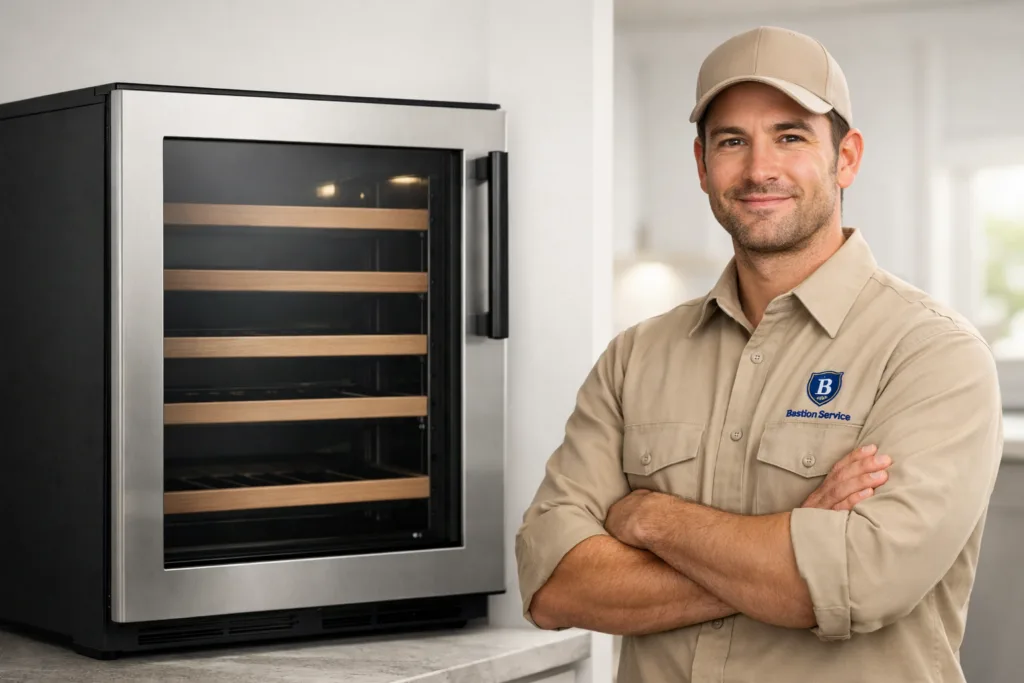
Stable storage depends on more than whether the cabinet feels cold at a glance. A U-Line wine cooler can seem to be running normally while still drifting above or below the set range, developing hot spots, or cycling in a way that puts unnecessary strain on fans and compressor components. Looking at the exact symptom pattern usually tells you whether the issue is likely related to airflow, controls, door sealing, drainage, or the cooling system itself.
Common U-Line wine cooler symptoms and what they may mean
Some problems are obvious, such as a cabinet that is no longer cooling. Others show up more gradually, including bottles that never seem to reach the expected temperature, a unit that runs longer than before, or moisture collecting where it did not used to. In Marina del Rey homes, these symptoms are often easiest to sort out when they are grouped by how the cooler behaves throughout the day rather than by one isolated event.
Cabinet is too warm
If the interior stays warmer than the setting, several faults are possible. A worn gasket can let room air leak in. Dust buildup on condenser components can make heat removal less efficient. A fan motor may be slowing down, a sensor may be reading inaccurately, or the controls may not be responding correctly to actual cabinet temperature. In some cases, warm storage points to start component trouble or a more serious sealed system problem.
Because multiple issues can create the same “not cooling” complaint, it helps to note whether the cooler is warm all the time, warms only during certain cycles, or cools somewhat but never fully stabilizes. That distinction often changes the repair path.
Cabinet is too cold or bottles are overchilled
Wine coolers are built for consistency, not extreme cold. If bottles feel colder than expected or parts of the cabinet begin freezing, the issue may involve a thermostat, thermistor, control board, or airflow imbalance. Overcooling is not just a comfort issue for storage conditions; it can also signal that the unit is no longer regulating itself properly.
Uneven temperature from top to bottom
When one section cools normally and another lags behind, airflow becomes a likely suspect. Interior fan problems, blocked vents, frost interference, or shelf loading that restricts circulation can all contribute. Uneven cooling is worth checking early because it often becomes a larger performance complaint over time.
Moisture, condensation, and frost problems
Water or frost inside a U-Line wine cooler usually means the appliance is struggling to manage air and moisture the way it should. That can happen when humid room air enters through a poor seal, when drainage is restricted, or when airflow and defrost behavior are no longer balanced.
Condensation around the door
Moisture near the gasket or on surrounding surfaces can suggest a sealing problem, door alignment issue, or repeated warm-air intrusion. Even a small gap can affect temperature stability and make the unit run longer to recover after each cycle.
Water collecting inside the cabinet
Pooled water may point to a drainage issue, excess condensation, or frost melt that is not moving out of the system correctly. If this keeps returning after cleanup, the underlying cause should be addressed rather than treated as a one-time spill or humidity event.
Frost buildup that comes back
Recurring frost can indicate moisture entering the compartment, weak gasket contact, fan trouble, or a defrost-related issue. Frost also interferes with normal airflow, which can make the cooler seem inconsistent even if the cooling system is still operating.
Noise, vibration, and cycling changes
Many homeowners first notice a problem because the cooler sounds different. A change in noise does not always mean a major failure, but it often provides useful clues about what part of the appliance is under stress.
Clicking or buzzing when the unit tries to start
If the cooler clicks repeatedly without cooling properly, the problem may involve the compressor start device, controls, or an electrical fault. A unit that struggles to start should not be ignored, since repeated failed starts can add wear and leave the cabinet warming between attempts.
Runs constantly or cycles too often
A U-Line wine cooler that rarely seems to shut off may be compensating for dirty condenser surfaces, air leaks, fan problems, inaccurate sensing, or a cooling system that is losing efficiency. Short cycling can point to control issues, sensor faults, or other interruptions in normal operation. Either pattern is a sign that the appliance is no longer maintaining temperature efficiently.
Rattling, fan noise, or cabinet vibration
Loose shelves and minor vibration can be simple fixes, but persistent rattling or fan noise can also mean a fan motor is failing, ice is interfering with blade movement, or mounting hardware has loosened. If noise changes appear together with warming, frost, or long run times, the symptom deserves prompt attention.
Control and display problems
When the display is blank, inaccurate, or unresponsive, the issue may be more than cosmetic. User interface faults, wiring problems, and control board issues can all affect how the cooler senses temperature and commands cooling. Sometimes the panel appears normal even when the internal reading is off, which is why actual cabinet temperature matters more than the display alone.
Repeated resets, flashing indicators, or settings that do not hold are especially important to note. Those patterns can help separate a simple control issue from a broader electrical or refrigeration problem.
When repair is usually worth scheduling
It makes sense to schedule service when the cooler cannot maintain the set temperature, moisture keeps returning, frost reappears after being cleared, the unit becomes unusually noisy, or it starts failing to start reliably. These issues rarely correct themselves, and continued operation can turn a manageable problem into a more expensive one.
- The cabinet warms even though the cooler is running
- The temperature swings more than it used to
- The unit runs nonstop or clicks repeatedly
- Condensation or water buildup keeps coming back
- The display stops responding or shows inconsistent behavior
- Fan noise or vibration appears along with cooling changes
Built-in installation conditions can matter as well. If airflow around the cabinet is compromised or heat is not being rejected properly, the cooler may show repeat performance complaints even when only one part has failed.
Repair or replace?
Many U-Line wine cooler issues are reasonable repair candidates, especially when the problem involves door gaskets, sensors, fan motors, controls, drainage, or start components. Replacement becomes a stronger consideration when there is a major sealed system failure, the cabinet has multiple overlapping problems, or the cost of repair approaches the value of the appliance.
Age is part of the decision, but it is not the only factor. A well-kept unit with one identifiable fault is different from a cooler that has been losing consistency for months, showing signs of compressor stress, and developing repeated moisture or control complaints. The most useful service visit should clarify what has failed, what condition the rest of the unit is in, and whether the repair path makes sense for the household.
What homeowners should have ready before a service visit
A few details can make diagnosis faster and more accurate. If possible, note whether the problem is constant or intermittent, whether the display changed before performance changed, and whether noise, condensation, or frosting appeared at the same time. It also helps to know if the unit has recently been cleaned, moved, or loaded differently than usual.
For homeowners in Marina del Rey, that kind of symptom history often helps narrow the issue sooner than a general “not working” description. Small details such as warming after the door closes, noise during startup, or water appearing only on certain days can point the technician in the right direction.
Why symptom-based diagnosis matters for wine storage
Wine coolers are not judged only by whether they produce cold air. They need to hold a stable environment with predictable cycling, balanced airflow, and working controls. A unit that is still partially cooling can still be failing in a way that affects long-term storage conditions.
That is why U-Line Wine Cooler Repair in Marina del Rey is most useful when the complaint is traced to the real source instead of guessing from one symptom. Whether the issue turns out to be a gasket, fan, sensor, control problem, or a larger refrigeration fault, the right next step starts with understanding how the cooler is actually behaving.