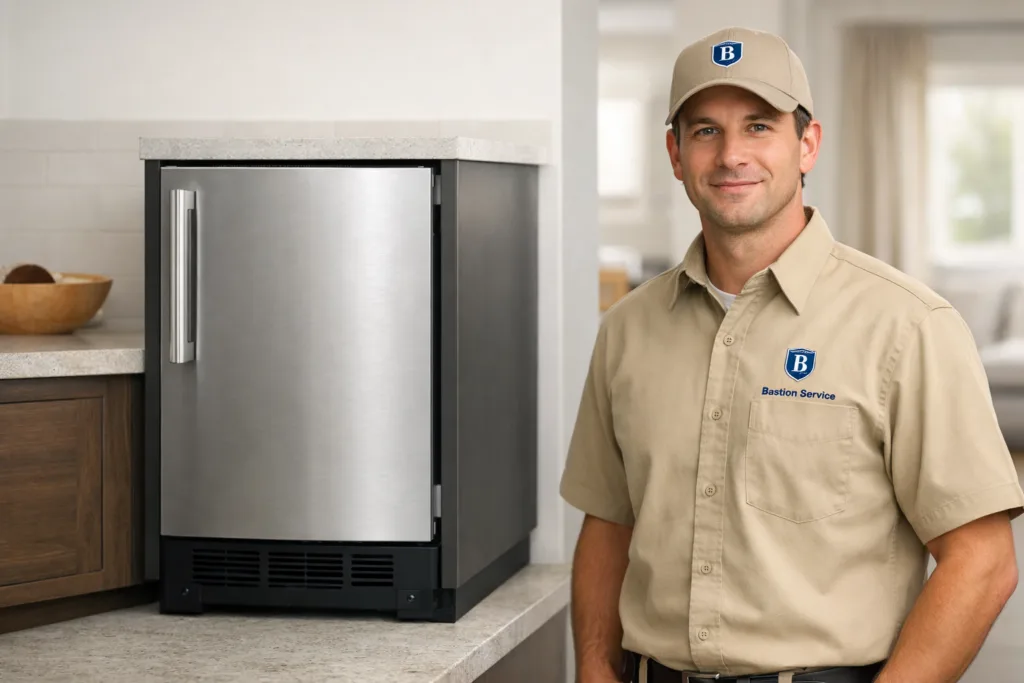
Ice makers fail in a few recognizable ways, but the cause is not always obvious from the symptom alone. A unit that makes no ice at all can have a very different problem from one that still makes ice slowly, leaks water, or forms a solid frozen mass in the bin. In a Marina del Rey home, the most useful starting point is to match what the machine is doing with the likely system involved.
Common U-Line ice maker symptoms and what they can mean
Undercounter ice makers depend on water supply, freezing performance, circulation, sensing, and harvest timing working together in the right order. When one part of that sequence breaks down, the symptom often points to a short list of likely faults.
No ice production
If the machine is on but the bin stays empty, the issue may involve the water inlet valve, fill tube, control system, temperature sensing, or the sealed cooling side that allows ice to form and release. Sometimes the machine will appear normal from the outside but never begin a full production cycle. In other cases, it may start and then stop before water enters or before ice is harvested.
This symptom is often best checked sooner rather than later, especially if the unit has already been reset multiple times without a lasting result.
Slow ice production
When a U-Line ice maker is still working but making less ice than usual, reduced water flow, mineral buildup, weak cooling performance, or harvest-cycle problems are common possibilities. Homeowners often notice this first during weekends, guests, or warmer weather inside the kitchen when demand is higher.
Slow production can seem minor, but it often means the machine is struggling through part of its cycle. That strain can lead to more obvious failure later.
Small, hollow, cloudy, or misshapen ice
Changes in cube shape or clarity usually point to inconsistent fill volume, water quality buildup, or freezing irregularities. Thin or undersized ice may mean the machine is not getting enough water. Clumped or oddly fused pieces can suggest trouble with release timing, bin conditions, or the way water is entering during the cycle.
These symptoms matter because ice quality is often an early warning sign. If the machine continues running with the same fault, it may eventually stop making usable ice entirely.
Leaking water around the unit
Leaks can come from a loose connection, drain issue, blocked line, pump-related problem on certain models, or an internal ice-making fault that causes overflow. Water under an undercounter unit should never be ignored, especially when cabinetry, flooring, or nearby finishes could be damaged.
If the leak appears only during active cycles, that timing can help narrow down whether the source is fill-related, drain-related, or tied to ice release.
Clumped ice or a frozen sheet of ice
When ice sticks together in the bin or forms a slab, the machine may be overfilling, failing to complete harvest correctly, or allowing melting and refreezing inside the storage area. This kind of symptom is frustrating because the machine may look like it is still producing, but the output is not usable in normal daily use.
Buzzing, clicking, or repeated cycling
Unusual sounds can point to a struggling valve, pump, fan, or mechanical component. Repeated attempts to start a cycle without finishing it may also suggest a control or sensor issue. New noises are important clues, particularly when they happen at the same point in each cycle.
Why the same symptom can have different causes
Ice makers are compact appliances with several systems overlapping in a small space. A “no ice” complaint, for example, could stem from no water entering, water entering but not freezing correctly, ice forming but not releasing, or a control problem preventing the cycle from advancing.
That is why part-swapping based on guesswork often does not solve the problem. A proper diagnosis looks at the appliance’s actual behavior: whether it fills, whether it cools properly, whether water circulates where applicable, whether the unit drains correctly, and whether the machine can complete a harvest sequence without stalling.
When a repair is usually worth considering
Many U-Line ice maker issues are repairable when the fault is isolated to a serviceable component such as a valve, sensor, drain-related part, pump component, switch, or control-related failure. Repairs also make sense when the rest of the machine is in solid condition and the problem has not caused broader damage.
In residential settings, timely service is especially helpful when:
- the machine has stopped making ice completely
- production has become unreliable or unusually slow
- water is leaking into surrounding cabinetry or onto the floor
- ice quality has changed noticeably
- the unit needs frequent resets to run again
When replacement may be the better path
Replacement becomes more reasonable when the ice maker has several problems at once, shows significant corrosion, has a history of recurring breakdowns, or would need major work compared with its overall condition. The question is not only whether the machine can be fixed, but whether the repair is likely to restore normal, everyday use without turning into a repeat problem.
For homeowners in Marina del Rey, that decision often comes down to age, reliability, visible wear, and how extensive the current failure appears to be after inspection.
Signs you should stop using the unit until it is checked
Some symptoms are more urgent than others. It is wise to pause use if you notice:
- water pooling under or around the appliance
- ice buildup interfering with the door, bin, or internal components
- electrical odor, repeated clicking, or abnormal buzzing
- the machine running continuously without producing normal ice
- evidence that nearby cabinet panels or flooring are getting wet
Using the machine in these conditions can lead to secondary damage or turn a smaller repair into a larger one.
What homeowners can notice before service
A few observations can make the symptom pattern easier to explain. It helps to note whether the unit has power, whether you hear water enter, whether the problem started suddenly or gradually, and whether the leak appears all the time or only during part of the cycle. If the machine makes some ice, it is also useful to note whether the pieces are small, cloudy, fused together, or melting into a clump.
Even simple details like “it hums but never fills” or “it leaks only when trying to make a batch” can help narrow the repair path.
U-Line ice maker service for Marina del Rey homes
In a residential kitchen, bar area, or entertaining space, an undercounter ice maker is expected to run quietly in the background. When it stops doing that, the best next step is a practical repair plan based on the actual failure rather than the most visible symptom. That approach helps determine whether the issue is a straightforward part replacement, a drainage or water-supply problem, or a larger cooling or control fault.
If your U-Line ice maker in Marina del Rey is making no ice, producing slowly, leaking, or creating unusable clumps instead of normal batches, addressing it early gives you the best chance of avoiding cabinet damage, wasted time, and repeat breakdowns.