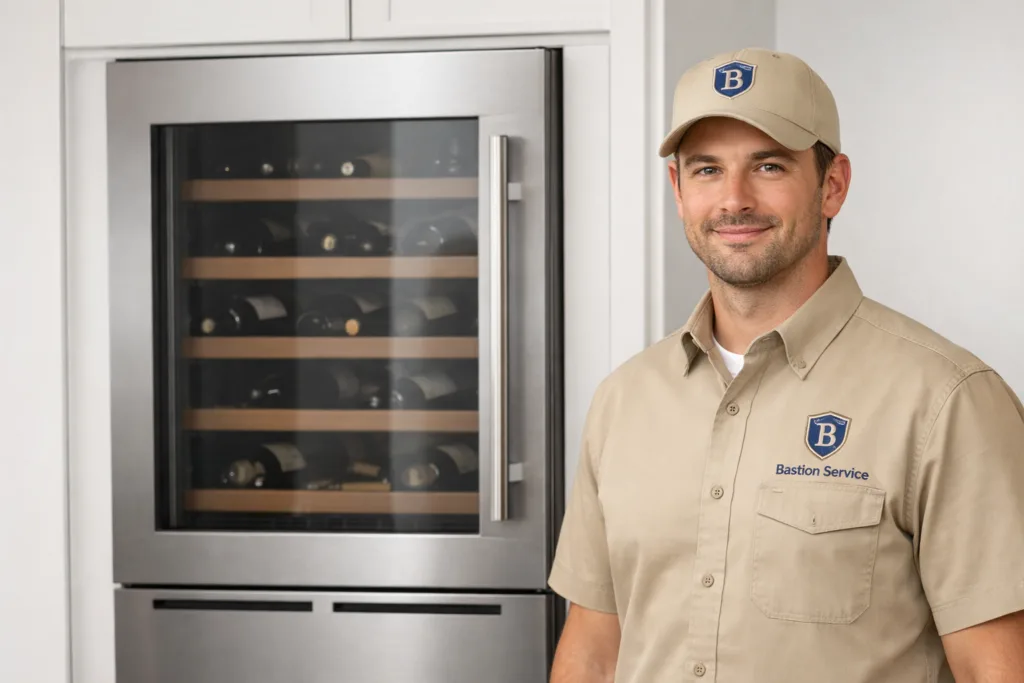
Wine coolers often show a small group of symptoms before a larger failure becomes obvious. If your Monogram unit is running warm, cycling too long, building condensation, or making new noises, the pattern usually points to an airflow, sensor, seal, drain, fan, or control problem rather than a single catch-all cause. Looking closely at the symptom pattern helps narrow down what is actually failing and whether repair is likely to restore stable performance.
Common Monogram wine cooler problems in Marina del Rey homes
In a residential kitchen, bar area, or built-in entertaining space, a wine cooler depends on steady airflow, accurate temperature feedback, and a tight door seal. When one part falls out of range, the results can overlap. A cooling complaint may start with an electronic issue, and a moisture complaint may begin with an airflow or gasket problem.
Not cooling enough
If bottles are no longer staying at the selected temperature, the cause may be a weak fan motor, dirty condenser area, sensor error, control fault, restricted airflow, or trouble in the compressor start circuit. Sometimes the display appears normal while the interior temperature drifts upward. That mismatch is a sign the unit needs testing rather than assumptions based only on the control panel.
Freezing or fluctuating temperatures
A wine cooler that gets too cold, partially freezes contents, or swings between warm and cold may have a thermistor issue, thermostat fault, control problem, or uneven air circulation inside the cabinet. When upper and lower sections do not hold temperature evenly, the issue is often related to internal airflow and not always to a major cooling system failure.
Condensation, water, or frost buildup
Moisture on shelves, fogging on glass, water under drawers, or frost on interior panels can point to a door gasket leak, a drain issue, or an airflow imbalance. If warm room air keeps entering the cabinet, the cooler may run longer than normal and collect more moisture over time. Catching this early can prevent added strain on other components.
Buzzing, clicking, rattling, or loud fan noise
Some operating noise is expected, but changes in sound matter. Repeated clicking can suggest compressor start trouble. Rattling may come from loose hardware or vibration. A louder-than-usual fan can indicate a worn motor, blade interference, or ice affecting airflow. Noise complaints are worth checking early because they often appear before full cooling failure.
Display or control problems
If the panel is unresponsive, settings do not stay where you place them, interior lighting behaves inconsistently, or the unit powers on but does not respond normally, the problem may involve the interface, wiring, switches, or main control board. Electronic faults can also affect cooling behavior, so they should be evaluated as part of the whole system.
How symptom patterns help identify the likely issue
Specific combinations of symptoms can help homeowners understand whether a repair visit is likely to focus on airflow, sealing, drainage, or controls.
- Warm interior with normal display: often associated with sensor problems, fan trouble, or control issues.
- Warm interior with frequent clicking: may point to compressor start problems or electrical faults.
- Condensation plus long run times: commonly linked to a poor door seal or warm air entering the cabinet.
- Frost with uneven cooling: may suggest airflow restriction, evaporator fan trouble, or repeated moisture intrusion.
- Noise without obvious temperature loss: can be an early warning of fan wear, vibration, or mounting issues.
These patterns do not replace testing, but they do help explain why one visible symptom can come from several different faults.
Why accurate diagnosis matters on a Monogram wine cooler
Monogram appliances are built with brand-specific controls, temperature management features, and finish expectations that make correct troubleshooting especially important. A cabinet that seems simply “not cooling” could be dealing with a door seal leak, stalled evaporator fan, inaccurate temperature sensing, or a control issue. Replacing parts based on guesswork can increase cost without solving the actual problem.
For homeowners in Marina del Rey, the value of service comes from identifying what the cooler is doing during operation, what components are causing the behavior, and whether the repair path makes sense for the condition of the unit.
When to schedule service
It is a good time to schedule Monogram wine cooler repair when the unit cannot hold temperature, runs constantly, develops recurring moisture, starts making new mechanical sounds, or stops responding properly at the controls. These issues rarely resolve on their own and often become more expensive if ignored.
You should also have the appliance checked if the cabinet feels much warmer than the display indicates, the door no longer closes firmly, or water keeps appearing inside or underneath the cooler. Those are signs that the fault may be affecting more than one part of the system.
When continued use can make the problem worse
Some wine cooler issues create extra wear every day the unit stays in service. A cooler that runs nonstop can overwork cooling components. Frost buildup can choke airflow and reduce temperature stability. A weak gasket can lead to ongoing condensation and longer cycles. Intermittent electrical behavior may progress to a full no-cool condition.
If your Monogram wine cooler in Marina del Rey is showing any of these patterns, limiting use until the problem is evaluated may help prevent a smaller repair from turning into a larger one.
Repair versus replacement considerations
Repair is often worthwhile when the problem is isolated to a serviceable part such as a fan motor, sensor, interface component, control issue, gasket, or drain-related fault, and the cabinet itself remains in good condition. Many wine cooler problems fall into this category, especially when the issue is caught before prolonged moisture or overheating affects other components.
Replacement becomes a more serious consideration when there is major sealed-system trouble, repeated breakdown history, significant moisture damage, or a projected repair cost that no longer fits the age and condition of the appliance. Built-in appearance and fit can also matter in the decision, particularly when the cooler is part of a finished residential space.
What homeowners can check before a repair visit
Before service, there are a few simple things worth confirming:
- Make sure the door is closing fully and not being pushed open by stored bottles or shelving misalignment.
- Check that interior vents are not blocked, which can cause uneven airflow.
- Confirm the temperature setting has not changed accidentally.
- Look for visible gasket gaps, repeated moisture, or frost accumulation.
- Notice whether unusual sounds happen constantly or only during certain parts of the cooling cycle.
These basic observations can help narrow down the source of the problem, but if the unit still shows unstable cooling, noise, or moisture, the next step is professional diagnosis.
What to note before you call
It helps to write down what the cooler is doing and when it started. Useful details include whether the display matches the actual cabinet temperature, whether the problem affects the whole unit or only one section, whether the noise is constant or intermittent, and whether condensation appears around the door or deeper inside the cabinet. Small details like these often make troubleshooting more efficient.
Household impact of wine cooler problems
Even when a wine cooler issue seems minor, the effect on a household can add up quickly. Temperature swings can affect storage quality, persistent fan noise can become disruptive in open living spaces, and moisture inside a built-in unit can raise concern about surrounding cabinetry. Addressing the problem early usually gives homeowners more repair options and a better chance of restoring quiet, stable operation.