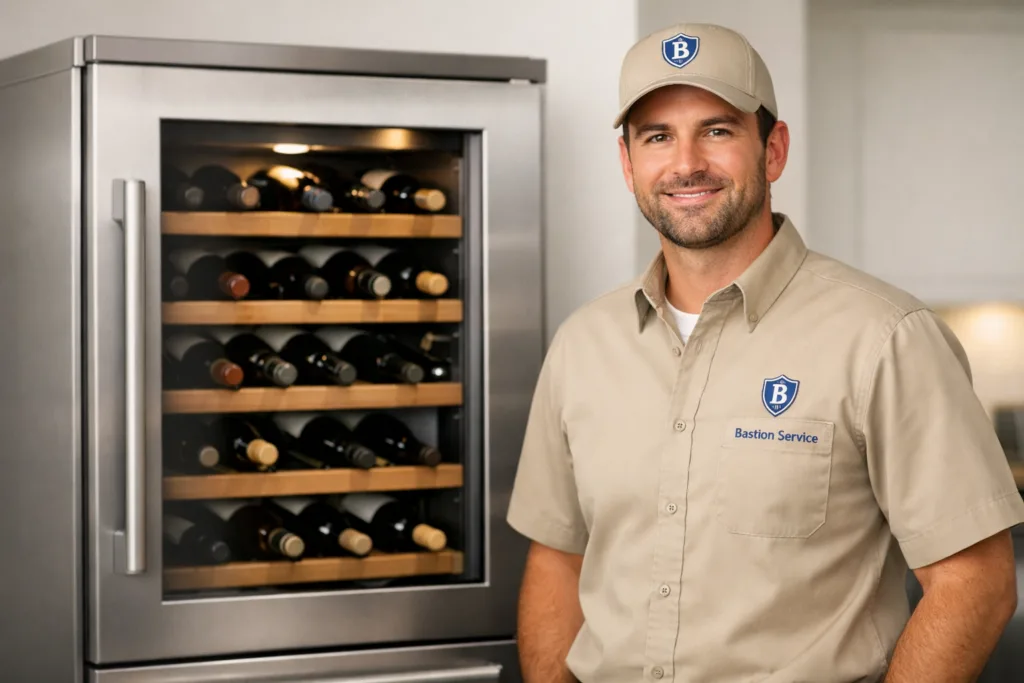
A True wine cooler that runs warm, cycles too often, or develops moisture inside can put stored bottles at risk faster than many homeowners expect. The same symptom can come from very different causes, so the most useful next step is identifying whether the problem is related to airflow, controls, door sealing, drainage, fans, or the refrigeration system itself.
Common True wine cooler problems in Marina del Rey homes
Most failures begin with a small change in performance rather than a full shutdown. Catching those early signs can help limit spoilage, reduce strain on major components, and keep a repair more manageable.
Not cooling enough or drifting above the set temperature
If the cabinet no longer holds a stable temperature, possible causes include dirty condenser coils, restricted ventilation, a faulty thermistor or thermostat, evaporator fan trouble, a control issue, or a sealed system problem. In some cases the cooler still seems to run normally, but the internal temperature slowly rises over hours or days.
This symptom matters because wine storage depends on consistency, not just occasional cooling. If shelf temperatures are fluctuating, the unit may be running without actually protecting the contents the way it should.
Too cold, freezing, or uneven temperatures
A wine cooler that overcools can be just as problematic as one that runs warm. Sensor errors, thermostat faults, control board problems, or poor internal airflow can cause one section to become too cold while another stays warmer than expected. Homeowners often notice this when bottles near one shelf feel significantly colder than bottles stored elsewhere in the same cabinet.
Water inside the cabinet or around the base
Moisture issues commonly trace back to a blocked drain, excess condensation, a door that is not sealing correctly, or a defrost-related malfunction. Even a small amount of recurring water should not be ignored. Over time, it can affect wood flooring, nearby cabinetry, labels, shelving, and the cooler interior.
Fan noise, buzzing, clicking, or nonstop running
New sounds usually mean something has changed mechanically or electrically. A worn fan motor, airflow obstruction, compressor strain, relay issue, or vibration from loose components can all change the way a True wine cooler sounds. If the unit is running almost constantly, that often points to a cooling loss or a control problem forcing longer run times.
Display or control problems
When the display goes blank, settings do not respond, temperatures read inaccurately, or lights behave erratically, the issue may involve the interface, wiring, switches, sensors, or main control board. These faults can look minor at first but still interfere with stable cooling.
Why symptom patterns matter on a True wine cooler
Two coolers with the same complaint can need very different repairs. For example, “not cooling” might be caused by poor airflow and maintenance buildup, or it could point to a more serious refrigeration failure. “Water inside” might be a drain issue, but it can also be a sign of temperature imbalance creating excess condensation.
That is why brand-specific service should focus on the actual pattern of failure: when the issue started, whether it is constant or intermittent, whether noise changed first, and whether the cooler still reaches temperature at any point during the day. Those details help separate a contained repair from a larger problem.
Signs you should schedule service soon
It is usually time to have the unit inspected when you notice any of the following:
- The cabinet no longer stays at a dependable temperature
- The cooler is running far more than usual
- You hear new clicking, rattling, buzzing, or fan noise
- Water is collecting under the unit or inside the cabinet
- Condensation keeps returning on the door or interior walls
- The display is inaccurate, blank, or unresponsive
- The door does not seem to close or seal properly
Waiting too long can turn a smaller issue into a more expensive one. A weak fan can worsen cooling imbalance, restricted airflow can lead to icing, and a stressed compressor may wear faster if the underlying cause is left unresolved.
When continued use can make the problem worse
Wine coolers are often left running because they still appear to be doing something, even when performance has already dropped. That can be risky. If the unit is warming, short cycling, icing up, or leaking, continued operation may add strain to the compressor, fan motors, and controls.
For Marina del Rey homeowners, one of the clearest warning signs is a cooler that seems active but cannot hold the same temperature from morning to evening. Once that inconsistency shows up, the appliance may no longer be protecting the contents reliably.
Repair or replacement: how to evaluate the choice
Not every malfunction means the cooler should be replaced. Many problems involving fans, sensors, controls, drainage, door gaskets, or electrical components can still make repair a sensible option. The better question is whether the problem is isolated and whether the appliance is otherwise in solid condition.
Replacement becomes more likely when there are multiple major issues at once, repeated cooling failures, or evidence of advanced sealed system trouble. Age, condition, repair history, and current performance all matter. A good diagnosis gives you a realistic way to compare repair value against the likelihood of future problems.
What to expect from residential service
For homeowners dealing with a malfunctioning True wine cooler, the goal of service is simple: determine what is failing, explain how it affects cooling, and outline the repair path in plain terms. That may lead to a straightforward component repair, a recommendation to address maintenance and airflow issues, or a candid conversation about whether further investment is worthwhile.
Useful service is not just about replacing parts. It is about understanding why the unit stopped holding temperature correctly and helping you decide on the next step based on the condition of the appliance, the severity of the fault, and the importance of preserving what is stored inside.