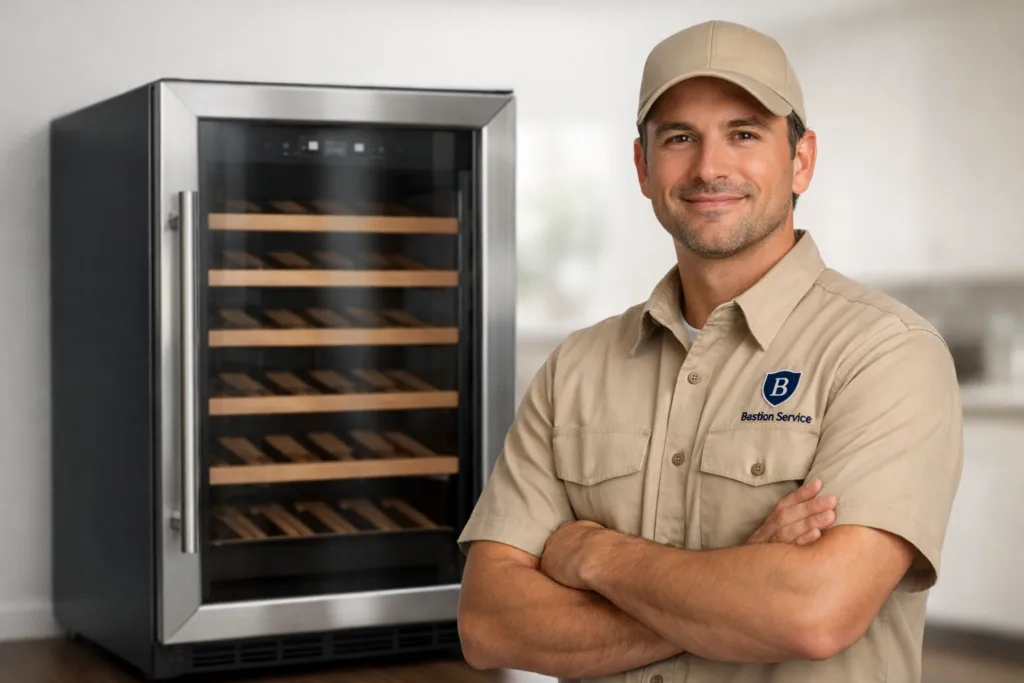
Temperature drift, interior moisture, and new operating noises are often the first signs that an EdgeStar wine cooler needs attention. Because wine storage depends on stability more than extreme cold, even a unit that still seems to be running can be underperforming in ways that affect both the appliance and the bottles inside.
Common EdgeStar wine cooler problems in Marina del Rey homes
Most service calls fall into a handful of symptom patterns. The visible problem is not always the failing part, which is why symptom-based troubleshooting matters with compact refrigeration appliances.
Not cooling to the set temperature
If the display shows one temperature but the cabinet feels noticeably warmer, possible causes include weak airflow, a failing fan motor, dirty condenser components, a control issue, or a door seal that is letting warm air in. Some homeowners also notice that the upper shelves feel different from the lower area, which can point to circulation trouble rather than a total cooling loss.
Overcooling or freezing inside the cabinet
Wine coolers are designed for controlled cooling, not freezing. When bottles, labels, or interior surfaces start getting too cold, the issue may involve a sensor reading incorrectly, a thermostat or control fault, or an airflow problem that causes certain sections to chill more aggressively than they should.
Condensation, fogging, or water around the unit
Moisture problems can show up as foggy glass, damp shelving, water under the appliance, or repeated condensation near the door. This may happen when the gasket is not sealing tightly, when a drain path is restricted, or when the cooler cannot maintain a stable interior environment. In a residential kitchen, bar area, or built-in cabinet, that extra moisture can also affect surrounding finishes.
Buzzing, clicking, rattling, or loud fan noise
A change in sound is often a clue that the unit is under strain. Rattling may come from vibration or mounting issues. Buzzing can be associated with compressor operation. Clicking may point to start or control problems. A rough or loud fan sound can indicate a motor beginning to wear out or blades contacting frost or debris.
Running constantly or failing to start
An EdgeStar wine cooler that never seems to cycle off may be struggling to reach its target temperature. One that does not start at all may have a power supply issue, control problem, start-device failure, or a more serious compressor-related fault. Both situations call for testing before any parts are replaced.
What these symptoms can mean
Many wine cooler issues overlap. A door that is slightly misaligned can look like a cooling failure. A bad fan can create warm spots that seem like thermostat trouble. Frost buildup can point to sensor problems, airflow restriction, or warm air entering the cabinet. That is why the most useful repair process starts with how the unit is actually behaving rather than guessing based on one symptom alone.
For homeowners in Marina del Rey, this matters most when the cooler still works part of the time. Intermittent performance often leads people to wait, but partial cooling, random noise changes, and inconsistent temperatures are exactly the kinds of symptoms that can worsen with continued use.
Signs the problem should be checked soon
- The cabinet temperature no longer matches the control setting
- Condensation keeps coming back after wiping the interior dry
- The cooler runs longer than usual or seems to run nonstop
- The door does not close firmly or the gasket looks uneven
- Noise has changed from the unit’s normal operating sound
- Only part of the cabinet feels cool
- The unit starts and stops unpredictably
These warning signs do not always mean the cooler is beyond repair, but they do suggest that continued operation could increase wear on fans, controls, or the compressor. If the appliance is storing bottles you want to keep at a consistent condition, earlier service usually gives you better options.
Repair or replace?
That decision usually depends on the age of the appliance, the type of failure, and whether the cabinet and cooling system are otherwise in good shape. Problems involving fans, door gaskets, drainage, accessible controls, and certain electrical components are often more reasonable to repair. Replacement becomes more likely when the unit has recurring cooling complaints, multiple failing components, or sealed-system issues that do not offer good value relative to the appliance itself.
A service visit should help answer a few practical questions: Is the cooler reaching and holding temperature? Is the problem isolated to one component or part of a larger wear pattern? Does the repair restore reliable operation, or is it likely to be followed by additional failures? Those answers are usually more helpful than judging the unit by symptoms alone.
What a service appointment should evaluate
With an EdgeStar wine cooler, a useful diagnosis typically includes verifying actual cabinet temperature, checking fan operation, inspecting airflow paths, evaluating the door seal, reviewing control response, and determining how the compressor is behaving during operation. That process helps separate minor repair issues from larger refrigeration problems.
For EdgeStar Wine Cooler Repair in Marina del Rey, the goal is straightforward: identify why the unit is unstable, explain whether the repair is practical, and help you protect the appliance and the collection it is meant to store.
Why small performance changes matter with wine coolers
Unlike a standard refrigerator, a wine cooler is expected to maintain a narrower and more consistent storage environment. A few degrees of drift, repeated warm-ups, or uneven cooling from shelf to shelf can matter more than homeowners expect. Even when there is no complete breakdown, unstable operation can make the unit less useful for long-term storage.
If your EdgeStar cooler is showing early signs of trouble, addressing the symptom pattern promptly is often the best way to prevent a minor issue from turning into a larger repair decision.