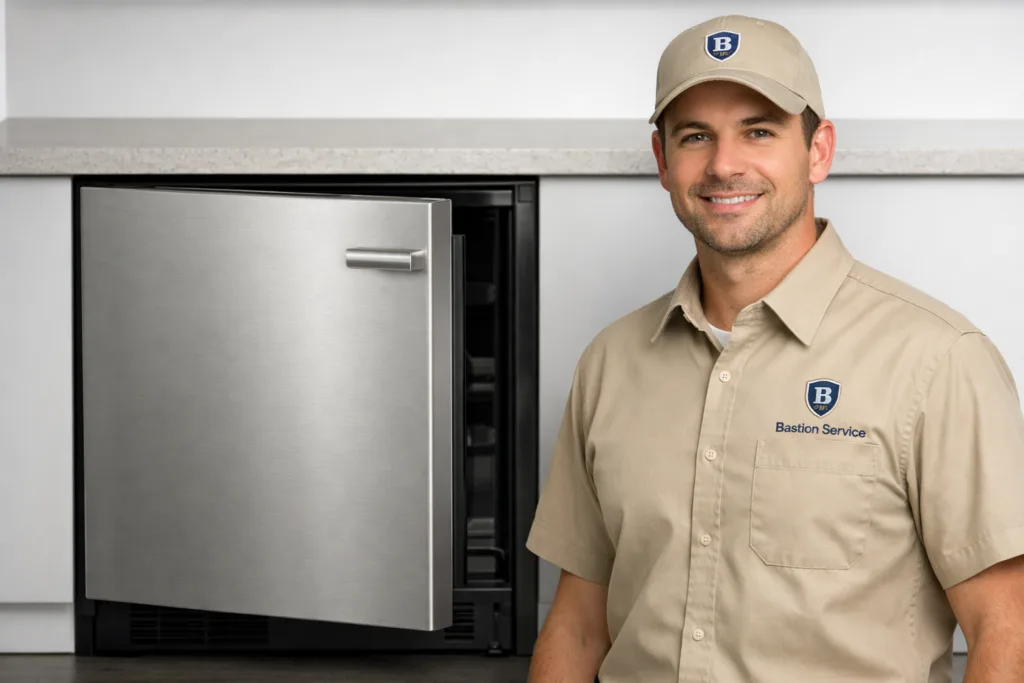
Temperature trouble in a U-Line refrigerator usually shows up before the unit fully stops working. You might notice drinks are not as cold, produce spoils faster, condensation forms on shelves, or the refrigerator seems to run far longer than usual. Those patterns matter because they often point to different systems inside the appliance, from airflow and sensors to drain components, fans, controls, or the sealed system.
Start with the symptom pattern
U-Line refrigerators are often installed in kitchens, bars, entertaining spaces, and built-in cabinet layouts where airflow, door movement, and temperature stability all matter. When performance changes, the most useful way to approach the problem is by looking at exactly how it changed. A refrigerator that is slightly warm all day suggests something different from one that cools normally for hours and then drifts upward later.
In Marina del Rey homes, this kind of symptom-based evaluation helps narrow down whether the issue is likely to be an isolated repair or a more involved cooling problem. It also helps homeowners avoid waiting too long on leaks, frost buildup, or unstable temperatures that can affect food storage and surrounding cabinetry.
Common U-Line refrigerator problems and what they may mean
Refrigerator not cooling enough
If the cabinet feels warmer than it should, several causes are possible. Restricted airflow, dirty condenser areas, evaporator fan trouble, sensor or thermostat faults, and control issues can all reduce cooling. In some cases, the refrigerator may still seem partly functional while failing to hold a steady temperature.
Helpful signs to watch for include:
- Food turning warm before the refrigerator alarmingly feels hot
- Cooling that improves after the door stays closed, then fades again
- A compressor that runs often without restoring normal temperature
- One section cooling better than another
Items freezing in the fresh-food section
When a refrigerator starts freezing vegetables, drinks, or dairy, the issue is often related to temperature regulation rather than raw cooling power. A faulty sensor, control problem, airflow imbalance, or seal issue can push cold air where it should not go or keep the unit running too long.
This symptom is easy to dismiss at first, but it often means the appliance is no longer controlling temperature accurately.
Water leaking inside or onto the floor
Leaks may come from a blocked drain path, heavy condensation, internal frost that later melts, poor door sealing, or leveling issues. In built-in installations, water does not always become obvious right away. It can collect under the unit or affect nearby flooring and trim before the source is noticed.
Repeated moisture is a sign worth addressing quickly, especially if you see:
- Pooled water under drawers or on shelves
- Drips near the door opening
- Water beneath the refrigerator
- Dampness returning after cleanup
Frost buildup or heavy condensation
Frost usually means excess moisture is entering the cabinet or defrost-related operation is not behaving as it should. A worn gasket, incomplete door closure, circulation issue, or control-related fault can all contribute. Condensation around the door or on interior surfaces often appears before more obvious frost accumulation.
If frost keeps returning after being cleared, the cause is usually still active and should be identified rather than managed repeatedly by hand.
Noisy operation or unusual cycling sounds
Not every refrigerator sound is a problem, but new or changing noises often tell an important story. Buzzing, repeated clicking, rattling, fan scraping, or louder compressor operation can indicate anything from a loose component to motor strain or difficulty starting.
The most useful details are when the noise occurs and whether it matches another symptom, such as warming, frost, or long run times.
Signs the refrigerator may be under strain
A U-Line refrigerator does not need to be completely dead to need service. Many units continue running while performance gradually declines. That can be harder to catch, but it is often when repair is most manageable.
Scheduling service makes sense when you notice:
- Temperatures rising or fluctuating from day to day
- The unit running almost constantly
- Frequent frost or recurring condensation
- Leaking that comes back after cleaning
- New noises that persist for more than a short period
- Food freshness dropping even though settings have not changed
Why built-in refrigerator issues should not be ignored
Many U-Line units are used in spaces where appearance and fit matter as much as performance. When a refrigerator is built into cabinetry or installed under a counter, restricted access can make early warning signs easier to miss. Small leaks, poor ventilation, and door alignment problems may continue longer before they are discovered.
That is one reason symptom changes in Marina del Rey homes deserve attention sooner rather than later. A minor cooling or drainage problem can become more expensive if it starts affecting surrounding materials or puts extended strain on major components.
Repair or replacement depends on the actual fault
It is not always necessary to replace a refrigerator just because cooling becomes unreliable. The better choice usually depends on the failed part, the condition of the rest of the unit, the age of the appliance, and whether there have been repeated recent repairs. Some problems are relatively contained, while others involve more complex or higher-cost correction.
A practical repair decision usually comes down to a few questions:
- Is the issue isolated to one system or part?
- Has the refrigerator otherwise been performing well?
- Is the current symptom likely to lead to additional failures if ignored?
- Will the repair restore stable, normal operation?
Once the cause is narrowed down, homeowners can make a more informed choice instead of guessing based on a warm cabinet, a puddle, or a new sound alone.
What a service visit should help you understand
A useful appointment should do more than confirm that the refrigerator has a problem. It should clarify what is causing the symptom, whether the unit can still be used safely in the meantime, and what the repair path looks like. For U-Line refrigerator repair in Marina del Rey, that means evaluating cooling behavior, door sealing, fan operation, drainage, controls, and overall symptom history together.
That kind of diagnosis helps homeowners decide whether to move forward with repair, monitor a minor issue, or consider replacement if the fault is extensive. When the refrigerator supports daily food storage, the best next step is usually the one based on how the appliance is actually behaving now, not on a guess from a single symptom.