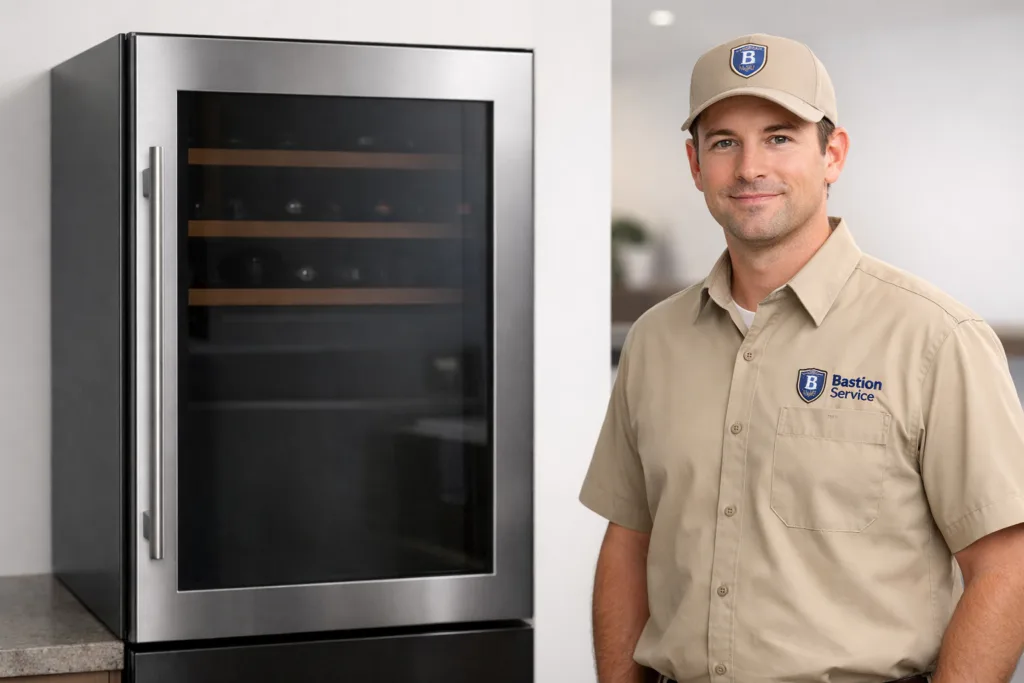
Small changes in a wine cooler can have a big effect on storage conditions. If bottles are no longer staying at the selected temperature, the cabinet feels damp, or the unit sounds different than usual, it helps to look at the symptom pattern before assuming the cause. On Miele wine coolers, airflow, sensors, sealing, fan performance, drainage, and control problems can all create similar complaints.
Common Miele wine cooler issues homeowners notice
Most service calls start with one of a few recurring signs: unstable temperature, constant running, fan or compressor noise, moisture inside the cabinet, or controls that do not respond normally. The useful part is figuring out whether the issue is limited to one system or whether one fault is triggering others.
Temperature swings or not cooling properly
If the cabinet is warmer than the setting, takes too long to recover after the door is opened, or seems colder in one section than another, the problem may involve a temperature sensor, control board, evaporator fan, frost restricting airflow, or a sealed system issue. In some cases, the cooler is technically running but not circulating cold air correctly, which makes the unit feel inconsistent rather than fully warm.
A gradual loss of cooling often points to performance decline somewhere in the refrigeration cycle. A sudden change can suggest an electrical or control-related fault. Both situations need attention if you want to avoid exposing wine to repeated temperature variation.
Unit runs constantly
A Miele wine cooler that rarely shuts off is usually compensating for something. Warm air may be entering through a worn or misaligned door gasket, airflow may be obstructed, condenser heat may not be dissipating properly, or the cooling system may be losing efficiency. If the cabinet temperature still drifts upward while the unit runs nonstop, that is a stronger sign that repair should not be delayed.
Built-in installation also matters. If ventilation is compromised or heat is not moving away from the appliance as intended, runtime can increase noticeably.
Condensation, water, or interior dampness
Moisture on shelves, around the door opening, or under the unit usually indicates either warm-air intrusion or a condensation management problem. A door that does not seal evenly can pull in humid air. A blocked drain path can allow water to collect where it should not. Condensation that keeps returning after wiping it down is usually a symptom, not the root problem.
This matters not only for storage conditions but also for nearby finishes. Persistent moisture can affect labels, shelving surfaces, and surrounding cabinetry.
Buzzing, rattling, clicking, or loud fan noise
Wine coolers are not silent, but a clear change in sound is worth checking. Rattling can come from mounting, leveling, or a vibrating panel. Buzzing may point to a stressed compressor or fan motor. Repeated clicking can indicate a start-related electrical problem or a control issue. If the sound starts around the same time as cooling loss or moisture buildup, those clues often belong to the same underlying fault.
Display or control problems
If the display flashes, settings change unexpectedly, buttons stop responding, or the unit behaves erratically after a power interruption, the issue may involve the interface, sensor feedback, or main control components. A responsive display does not always mean the cooling system is healthy, but unusual control behavior can be an important part of the diagnosis.
How symptom patterns help narrow down the cause
One of the more confusing parts of wine cooler repair is that very different failures can look alike from the outside. For example, a cabinet that feels too warm could be caused by weak cooling, blocked airflow, a fan that is not moving air through the compartment, or a sensor reading that causes incorrect cycling. That is why symptom timing matters.
- If the cooler is warm everywhere, the issue may be broader than airflow alone.
- If one area stays cooler than another, circulation or frost buildup becomes more likely.
- If condensation appears mostly near the door, sealing and air intrusion should be checked.
- If noise increases before cooling declines, fan or compressor strain may be part of the problem.
- If the unit acts up intermittently, controls or sensors may be involved.
These details help separate a manageable component repair from a larger refrigeration fault.
When service is worth scheduling
It is a good idea to schedule Miele wine cooler repair when the selected temperature is no longer being maintained, when new moisture appears repeatedly, or when operating sounds clearly change. Service is also worth considering if the door does not close or seal the way it used to, if frost appears where it normally does not, or if the control panel becomes inconsistent.
Waiting too long can lead to secondary problems. Continuous operation can place extra stress on the cooling system. Frost buildup can reduce airflow further. Moisture can spread beyond the cabinet interior. If the unit is built into custom cabinetry in your Marina del Rey home, early repair can help prevent avoidable cosmetic or material damage around the installation.
Repair or replacement: what usually makes sense
Many wine cooler problems are repairable, especially when they involve fans, switches, sensors, gaskets, drainage parts, or controls. Those issues can often be addressed without replacing the entire appliance. The decision gets harder when a major sealed system problem is confirmed, when the unit has several faults at once, or when overall condition has declined beyond the cooling complaint alone.
Useful factors include:
- Whether the fault is isolated or part of a broader performance decline
- The age and condition of the cabinet, shelves, controls, and door seal
- Whether cooling loss happened suddenly or gradually over time
- How severe the temperature instability has become
- Whether the estimated repair path is proportionate to the appliance’s condition
For many Marina del Rey homeowners, the goal is simple: restore stable storage without spending on unnecessary parts or guessing at the problem.
What to check before your appointment
A few observations can make diagnosis faster. Note the current temperature setting and whether the display is behaving normally. Pay attention to whether the problem is constant or intermittent. Listen for fan movement, clicking, or long run cycles. Check whether condensation appears mainly after frequent door openings or even when the cooler stays closed.
It also helps to notice whether the cabinet is uniformly warm, only partly cool, or cooling at first and then drifting. Those patterns often point toward different repair paths and can make the visit more productive from the start.
Why built-in wine coolers need careful evaluation
Miele wine coolers are often installed where airflow, cabinet fit, and finish protection all matter. A repair is not just about making the unit cold again. It is also about confirming that the appliance is ventilating correctly, the door is sealing as intended, moisture is being managed properly, and the surrounding installation has not been affected by excess heat or water.
That is especially important in homes where the wine cooler is part of a larger kitchen or bar layout. A targeted inspection can show whether the issue is contained to the appliance itself or whether installation conditions are adding stress to the system.
Focused help for Miele wine cooler repair in Marina del Rey
If your wine cooler is running too much, not cooling evenly, collecting moisture, or making unusual noise, the next step is to match the symptom to the system most likely at fault. Bastion Service helps homeowners in Marina del Rey evaluate Miele wine cooler problems based on actual operating behavior, appliance condition, and the repair path that makes the most sense for the home.