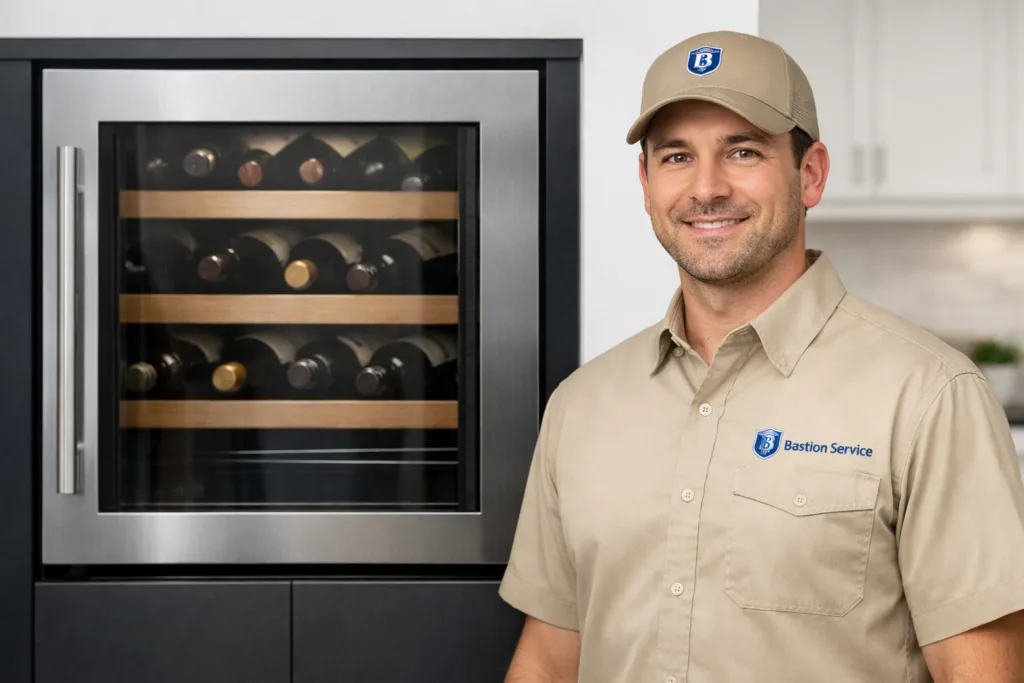
Warm bottles, unexplained moisture, and new noises usually point to a refrigeration issue that needs more than trial-and-error. On a U-Line wine cooler, similar symptoms can come from very different failures, including airflow restrictions, sensor problems, fan issues, door-seal leaks, control faults, or a larger cooling-system problem. Sorting that out early helps protect stored wine and prevents extra stress on the unit.
Common U-Line Wine Cooler Problems in Brentwood Homes
Most service calls start with one of a few patterns: the cabinet is not cooling correctly, the unit runs too long, water appears inside or underneath, frost starts building up, or the controls stop behaving normally. Because wine coolers are built for stable storage rather than rapid temperature recovery, even modest performance changes can matter.
Not cooling enough or drifting above the set temperature
If the cabinet feels only slightly warm one day and noticeably warmer the next, the problem may involve the temperature sensor, thermostat logic, poor evaporator airflow, dirty condenser areas, or a failing compressor-related component. Some units cool unevenly, with different temperatures from top to bottom, which can also point to circulation trouble inside the cabinet.
When a wine cooler is not holding a steady range, the issue rarely improves on its own. Continued use can lead to longer run times, more wear on the cooling system, and less predictable storage conditions.
Running constantly or making unusual noise
A U-Line wine cooler that seems to run all day may be trying to overcome heat buildup, restricted airflow, weak fan performance, or leaking cold air around the door gasket. Noise changes can help narrow the source. A soft hum is expected, but repeated clicking, rattling, buzzing, fan scraping, or a sudden increase in operating sound often means a specific component is struggling.
Noise does not always mean a major failure, but a change in sound paired with reduced cooling is a strong sign that service is needed.
Water inside the cabinet or on the floor
Moisture problems often come from condensation, drain restrictions, frost melt, or a door that is not sealing as tightly as it should. In some cases, the unit is still cooling while water collects, which can make the problem seem minor. It usually is not. Repeated moisture can affect nearby flooring, insulation, shelving, and electrical components inside the appliance.
Frost or ice buildup
Frost along the back wall, around vents, or near interior panels usually indicates that air movement or temperature sensing is off. A poor door seal can also let humid air enter and freeze in the wrong place. As frost spreads, airflow gets worse, temperature readings become less accurate, and the cooler can begin cycling improperly.
Display, button, or alarm problems
If the display is blank, the controls stop responding, or alarms appear without a clear reason, the root cause may be electronic, sensor-based, or tied to actual cooling loss. This is one of the more important areas to diagnose correctly, because replacing a control board without confirming the cause can leave the original problem unresolved.
Why Symptom Patterns Matter
Compact refrigeration products can be deceptive. A wine cooler that is warm inside may have a simple airflow or fan issue, or it may have a much larger sealed-system failure. A unit with water inside may have a drain problem, or it may be icing up because of sensor or circulation trouble. The right repair decision depends on how the symptoms appear together, not just on one complaint by itself.
That is especially important when the cooler still works part of the time. Intermittent cooling, periodic alarms, and occasional frost often suggest a problem that is progressing rather than a one-time inconvenience.
Signs You Should Schedule Service Soon
If the unit has stopped cooling completely, service should be arranged promptly. It is also smart to schedule a visit when the cooler is still partially working but showing a pattern that keeps returning.
- The interior temperature keeps rising or swings noticeably
- The cooler runs almost nonstop
- Water keeps reappearing inside or under the unit
- Frost returns after being cleared
- The display or controls work intermittently
- New clicking, buzzing, or fan noise has started
- The door no longer closes or seals firmly
Waiting too long can turn an isolated part failure into broader performance issues, especially if the fan, airflow path, or cooling system is already under strain.
Repair or Replace: What Usually Makes Sense
For many Brentwood homeowners, the answer depends on the exact failed part, the age of the wine cooler, and the condition of the cabinet as a whole. Repairs are often worthwhile when the issue is limited to a fan motor, sensor, control component, gasket, or drain-related problem. Those failures are usually easier to isolate and more practical to address when the rest of the unit is in good shape.
Replacement becomes a more serious consideration when the diagnosis points to major sealed-system trouble, multiple overlapping faults, or an older unit with recurring cooling complaints. In those cases, the question is not just whether the cooler can be repaired, but whether the repair path is reasonable for the household.
What You Can Check Before the Appointment
A few observations can make the service visit more productive:
- Note whether the cabinet is fully warm or only slightly off
- Check whether the problem is constant or comes and goes
- Look for visible frost, standing water, or condensation
- See whether the door closes evenly and the gasket sits flat
- Listen for fan noise, clicking, or changes in compressor sound
- Make sure surrounding ventilation is not blocked
These checks do not replace testing, but they help create a clearer picture of what the appliance is doing before any parts are considered.
A More Focused Approach to Wine Cooler Repair
Wine coolers need stable temperature control, consistent airflow, and reliable electronics in a compact cabinet. That makes them different from standard kitchen refrigeration. When a U-Line unit starts drifting warm, collecting moisture, or making new sounds, the most useful next step is to identify the exact failure and determine whether repair is practical based on the appliance’s condition and repair path.