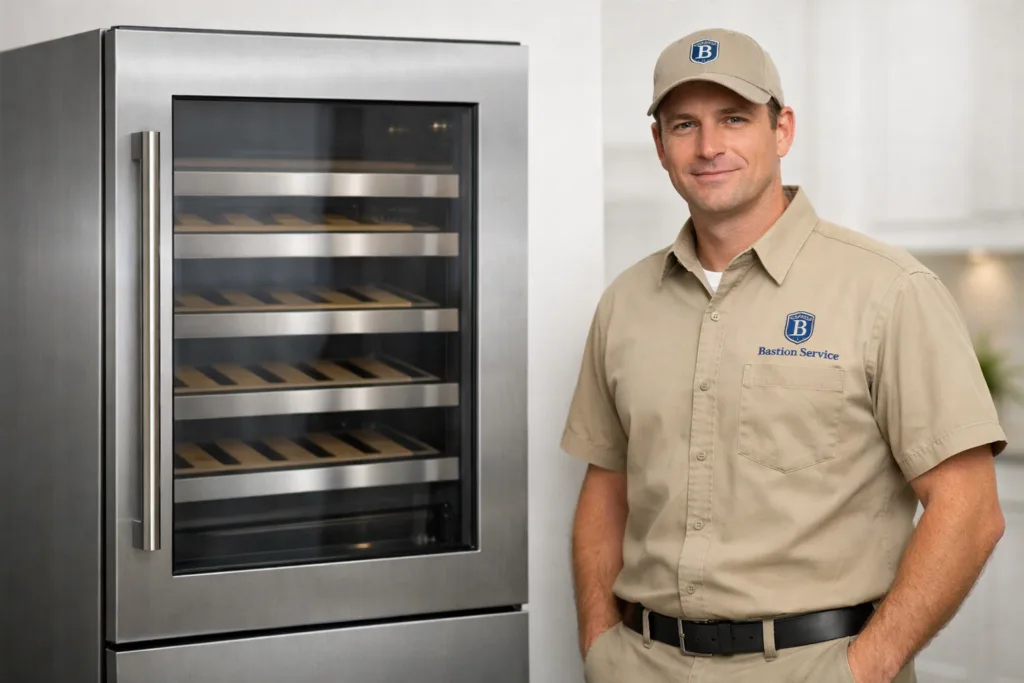
Start with what the wine cooler is actually doing

Monogram wine coolers can fail in ways that look similar on the surface but come from very different causes. A cabinet that feels warm may have an airflow problem, a weak fan, a dirty condenser area, a bad sensor, or a cooling-system issue. A cabinet that turns too cold can point to inaccurate temperature sensing, control trouble, or a unit that is no longer cycling correctly.
Watching the symptom pattern usually tells more than a single temperature reading. If the cooler drifts warm in the afternoon, runs loudly at night, forms condensation near the door, or cools unevenly from top to bottom, those details help narrow down whether the problem is mechanical, electrical, or related to door sealing and airflow.
Signs the problem may be cooling-related
- The cabinet never reaches the set temperature.
- Bottles feel warmer than expected even though the display looks normal.
- The compressor runs for very long stretches or seems to run constantly.
- Cooling improves temporarily after a power reset, then slips again.
- One section of the cooler stays much warmer or colder than the rest.
What temperature swings often mean
Temperature instability is one of the most common complaints with residential wine coolers. In many cases, the issue is not that the unit has stopped completely, but that it can no longer maintain a steady storage range. That can happen when interior air is not circulating properly, when the thermistor is reading cabinet conditions incorrectly, or when the control board is not responding the way it should.
Door-related problems also matter more than many homeowners expect. A slightly misaligned door, a worn gasket, or shelves and bottles pushing against the seal can allow warm air into the cabinet. That creates extra moisture, longer run times, and inconsistent cooling that can look like a major internal failure even when the root cause is simpler.
Symptoms that often point to sensor or control problems
- The displayed temperature does not match the actual cabinet feel.
- The unit overcools and begins freezing bottles near the back wall.
- The cooler cycles on and off at odd times without stabilizing.
- The controls respond inconsistently or reset unexpectedly.
- The interior light or display acts up along with cooling changes.
When fan noise, buzzing, or clicking should not be ignored
A wine cooler is never completely silent, but new or changing noises usually mean something has shifted. Rattling may come from vibration or loose mounting. Buzzing can be related to the compressor or fan motor. Clicking at startup may point to electrical starting components or a compressor struggling to engage. A scraping or uneven fan sound can mean the fan blade is obstructed, icing is present, or the motor is wearing out.
Noise matters because it often appears before full cooling failure. In Brentwood homes, catching the change early can help prevent longer compressor run times, unstable temperatures, and unnecessary strain on other components.
Condensation, leaks, and moisture inside the cabinet
Water inside or under a Monogram wine cooler does not always mean a cracked line or major internal leak. Many moisture complaints come from a blocked drain path, heavy humidity entering through a poor seal, or a leveling issue that affects how water moves through the unit. Condensation around the door frame can also suggest warm air intrusion rather than a cooling-system fault.
If moisture is left unresolved, it can lead to odor, cabinet staining, corrosion, and damage around nearby flooring. If the cooler is both leaking and struggling to hold temperature, those symptoms should be evaluated together rather than treated as separate problems.
Moisture issues homeowners commonly notice
- Water pooling under the front of the unit.
- Droplets forming on shelves or inner walls.
- Persistent fogging or condensation near the glass.
- A musty smell after repeated moisture buildup.
- Visible gasket gaps or a door that no longer closes smoothly.
Power and display problems that need service
If the unit is unresponsive, shuts off intermittently, or trips a breaker, the issue may involve wiring, startup components, the control board, or power-supply failure inside the appliance. Display glitches can also be more than cosmetic. On a wine cooler, a faulty display or erratic controls can affect how the unit senses temperature and how long it runs.
Because electrical symptoms can overlap with cooling complaints, replacing parts by guesswork often wastes time and money. This is where a clear diagnosis and a practical repair plan are most useful, especially when the cooler still powers on but performs unpredictably.
Helpful checks before scheduling repair
There are a few simple things homeowners can look at before service. Make sure the door closes fully and the gasket is making full contact. Check that bottles or shelves are not blocking airflow. Confirm the unit has proper ventilation clearance and that the condenser area is not heavily clogged with dust. If the issue started after the cooler was moved or after a power interruption, that detail is worth noting.
These checks can help identify obvious causes, but they do not replace service when temperature control remains unreliable, the unit is making new noises, or water is collecting inside or beneath the cabinet.
When repair is usually worth it
Many Monogram wine cooler problems are repairable when the failure is limited to a fan motor, thermistor, control issue, door gasket, drain blockage, switch, or another accessible component. These are often the kinds of problems that cause poor performance without meaning the entire appliance is at the end of its life.
Repair becomes harder to justify when the cooler has multiple failing systems, repeated recurring issues, or major sealed-system trouble on an older unit. The best decision depends on the exact fault, the condition of the cabinet, and whether the repair will restore stable long-term performance rather than only a temporary improvement.
When to stop using the wine cooler
It is smart to pause normal use if the cabinet is no longer holding temperature, is freezing contents, is producing burning smells, is tripping the breaker, or has active water buildup around electrical areas. Continued operation in those conditions can increase wear on the compressor, fan motors, and control components.
If your Monogram wine cooler in Brentwood is showing a combination of cooling loss, condensation, noise, or erratic controls, the most effective next step is symptom-based diagnosis rather than repeated setting changes or random part replacement. That approach usually leads to a faster answer on whether the unit should be repaired and what the repair path is likely to involve.