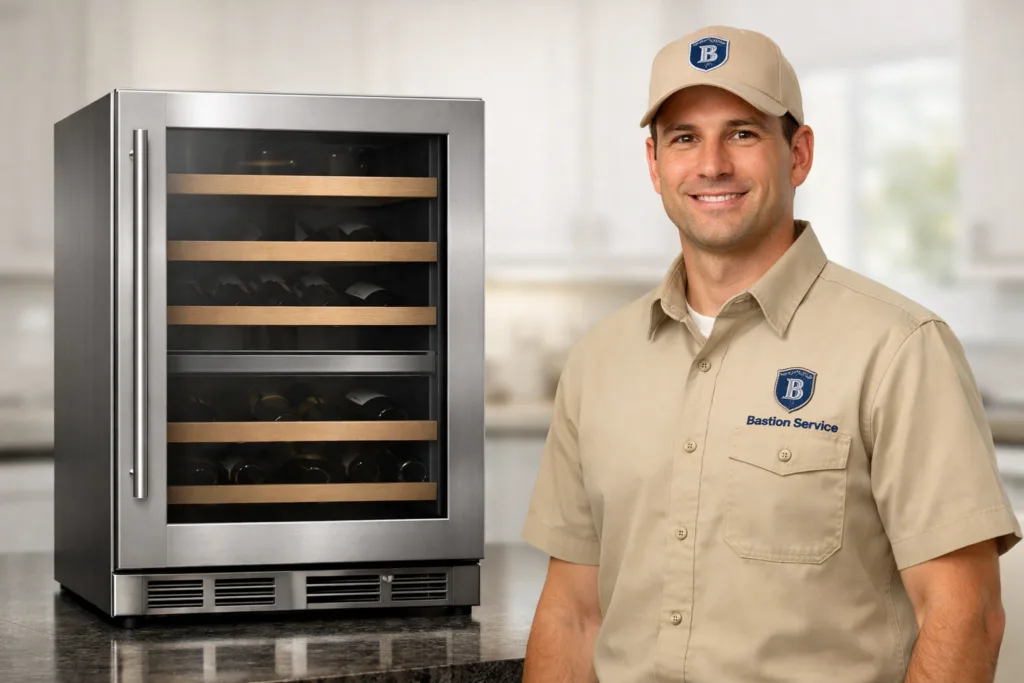
Small temperature changes matter in a wine cooler, especially when you are trying to protect bottles intended for longer storage. When a Perlick unit starts running warm, overcooling, collecting moisture, or making unfamiliar noise, the symptom pattern usually tells you where to look first. The most important step is separating a simple airflow or control issue from a larger refrigeration problem before the cooler is pushed harder than it should be.
What different symptoms often mean
Not every cooling complaint points to the same failed part. Two units can both seem “not cold enough” while the actual causes are completely different. In Brentwood homes, the most common patterns usually fall into a few categories: temperature instability, airflow problems, moisture buildup, electrical or control faults, and mechanical noise.
Running warm or not cooling enough
If the cabinet temperature stays above the setting, the issue may involve restricted airflow, a weak evaporator fan, a control problem, a sensor reading incorrectly, dirty condenser conditions, or a compressor start and run problem. A wine cooler that is slightly cool but never reaches the target temperature often needs testing rather than guesswork, because the unit may still be operating while failing to cool efficiently.
Too cold or freezing bottles
Overcooling can be just as concerning as running warm. This often points to thermostat or thermistor problems, control board faults, or poor fan regulation inside the cabinet. If the temperature swings sharply from one day to the next, the control system may not be reading or responding correctly.
Condensation, frost, or water under the unit
Moisture issues usually come from one of three places: warm air entering through a weak door seal, frost forming because of an airflow problem, or water failing to drain as intended. Condensation on the glass, damp shelving, or water near the toe-kick area can all be signs that the unit needs service before surrounding cabinetry is affected.
Buzzing, clicking, rattling, or fan noise
New sounds are often an early warning sign. A clicking cooler that struggles to start may have electrical starting issues. Rattling can come from loose panels or vibration. A grinding or uneven airflow sound may point to a fan motor wearing out. Noise by itself does not confirm a major failure, but it usually means the unit should be checked before performance drops further.
Signs the problem is getting worse
Wine coolers do not always fail all at once. Many problems build gradually, which is why homeowners often notice one small change before a larger one follows. A unit that runs longer than usual, shows occasional condensation, or drifts a few degrees off the setting may still appear usable while underlying components are under extra strain.
- The cooler runs almost continuously
- The display setting and actual cabinet temperature do not match
- The door area feels damp or warm air seems to enter easily
- Cooling returns briefly and then fades again
- The unit becomes noisier during startup or shutdown
- Moisture or frost keeps reappearing after being wiped away
Ignoring these signs can make a manageable repair more expensive. A struggling fan, poor door seal, or electrical start issue can place extra demand on the cooling system if the appliance keeps running without correction.
Why Perlick wine coolers need symptom-based diagnosis
Perlick wine coolers are designed to maintain stable storage conditions, so even a modest performance change should be taken seriously. Premium built-in units can present overlapping symptoms, where a control fault looks like a cooling issue or an airflow problem mimics a sealed-system problem. That is why clear diagnosis and a practical repair plan matter more than replacing parts based on assumption.
A focused service visit should clarify whether the fault is tied to:
- Temperature sensors or thermostat response
- Interior evaporator fan operation
- Condenser airflow and heat removal
- Door gasket sealing and moisture entry
- Drain blockage or frost-related water issues
- Compressor startup components or compressor operation
- Display, switch, or electronic control behavior
Repair or replacement: how homeowners usually decide
Many Perlick wine cooler problems are repairable when the issue is isolated to controls, sensors, fans, switches, gaskets, drains, or startup components. Those repairs are often more straightforward than homeowners expect, particularly when the cabinet itself is in good condition and the unit has otherwise been dependable.
Replacement becomes a more serious consideration when the problem involves major sealed-system failure, compressor failure, repeated cooling breakdowns, or multiple faults at the same time. The key is understanding whether the current symptom reflects one failed component or a broader refrigeration-system decline.
Repair is often worth considering when
- The issue appeared recently and the unit had been holding temperature well
- The problem is limited to noise, controls, fan behavior, or moisture
- The cooler still runs but does not perform correctly
- The cabinet fit and built-in installation make replacement more disruptive
Replacement may be more practical when
- The cooling system has a major internal failure
- The same cooling problem keeps returning after prior repair
- Several systems are failing at once
- The repair path is extensive compared with the condition of the appliance
Simple checks homeowners can make before service
There are a few basic observations that can help narrow the issue without taking anything apart. Check whether the door closes evenly and seals firmly all the way around. Confirm that the temperature setting has not changed unexpectedly. Listen for whether the fan sound is steady or intermittent. Look for heavy frost, pooled water, or condensation patterns that return quickly after cleaning.
It also helps to note whether the cooler is always warm, only warm after the door opens frequently, or cold in some sections and warm in others. Those details can help distinguish a control issue from an airflow issue. If the unit is clicking repeatedly, failing to start, or warming quickly, it is best to stop forcing it through repeated cycles and have it evaluated.
When to schedule Perlick wine cooler repair in Brentwood
Service is a smart next step when the cooler can no longer hold a stable temperature, when bottle storage conditions are inconsistent, or when moisture and noise suggest a developing component failure. For households in Brentwood, the goal is not only restoring cooling, but also protecting the appliance, the surrounding installation, and the contents inside.
A good repair decision should leave you with a clear answer: whether the problem is a targeted fix, whether continued use risks further damage, and whether the unit remains a practical candidate for repair. That keeps the next step straightforward and helps avoid spending money in the wrong direction.