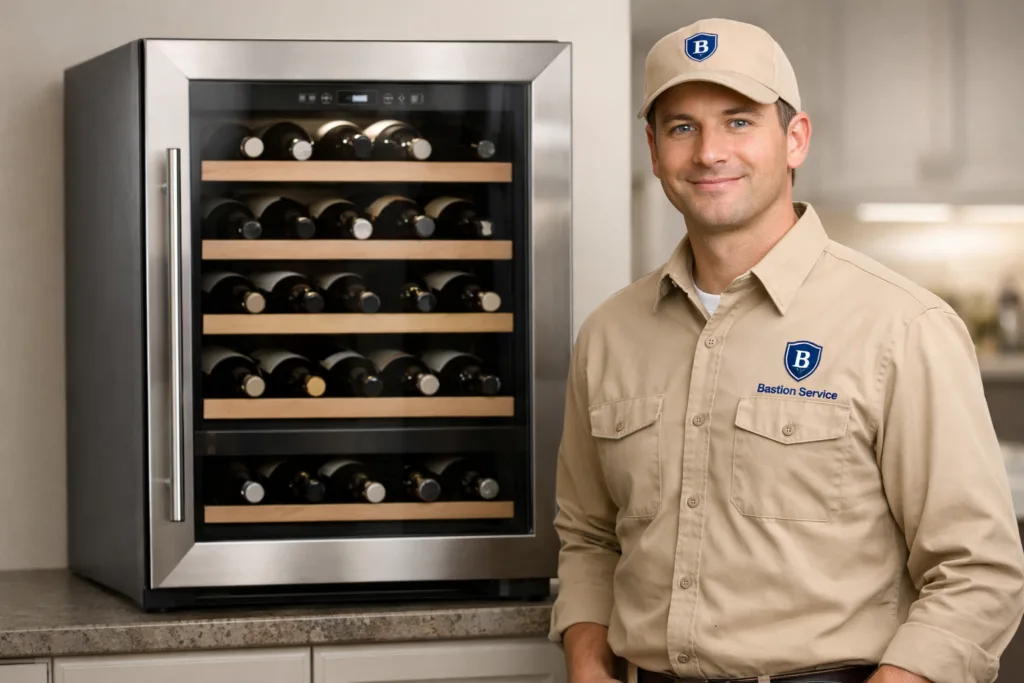
An EdgeStar wine cooler that starts running warm, develops moisture, or cycles oddly can put a collection at risk faster than many homeowners expect. Because temperature loss, fan noise, leaks, and control faults can come from very different causes, it helps to evaluate the exact symptom pattern before any repair decision is made. Guessing at parts too early can waste time, increase wear on the unit, and leave the original problem unresolved.
EdgeStar wine cooler issues homeowners notice most
Most service calls begin with a few common complaints. The cooler may stop holding the set temperature, one zone may drift while the other seems normal, the display may show an inaccurate reading, or the cabinet may run constantly without getting cold enough. Some homeowners also notice puddling, condensation on the glass or shelves, frost buildup, clicking, buzzing, or a fan sound that has changed.
These symptoms do not all point to the same repair. A cooling complaint may involve restricted airflow, dirty coils, fan trouble, sensor errors, door sealing problems, or a sealed-system fault. Water inside the cabinet may trace back to drainage or humidity entry, while repeated frosting can suggest an airflow or control issue. The underlying cause matters because the right fix for one symptom can be completely wrong for another.
What common symptom groups can mean
Not cooling or running warm
If the cabinet temperature stays above the setting, attention usually turns to airflow, condenser performance, fan motors, sensors, control response, and compressor operation. Built-in placement can also matter if ventilation is restricted. A unit that runs for long periods without reaching temperature is usually under strain, and continued use in that condition can lead to added wear.
Too cold, freezing, or uneven temperatures
Wine coolers are designed to stay stable, not freeze bottles or create hot and cold spots across the shelves. If the interior overcools, freezes near vents, or behaves differently from top to bottom, likely causes include sensor problems, circulation issues, control faults, or a door that is not sealing consistently. In dual-zone models, one section working normally does not rule out a problem in the other.
Condensation, water, or frost buildup
Moisture on the door, shelves, or floor can happen when warm air enters the cabinet, a drain is not clearing properly, or the cooling cycle is no longer balanced. Frost on the back panel or near evaporator areas often points to a defrost, airflow, or control problem. In Brentwood homes, persistent moisture is worth addressing promptly because it can affect surrounding cabinetry, flooring, and labels on stored bottles.
Noise, clicking, or constant running
A wine cooler will make some normal operating sounds, but new or louder noises are worth noting. Rattling may come from vibration or loose panels. Buzzing or repeated clicking can happen when the compressor is struggling to start. A scraping or humming fan may signal motor wear or interference. If the unit seems to run all day and still does not hold temperature, that is usually a sign of a fault rather than normal operation.
Display or control problems
When touch controls stop responding, the display blinks, temperatures change unexpectedly, or the reading does not match actual cabinet conditions, the issue may be electronic rather than mechanical. Control boards, user interface components, sensors, and wiring may all need to be tested. This is one of the situations where a clear diagnosis can prevent unnecessary parts replacement.
Signs the problem is becoming more urgent
Some issues can wait a short time for scheduling, but others should be addressed sooner. It is wise to arrange service if the cooler cannot maintain temperature, begins freezing unexpectedly, leaks repeatedly, develops heavy frost, or starts making a new persistent noise. Erratic cycling, a tripped breaker, or a display that behaves unpredictably also points to a problem that can worsen with continued use.
Even when the unit still runs, declining performance often means the repair path becomes harder the longer it is delayed. A weak fan can put extra stress on cooling components. A worn gasket can increase run time and humidity. A drainage problem can become a cabinet or flooring issue. Acting earlier usually gives a better chance of limiting secondary damage.
What homeowners can check before an appointment
Before service, a few basic observations can help narrow down the problem:
- Confirm the unit has steady power and the outlet is working properly.
- Make sure the door closes fully and the gasket is not twisted, torn, or dirty.
- Check that interior shelves, bottles, or liners are not blocking air movement.
- If the unit is built in, verify that ventilation openings are not restricted.
- Note whether the issue affects one zone or both.
- Pay attention to whether water appears inside the cabinet, under the unit, or around the door.
- Listen for when unusual noises occur, such as at startup, during cooling, or all the time.
These checks do not replace repair, but they can make the visit more efficient by giving a clearer picture of how the problem behaves in everyday use.
Repair versus replacement considerations
For most households, the decision comes down to the failed component, the age of the cooler, the condition of the cabinet and door, and whether the issue is isolated or part of broader system wear. Repairs are often worthwhile when the problem involves serviceable parts such as fans, sensors, controls, gaskets, or drainage components and the rest of the unit is in good shape.
Replacement becomes a stronger consideration when the cooler has repeated major failures, poor overall condition, or a sealed-system problem that is not practical relative to the unit’s age and value. That choice is easier after the fault is identified through testing rather than assumed from symptoms alone.
Why wine cooler diagnosis is different from standard refrigerator repair
A wine cooler is a more specialized appliance than a standard kitchen refrigerator. Stable storage temperatures, controlled airflow, and lower vibration all matter more, especially when the unit is used for long-term storage. EdgeStar models can also vary in control layout, zone design, and ventilation requirements, so the same symptom may not lead to the same repair on every model.
For homeowners in Brentwood, the goal is usually straightforward: restore stable cooling, stop moisture or noise problems, and determine whether the repair is sensible for the condition of the appliance. A symptom-based evaluation is the best way to get there without unnecessary guesswork.