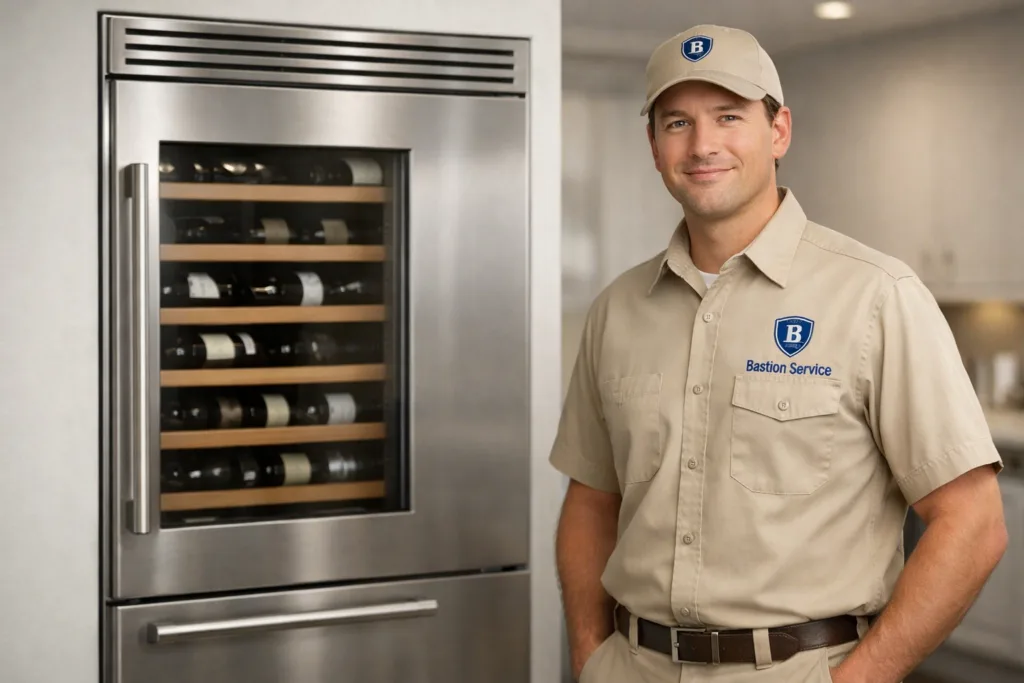
A Sub-Zero wine cooler that starts running warm, cycling strangely, or showing moisture around the door can put stored bottles at risk faster than many homeowners expect. Wine storage depends on steady conditions, so even a problem that seems minor at first can affect temperature consistency, humidity balance, and overall cabinet performance.
Common Sub-Zero wine cooler symptoms in Brentwood homes
Most wine cooler problems show up in one of a few ways: unstable temperature, unusual sound, visible moisture, or control behavior that no longer matches what the cabinet is actually doing. While those symptoms can look similar on the surface, the cause may involve airflow, sensors, fan motors, door sealing, drainage, controls, or the refrigeration system itself.
Cabinet not cooling properly
If bottles no longer feel as cool as expected, or the cabinet seems warmer than the displayed setting, the problem may be more than a simple adjustment issue. A Sub-Zero wine cooler can lose cooling performance because of restricted airflow, a failing evaporator fan, inaccurate temperature sensing, control failure, dirty condenser conditions, or sealed-system trouble.
In some cases, the unit still cools somewhat but struggles to maintain a stable range. That partial performance often leads homeowners to keep using it longer than they should, even though the appliance is already working harder than normal.
Temperature swings during the day
Temperature drift is one of the most important warning signs to take seriously. A cabinet that cools well overnight but warms up later, or one that fluctuates despite unchanged settings, may be dealing with sensor issues, intermittent fan operation, a weak seal, or control inconsistencies. Repeated swings matter because wine is better protected by stability than by occasional bursts of cooling.
Fan noise, humming, rattling, or constant running
A change in sound often points to a mechanical issue before complete failure happens. A rattling or scraping noise can suggest fan blade interference or wear. A louder hum may indicate the system is straining to maintain temperature. If the wine cooler seems to run almost nonstop, that usually means it is not reaching target conditions efficiently.
Frequent starting and stopping can be just as important. Short cycling may be tied to controls, sensors, or electrical issues rather than simple loss of refrigerating ability.
Condensation or water buildup
Moisture on the door, dampness around the frame, or water collecting where it should not be can point to several different issues. A worn gasket may be letting warmer air enter the cabinet. Drainage may be restricted. Airflow may be uneven. The cabinet temperature may also be varying more than the display suggests.
Even when cooling seems mostly intact, ongoing condensation should not be dismissed as cosmetic. It can affect labels, shelving, cabinet materials, and long-term performance.
Display or control problems
Sometimes the first symptom is not the temperature itself but the way the controls respond. The display may go blank, the settings may not change properly, or the readout may not match actual cabinet conditions. That can happen with interface faults, thermistor problems, wiring issues, or control board failure.
These cases are easy to misread. What looks like major cooling failure may actually be a control-side problem, while a display that appears normal may hide a deeper refrigeration issue.
Why symptom-based diagnosis matters
Two Sub-Zero wine coolers can appear to have the same problem and still need very different repairs. One unit that runs warm may need fan or sensor work, while another may be dealing with a more serious cooling-system fault. A noisy unit may have a worn fan motor, but it may also be running loudly because it is struggling to overcome a separate temperature problem.
That is why the best repair decisions are tied to the exact symptom pattern rather than assumptions. Identifying what has actually failed helps avoid unnecessary parts replacement and gives the homeowner a better sense of whether repair is likely to restore reliable storage conditions.
Signs the problem should be checked soon
Some wine cooler issues can wait a short time for scheduled service, but others should be addressed promptly to reduce the chance of additional wear or spoiled contents. It is usually smart to schedule service sooner when you notice any of the following:
- The cabinet is clearly warmer than it should be.
- The temperature reading does not seem to match real conditions inside.
- The unit runs constantly or cycles much more often than before.
- New fan noise, rattling, buzzing, or vibration develops.
- Condensation keeps returning after basic cleaning and door checks.
- The controls stop responding normally or the display behaves erratically.
- The appliance cools intermittently instead of steadily.
Continued operation under those conditions can turn a contained issue into a broader repair.
What homeowners can check before scheduling repair
There are a few basic things worth looking at before assuming the worst. Make sure the door is closing fully and not being blocked by bottle placement or shelving alignment. Check whether the gasket appears dirty, cracked, or loose in spots. If the exterior condenser area is accessible, visible dust buildup can also contribute to performance strain.
It also helps to note the pattern of the problem. For example:
- Does the cabinet stay warm all the time, or only part of the day?
- Is the noise constant, or does it happen during certain cycles?
- Does moisture collect inside the cabinet, around the door, or underneath?
- Did the issue begin after a power interruption, cleaning, or setting change?
Those details can make diagnosis faster and more accurate once service is scheduled.
Repair versus replacement for a Sub-Zero wine cooler
For many Brentwood homeowners, repair is often worth considering when the problem is isolated and the cabinet itself remains in good condition. Fan motors, sensors, gaskets, controls, and certain electrical faults may be repairable in a way that restores stable operation. When the appliance has been otherwise dependable, a targeted repair can make good sense.
Replacement becomes a more serious consideration when the wine cooler has multiple overlapping failures, a history of repeated breakdowns, or a major sealed-system problem that changes the long-term value of repair. Age, overall condition, parts involved, and the likelihood of restoring proper temperature control all matter in that decision.
The most useful approach is to weigh repair after the fault is identified, not before. A unit that seems beyond help may have a manageable issue, while an intermittent problem can sometimes point to a deeper and more costly failure path.
What effective service should accomplish
Good service should do more than respond to a warm cabinet or a noisy fan. It should determine why the Sub-Zero wine cooler is no longer holding proper storage conditions, identify the failed component or system, and help the homeowner decide on the next step based on the appliance’s actual condition.
For Brentwood households, that means focusing on the real in-home symptom pattern rather than treating every wine cooler complaint the same way. Whether the issue involves cooling loss, moisture, fan noise, or control trouble, the goal is to restore stable performance and protect the collection stored inside.