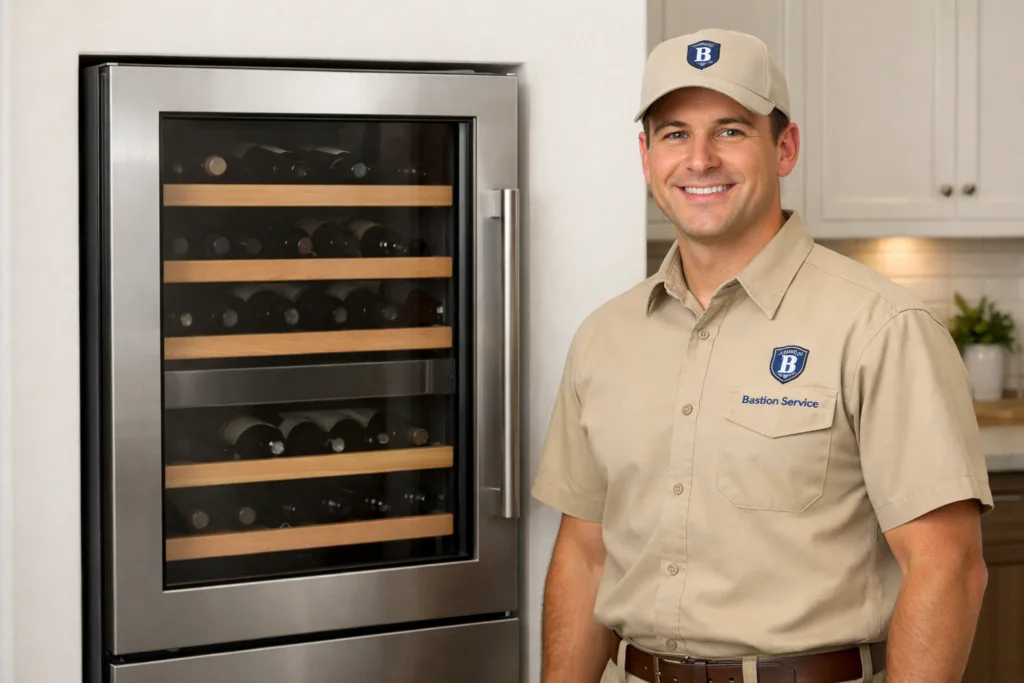
Temperature trouble is usually the first sign that a wine cooler needs attention. If bottles never feel as cool as the setting suggests, or the cabinet warms up after the door has been closed for hours, the problem may be tied to poor ventilation, dirty condenser coils, a weak fan motor, a sensor reading incorrectly, or a compressor that is no longer cycling the way it should. In many Brentwood homes, built-in placement can also affect performance if side or rear airflow is restricted.
Common wine cooler problems homeowners notice
Uneven cooling from top to bottom shelves is another frequent complaint. A dual-zone or single-zone cabinet should recover temperature in a predictable way after normal use. When one section stays warm, the unit runs constantly, or the display does not match actual cabinet temperature, the cause may be airflow imbalance, a door gasket leak, a control issue, or frost interfering with circulation.
Condensation, interior moisture, and small puddles around the unit are also worth checking early. Warm air entering through a worn seal can create water droplets inside the cabinet, while a blocked drain path or partial icing condition can leave water under the appliance. If the cooler is tilted out of level or packed too tightly against surrounding cabinetry, moisture problems can become more noticeable.
Noises, long run times, and cycling issues
A soft fan sound is normal, but louder humming, repeated clicking, rattling, or nonstop running usually points to a problem that should be diagnosed rather than guessed at. Clicking can indicate compressor start trouble. Rattling may come from a loose panel, fan blade interference, or vibration against the floor or cabinet opening. If the appliance runs for long periods without reaching the set temperature, that often means the cooling system is losing efficiency or warm air is entering faster than it should.
Display and control problems can be just as disruptive as cooling loss. A blank panel, flashing temperature readout, unresponsive buttons, or settings that change on their own may involve the user interface, main control, thermistor, or wiring connection. Because these symptoms can overlap, replacing parts without testing often leads to extra cost without solving the underlying fault.
When service makes sense
It is smart to schedule service when the cabinet is no longer holding temperature, frost keeps returning, water is collecting below the unit, or the cooler suddenly sounds different than usual. Waiting can turn a manageable fan, drain, or control issue into a more expensive repair if the compressor is forced to run harder for too long. If you notice a hot compressor area, a burning smell, or repeated tripping at the breaker, stop using the appliance until it can be checked safely.
Repair versus replacement depends on the age of the wine cooler, the quality of the cabinet and door seal, parts availability, and whether the issue is isolated or part of a larger sealed-system failure. Many units are worth repairing when the fault is limited to a thermostat, sensor, fan motor, gasket, drain issue, or accessible electrical component. Replacement becomes more likely when cooling loss is tied to major sealed-system damage, repeated refrigerant-related problems, or multiple failures at once.
What a useful diagnosis should cover
A proper evaluation should look at actual operating conditions, not just the symptom reported at the start. That means checking interior temperature behavior, coil condition, condenser airflow, evaporator fan operation, compressor start and run performance, frost pattern, drain condition, and the quality of the door seal. Installation details matter too, especially with under-counter and built-in wine coolers that depend on correct spacing and ventilation.
Households sometimes notice related symptoms in other cold-storage appliances at the same time. If a separate freezer is struggling with frost buildup, airflow restriction, or poor temperature recovery, Freezer Repair in Brentwood may be the more relevant service for that appliance.
If the concern is really about ice production, fill problems, or a water-supply issue rather than beverage cooling, Ice Maker Repair in Brentwood fits better for diagnosing the ice system and related components.
And when the main kitchen unit is showing food-storage temperature swings, section-to-section cooling differences, or fresh-food compartment warming, Refrigerator Repair in Brentwood is the right match for full refrigerator diagnosis.
How wine cooler issues typically develop
Many failures begin gradually. The cooler may seem a little warmer than usual, the fan may get slightly louder, or the door may need an extra push to close fully. Over time, these smaller symptoms can turn into long run times, condensation on bottles, frost on the back wall, or total loss of cooling. Catching the pattern early often helps limit stress on the compressor and reduces the chance of secondary damage inside the cabinet.
Specialty cooling appliances also tend to react quickly to environmental changes. Nearby heat sources, overloaded shelves that block airflow, and frequent door openings can all exaggerate an existing weakness. That does not always mean the usage caused the problem, but it can make an underlying control, fan, or seal issue show up faster.
What homeowners should expect from residential repair
For a household wine cooler, the goal is straightforward: identify what failed, explain whether the repair is practical, and make sure the unit can return to stable operation. Helpful service should leave you with a clear explanation of the fault, the likely next step, and any conditions that could shorten the life of the repair, such as poor ventilation, damaged gaskets, or recurring moisture entry. That matters with wine coolers because symptoms often appear minor before they develop into larger cooling and control problems.