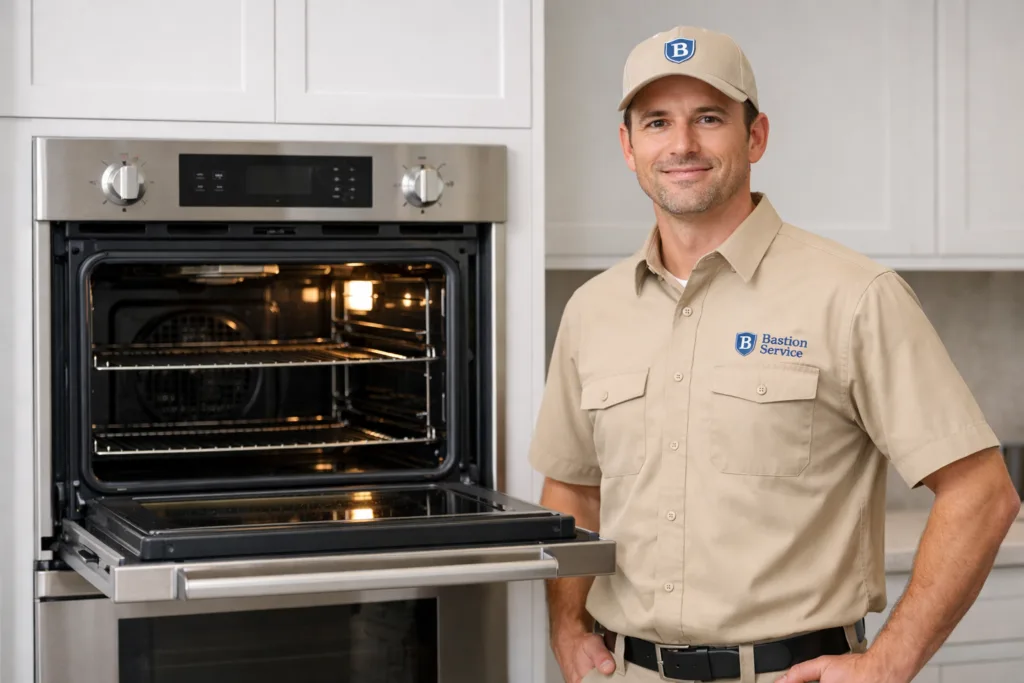
Wall ovens usually give warning signs before they fail completely. A Thermador unit may still power on and appear normal while struggling to hold temperature, taking too long to preheat, or shutting off during a cooking cycle. On a built-in appliance, those symptoms can come from heating components, sensors, door sealing problems, fan issues, or electronic control faults, so the best next step is to match the exact behavior to the likely cause before replacing parts.
Common Thermador wall oven symptoms and what they can mean
Different symptoms point to different repair paths. Some are tied to a single failed component, while others involve a combination of heat regulation and control issues.
Oven not heating at all
If the display responds but the cavity stays cold, the problem may involve the bake element, broil circuit, temperature sensor, relay, control board, thermal protection component, or a wiring fault. In some cases, only one heating function fails, which can make the oven seem partially operational even though cooking performance is no longer reliable.
Slow preheating
Long preheat times often indicate that one part of the heating system is weak rather than fully failed. A damaged element, inaccurate sensor reading, failing relay, or airflow problem can all cause the oven to creep toward temperature. Homeowners in Palos Verdes Estates often first notice this issue when weeknight cooking starts taking longer than expected or recipes that used to be routine stop coming out on time.
Uneven baking or roasting
Food that browns more on one side, finishes too quickly on the top, or stays underdone in the center can point to temperature regulation trouble. Common causes include sensor drift, convection fan problems, poor door sealing, or control calibration issues. Even a small temperature inconsistency can show up clearly in baking results.
Temperature swings during cooking
Some cycling is normal, but wide fluctuations are not. If the oven overshoots, cools too much, or produces inconsistent results from one use to the next, the issue may involve the sensor, control board, relay behavior, or uneven heat distribution inside the cavity. This type of problem is especially noticeable with baking, where stable temperature matters most.
Error codes or display problems
A flashing code, unresponsive touch panel, dim display, beeping without input, or intermittent shutdown can signal an electronic fault. Sometimes the oven will reset and work again temporarily, which makes the issue seem random. In practice, repeated codes or interruptions usually mean the problem is developing rather than disappearing.
Door, hinge, or latch concerns
If the door does not close evenly, heat can escape and affect both cooking performance and preheat time. A worn gasket, misaligned hinge, damaged latch, or lock problem after a self-clean cycle can all lead to poor sealing or trouble using the oven safely. When the latch system is involved, the unit may also refuse to start certain functions.
Why built-in wall oven issues should be diagnosed carefully
Thermador wall ovens combine high heat, electronic controls, safety systems, and compact built-in installation. That design helps performance, but it also means similar symptoms can come from very different failures. For example, an oven that seems “not hot enough” could have a weak heating circuit, an inaccurate temperature sensor, a bad relay, a control issue, or a door seal problem.
Accurate diagnosis matters because replacing the wrong part can leave the original problem unresolved. It also helps clarify whether the repair is isolated and sensible or whether multiple age-related problems are appearing at once.
Signs the problem is getting worse
Many wall oven failures start intermittently. A homeowner may notice one strange cycle, then normal operation, then a repeat a few days later. That pattern often points to a component that is failing under heat stress.
- Preheat takes noticeably longer than it used to
- Recipes that were previously consistent now come out unevenly cooked
- The oven reaches temperature on one day but not the next
- Error codes clear and then return
- The control panel resets or shuts off during use
- The door no longer seals tightly
- There is a burning smell, sparking, or visible interior damage
If there is visible electrical damage, repeated breaker trips, or signs of overheating, stop using the oven until it has been evaluated.
Problems that often appear after self-clean
Self-clean cycles place heavy thermal stress on oven components. After that cycle, some units develop latch problems, control issues, display failures, or temperature-related faults that were not obvious before. If a Thermador wall oven in Palos Verdes Estates begins acting differently right after self-clean, that timing is useful because it helps narrow the repair path.
Common post-self-clean complaints include a locked door that will not release, an oven that will not heat afterward, a blank or flickering display, and new error codes. These symptoms do not always mean the oven is beyond repair, but they should not be ignored.
When repair is usually worth considering
Repair is often reasonable when the issue is limited to one identifiable system and the rest of the oven is in good condition. That can include problems with heating elements, sensors, fans, latch assemblies, select control components, or door-related parts. Built-in replacement is often more involved than replacing a freestanding appliance, so confirming the actual fault before making a replacement decision is especially important.
Replacement becomes more likely when the oven has repeated major failures, several expensive components are failing together, or the overall condition of the unit suggests continued repairs will not be cost-effective. The right choice depends on the symptom pattern, age, condition, and scope of the repair.
What to note before service
A few simple observations can make troubleshooting faster and more accurate:
- Whether the problem happens in bake, broil, convection, or every mode
- Whether the oven eventually heats or stays cold the entire time
- Whether the display remains on when heating stops
- Any exact error code shown on the control
- Whether the issue began after a power interruption or self-clean cycle
- Whether the problem is constant or only appears after the oven has been running for a while
These details help separate heating faults from control problems, airflow issues, and door-related causes.
Choosing service for a Thermador wall oven in Palos Verdes Estates
For homeowners dealing with unreliable heating, inconsistent baking, or electronic faults, the most useful approach is symptom-based evaluation rather than guesswork. Thermador Wall Oven Repair in Palos Verdes Estates is typically most straightforward when the complaint is specific, such as no heat, slow preheat, recurring error codes, temperature swings, or latch trouble.
When the appliance is important to daily cooking, early attention can prevent a partial failure from turning into a bigger repair. A well-defined diagnosis and repair plan gives you a better basis for deciding whether to restore the oven or move on from it.