




Thermador appliances often show early warning signs before they stop working completely. A refrigerator may still cool, but not evenly. A dishwasher may finish the cycle, yet leave grit on glassware or water in the bottom. An oven may turn on, but take too long to preheat or bake inconsistently. Those partial-failure symptoms are usually the point where a repair decision becomes easier and less costly than waiting for a full breakdown.
For specific Thermador appliance paths in Palos Verdes Estates, review Thermador Refrigerator Repair in Palos Verdes Estates, Thermador Freezer Repair in Palos Verdes Estates, and Thermador Dishwasher Repair in Palos Verdes Estates.
How to read Thermador appliance symptoms before scheduling repair
The most useful way to look at an appliance problem is by pattern, not by one isolated event. If the issue repeats, changes over time, or affects normal daily use, there is usually a specific system behind it. Heating complaints can involve sensors, elements, igniters, relays, or electronic controls. Moisture problems can come from seals, drain paths, fill components, or defrost-related issues. Noise may point to fans, pumps, motors, or moving parts under strain.
For households in Palos Verdes Estates, this matters because many premium appliances keep operating in a limited way even when a part is failing. That can make the problem seem minor when it is actually progressing. Repeated overheating, poor cooling, leaking, or ignition trouble should not be treated as normal wear if the pattern is becoming more noticeable.
Common Thermador refrigerator and freezer problems
Refrigeration problems are often judged only by whether the unit feels cold, but that does not always tell the full story. A Thermador refrigerator or freezer can have a circulation or defrost problem long before it stops cooling entirely. If one section is warmer than another, if frost keeps coming back, or if the machine runs almost constantly, the issue may involve airflow, fan operation, sensors, door sealing, or the defrost system rather than a single obvious failed part.
Typical warning signs include:
- Food spoiling faster than expected
- Condensation on shelves or around doors
- Heavy frost in the freezer
- Water under crisper drawers or on the floor
- Buzzing, clicking, or fan noise that is new or louder than normal
- An icemaker that slows down or stops while cooling performance also changes
If temperatures drift or frost buildup continues returning, it is usually best to reduce unnecessary door openings and arrange service promptly. Continued operation with unstable cooling can lead to food loss and additional wear on the compressor and fan systems.
Dishwasher symptoms that usually point to a specific fault
A Thermador dishwasher can appear to have a general cleaning problem when the actual fault is more specific. Dishes that come out cloudy or dirty may reflect weak wash circulation, poor water fill, spray arm obstruction, filtration buildup, or detergent dispensing problems. Standing water at the end of the cycle points in a different direction, usually involving drainage or pump performance. Wet dishes after completion may be a drying issue rather than a washing issue.
Leak symptoms also need to be separated carefully. Water at the front edge of the machine can suggest a door seal or overfill problem. Water below the unit may come from a hose, pump area, or connection point. Intermittent leaking can be harder to notice because it may happen only during a certain portion of the cycle.
Homeowners in Palos Verdes Estates should be especially cautious about continuing to run a leaking dishwasher. Even a small recurring leak can affect flooring, cabinet bases, and nearby trim before the source is obvious.
Cooktop and range issues that should not be ignored
Thermador cooktops and ranges can develop problems in either the heating side or the control side. On gas units, recurring clicking, delayed ignition, uneven flame, or burners that light inconsistently may involve igniters, burner assemblies, switches, or fuel-flow related faults. On electric models, weak heat, burners that stay too hot, or elements that do not cycle properly can point to switches, elements, or control issues.
Ranges may also show broader symptoms such as:
- A cooktop burner working while the oven does not
- The oven heating, but not holding temperature
- Controls responding intermittently
- Error displays during normal cooking use
- Hot spots that make cooking results unpredictable
If a burner repeatedly clicks without lighting, or if there is a strong gas odor, stop using the appliance and address safety first. If the problem is inconsistent heating rather than a clear safety issue, it is still worth checking before relying on the unit for everyday meals.
Oven and wall oven performance problems
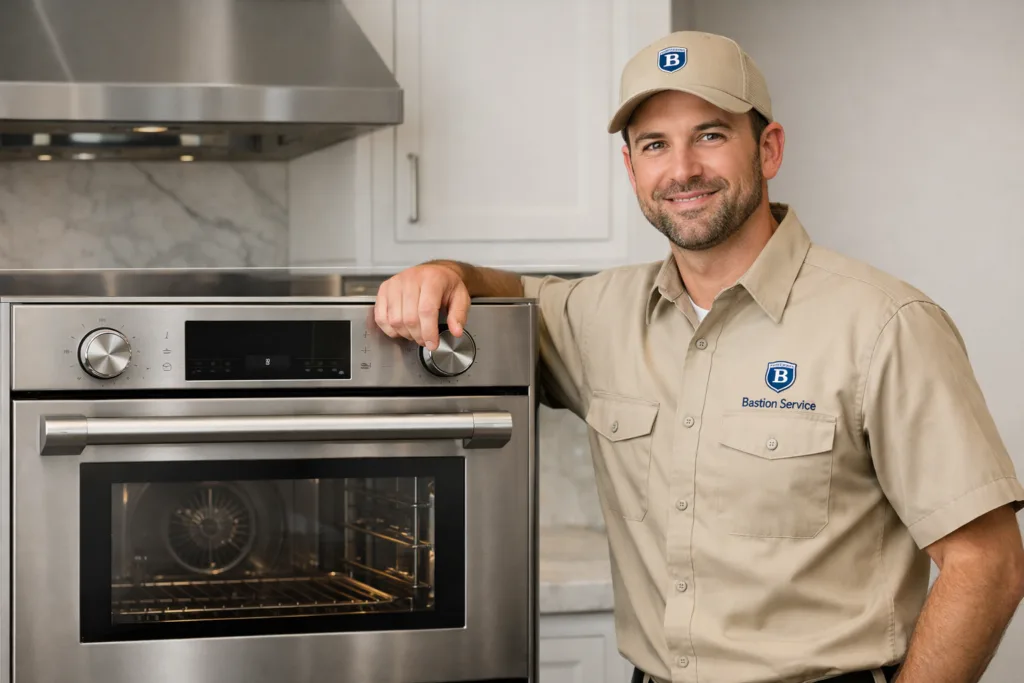
With Thermador ovens and wall ovens, temperature complaints are among the most common reasons homeowners seek help. Slow preheating, underbaked food, scorched tops, uneven browning, or a cavity that seems hotter on one side can come from calibration drift, sensor faults, heating element problems, door sealing issues, or electronic control failures.
Some signs are easy to dismiss at first. One poor baking result may not mean much. But a repeated pattern across several uses usually does. If preheat takes much longer than before, if the display shows an error, or if the oven appears powered but will not start a cycle, the problem is no longer just a cooking inconvenience.
Self-clean problems can also be tied to latch systems, temperature sensing, or control faults. If the door will not unlock properly or the cycle cannot complete, it is best not to force the mechanism.
When continued use can lead to a bigger repair
Some symptoms are stable for a while. Others get worse quickly when the appliance is pushed through normal use. The signs that usually call for faster attention include recurring leaks, repeated breaker trips, overheating, burning smells, loud mechanical noise, heavy frost accumulation, and persistent ignition trouble.
Using the appliance around those symptoms can create secondary damage. A struggling refrigerator fan can place more stress on the cooling system. A dishwasher with drainage issues can strain the pump. An oven running too hot can affect internal components beyond the original failed part. Catching the issue earlier often keeps the repair more contained.
Repair or replace: what usually makes sense
The best repair decision depends on the type of failure and the overall condition of the appliance. Repair is often the sensible option when the problem is isolated to one system and the appliance has otherwise been performing well. Replacement becomes more likely when there are multiple recurring problems, reliability has been declining over time, or the current issue is part of a larger pattern rather than a one-time failure.
That is especially true with premium kitchen appliances. A good diagnosis helps separate a repairable component issue from a broader decline in performance. Without identifying the failed system first, it is hard to compare costs in a meaningful way.
What to note before a Thermador repair visit
A few details can make the problem easier to identify. Before scheduling service, it helps to write down:
- When the problem started
- Whether it is constant or intermittent
- Any error code shown on the display
- Unusual sounds, odors, or visible leaks
- Whether one function fails or several do
- Whether the issue appeared after cleaning, a power interruption, or a recent move of the appliance
For refrigerators and freezers, note where frost or moisture appears and whether temperature changes affect one compartment or both. For dishwashers, note whether dishes are dirty, wet, or both, and where any leak appears. For ovens, ranges, and cooktops, record whether the issue affects all burners or only one area, and whether the problem occurs every time or only on certain settings.
Thermador repair guidance for homes in Palos Verdes Estates
In Palos Verdes Estates, the most helpful approach is usually to respond to the symptom pattern early instead of waiting for total failure. Thermador refrigerators, freezers, dishwashers, cooktops, ovens, ranges, and wall ovens are built with multiple interacting systems, so one outward symptom can have several possible causes. A thoughtful diagnosis is what turns a vague complaint into a repair plan.
If the appliance is leaking, overheating, failing to hold temperature, or showing signs of electrical or ignition trouble, limiting use until the problem is assessed is often the safest choice. For less urgent but persistent performance issues, documenting the pattern clearly can speed up the next step and help determine whether repair is the right long-term move for the household.


