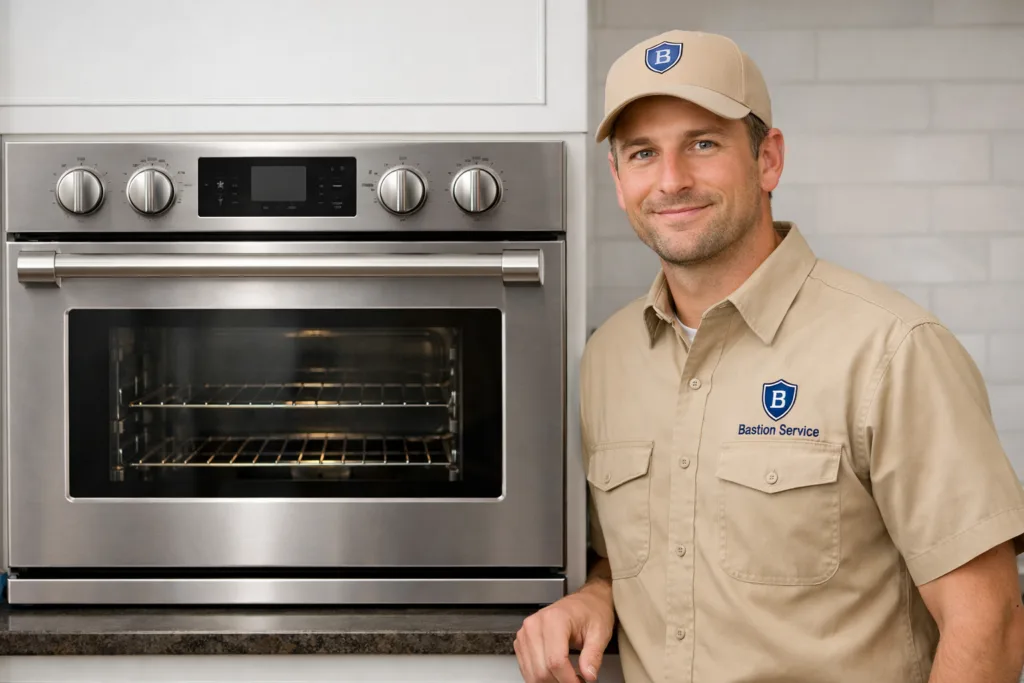
A Viking wall oven that starts missing temperatures, taking too long to preheat, or stopping mid-cycle usually gives warning signs before it fails completely. Paying attention to how the problem shows up can help narrow the cause. An oven that never reaches set temperature points to a different repair path than one that overheats, unlocks poorly after self-clean, or bakes unevenly from rack to rack.
What specific symptoms can reveal
Wall ovens rely on several systems working together: heating components, temperature sensing, airflow, door sealing, and electronic control. When one part falls out of range, the symptom pattern often becomes the best clue.
Oven will not heat or only gets warm
If the cavity stays cool or reaches only a low temperature, the issue may involve a failed bake element, a broil element that is not assisting properly, a weak igniter on applicable models, or a control problem that is not sending power as it should. In some cases, the display appears normal even though the heating circuit is not working correctly.
Uneven baking and hot spots
Cookies browning on one side, casseroles lagging in the center, or dishes needing extra time can indicate temperature sensor drift, weak element performance, convection fan trouble, or heat loss around the door. These problems are often more noticeable with multi-rack cooking or longer baking cycles.
Slow preheat
A gradual increase in preheat time is common when a heating component weakens rather than fails outright. The oven may eventually reach temperature, but only after a much longer wait. That can also happen when the sensor is reading inaccurately or the control is cycling heat poorly.
Temperature swings during cooking
If recipes that used to be reliable suddenly come out overcooked one day and undercooked the next, the oven may be struggling to regulate heat. Sensor faults, relay issues on the control board, fan problems, and sealing issues around the door can all contribute to unstable temperatures.
Error codes, beeping, or dead controls
Intermittent faults on the display, a keypad that does not respond consistently, or a unit that resets on its own can point to interface failures, wiring issues, or an electronic control problem. Some faults show up more often after high-heat cooking or self-clean cycles, when components are under greater stress.
Door latch or self-clean problems
A door that will not close tightly, will not unlock, or feels out of alignment affects both performance and usability. If trouble starts right after self-clean, heat-exposed parts such as latch assemblies, switches, and nearby electronic components are often worth checking first.
Why built-in wall oven problems need careful diagnosis
Because a wall oven is integrated into the kitchen, homeowners in Palos Verdes Estates often want to know not just what failed, but whether the issue is isolated and worth repairing. Two ovens can show the same symptom while having very different underlying causes. For example, “not heating” could stem from an element failure, a sensor reading problem, a relay on the control board, or a door condition that interferes with normal operation.
That is why symptom-based testing matters. Replacing parts based on guesswork can add cost without fixing the actual fault. A proper diagnosis helps determine whether the repair is likely to restore normal cooking performance or whether the oven is showing signs of broader decline.
When to stop using the oven
Some problems are inconvenient, while others make continued use a poor idea. Stop using the oven and arrange service if you notice any of the following:
- The unit trips a breaker or loses power during operation
- The oven overheats or seems unable to regulate temperature
- Error codes return repeatedly after resetting
- The door will not close securely or will not unlock
- There is sparking, burning odor, or visible wiring damage
- The oven shuts off mid-cycle on a regular basis
If there is a strong or persistent gas smell from a gas-configured unit, stop using the appliance and follow appropriate gas safety steps before arranging repair.
Repair or replacement: what usually makes the decision easier
Many Viking wall oven issues are limited to one main component or circuit. In those cases, repair is often the more practical option, especially when the appliance has otherwise been cooking well and the cabinet installation is still in good condition. Sensor problems, igniter failures, heating element faults, fan motor issues, and some latch or control-related failures can often be addressed without replacing the entire unit.
Replacement becomes more likely when the oven has multiple major problems at once, has recurring electronic failures, or has damage that goes beyond a single repair. Built-in replacement also brings added considerations such as cabinet fit, finish matching, and installation disruption, so it helps to understand the exact cause before making that call.
What Palos Verdes Estates homeowners usually want to know
Most people want straightforward answers: why the oven is acting up, whether it is safe to use, what part is likely involved, and whether fixing it is sensible. That is especially true when the wall oven is used daily for family meals, entertaining, or routine baking. A clear diagnosis and repair plan based on the exact symptom pattern is usually the fastest way to get there.
For Viking wall oven repair in Palos Verdes Estates, the most useful next step is identifying whether the problem is tied to heating output, temperature feedback, airflow, door operation, or the control system. Once that is known, the repair decision becomes much more practical and much less uncertain.