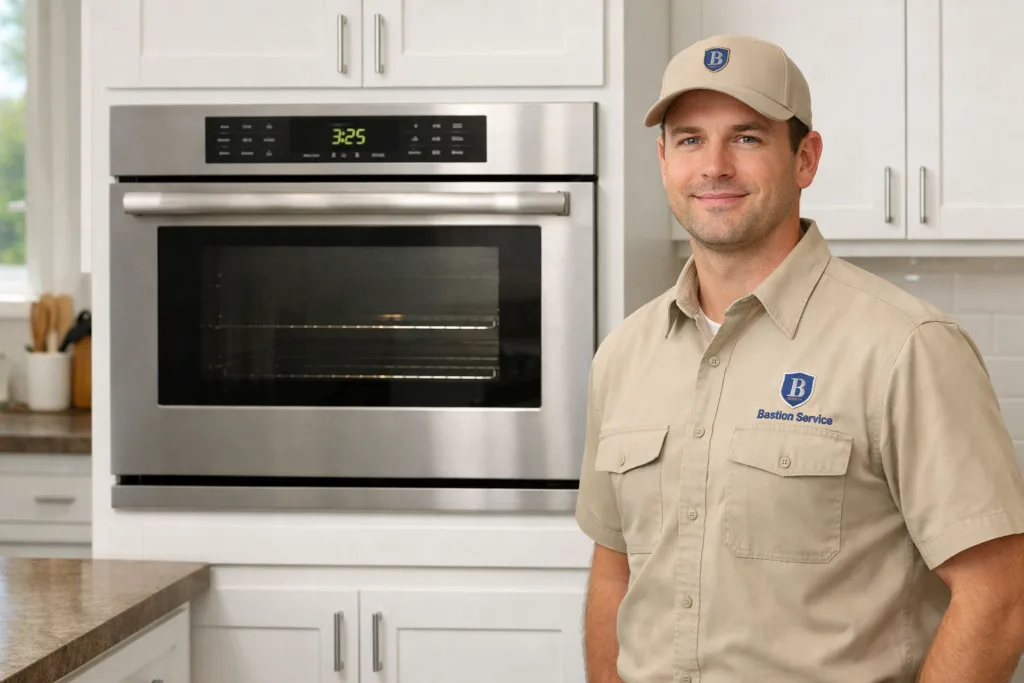
Temperature problems are often the first sign that a wall oven needs attention. An oven that preheats slowly, stalls below the selected setting, or browns unevenly from front to back can point to a weak bake element, a failing igniter, a drifting temperature sensor, or control trouble that is interrupting normal heating cycles. In many homes, these symptoms show up as longer meal prep times, inconsistent baking results, and dishes that need to be rotated far more than usual.
Common wall oven symptoms and what they may mean
If a wall oven will not heat at all, the fault may involve the heating element, igniter, thermal cutoff, wiring, or electronic control. When the display appears normal but the cavity stays cold, the problem is not always obvious from the control panel alone. A proper diagnosis usually checks whether the oven is receiving the right power, whether the heat-producing components are activating, and whether the control is sending the correct commands.
Uneven baking can come from more than one source. A misreading temperature sensor, a partially failed element, a damaged door gasket, or reduced airflow in a convection model can all produce hot and cool zones inside the oven. If the cooking issue is limited to the surface burners while the oven performance seems normal, Cooktop Repair in Palos Verdes Estates may be the better place to start.
Error codes, random shutoffs, or controls that respond inconsistently often suggest an electronic issue rather than a simple heating failure. Keypad faults, relay problems, loose connections, and overheated boards can all cause erratic behavior. These problems may start as occasional glitches and then become more frequent, especially during longer cooking cycles or higher-temperature use.
Signs the oven should not keep being used
Some symptoms go beyond inconvenience and call for the oven to stay off until it is inspected. Sparking, a strong burning smell, visible element damage, repeated breaker trips, or an oven that continues heating after it should cycle off can indicate a more serious electrical or safety concern. Continuing to use the appliance in that condition can damage other components and increase repair costs.
A door that will not close properly is another issue worth addressing promptly. Heat loss through the door can cause long preheat times, poor temperature stability, and extra strain on heating parts that are trying to compensate. On self-cleaning models, latch and lock problems should also be taken seriously, since forcing the mechanism can turn a limited repair into a larger one.
Intermittent problems still matter
Wall ovens do not always fail in a dramatic way. Sometimes the only clue is that one batch of cookies bakes perfectly and the next comes out pale on one side and overdone on the other. Intermittent issues often trace back to electronics, sensor drift, or connections that fail as the appliance heats up. Catching those problems early can prevent a full loss of function later.
How wall oven issues differ from other cooking appliance problems
It helps to separate wall oven symptoms from problems involving other cooking equipment in the kitchen. If the main complaint is poor oven temperature control, delayed preheat, or a cavity that does not heat evenly, Oven Repair in Palos Verdes Estates may fit better when the unit is a standard oven rather than a built-in wall model.
Some households notice mixed symptoms, such as an oven that struggles to heat along with surface burners acting up at the same time. When both cooking zones share the same appliance and both are affected, Range Repair in Palos Verdes Estates may be the more accurate service path.
There are also cases where homeowners describe the appliance as a stove even though the problem is centered on burners, ignition, or overall cooking performance. If the symptom involves top-burner heat along with general cooking issues on a freestanding unit, Stove Repair in Palos Verdes Estates may be more relevant.
Repair or replacement?
Many wall oven problems are repairable, especially when the issue is isolated to a sensor, igniter, bake element, broil element, latch assembly, or control-related component. Repair is often the practical option when the oven is otherwise in good condition and the problem has a clear, limited cause. Replacement becomes more likely when multiple major systems are failing, parts are no longer available, or the appliance has a long history of repeat breakdowns.
Age matters, but condition matters just as much. A well-maintained oven with one failed part may still have years of useful life left. On the other hand, an older unit with severe wiring damage, repeated control failures, and poor overall performance may no longer be the best candidate for continued investment. The most useful recommendation comes after the failure is identified, not before.
What a service visit should clarify
A productive appointment should answer a few practical questions: what failed, whether the oven is safe to use, what repair is recommended, and whether that repair makes sense for the appliance overall. That usually means checking heat output, confirming sensor readings, evaluating control response, and looking at door, latch, and wiring condition rather than guessing from the symptom alone.
For homeowners in Palos Verdes Estates, the goal is straightforward: restore consistent everyday cooking without unnecessary parts swapping or vague recommendations. Whether the issue is no heat, temperature swings, uneven baking, or an unreliable control panel, identifying the specific cause is what leads to a repair that actually solves the problem.