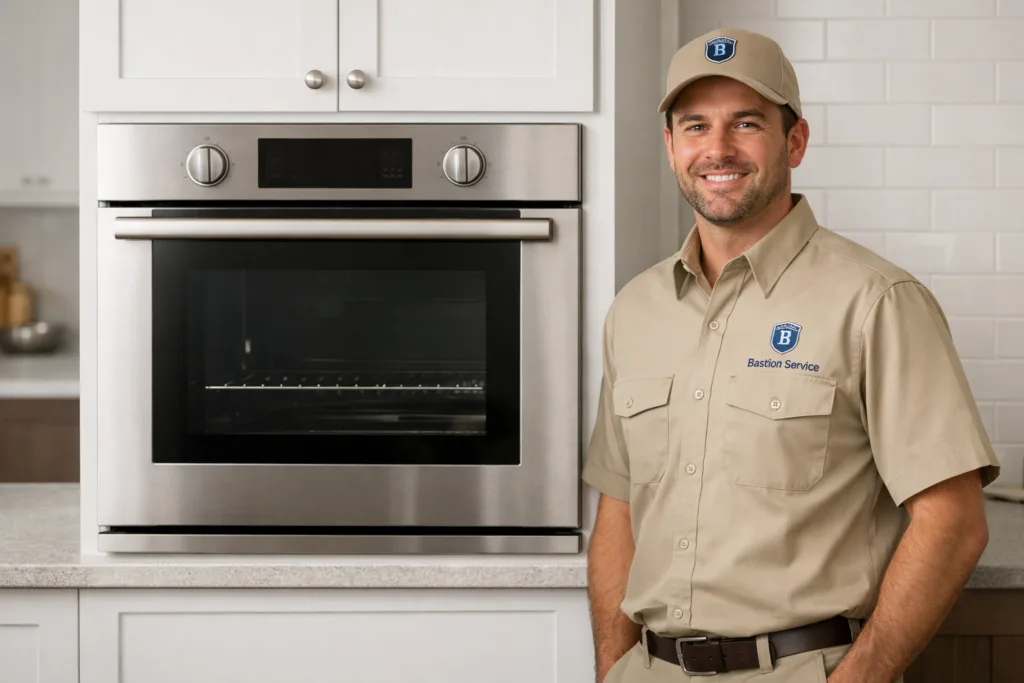
Built-in wall ovens usually fail in ways that look simple from the outside but are not always caused by a single bad part. A Dacor unit that will not heat, runs too cool, or shuts off during a cycle may have a problem in the heating circuit, sensor system, controls, door assembly, or incoming power. For homeowners in Palos Verdes Estates, the most useful service call is the one that identifies the actual failure before parts are chosen or replacement is considered.
Common Dacor wall oven symptoms and what they can mean
Most wall oven complaints fall into a few patterns. Understanding those patterns can make the next step easier and help you decide whether the appliance should be used again before service.
Not heating at all
If the display powers on but the oven never gets hot, the problem may involve a failed bake element, broil element, thermal protection component, temperature sensor, relay, or electronic control. In some cases, the oven appears normal until a cook cycle starts, then nothing happens inside the cavity. That difference matters because a power issue and a heating issue can look similar to the user.
Slow preheat
Slow preheating often points to one side of the heating system not doing its job. The oven may eventually reach temperature, but only after an unusually long wait, and cooking results may still be off. A weak element, sensor problem, or control fault can all create this symptom.
Uneven baking or roasting
When food browns too fast on one rack, stays pale in the center, or comes out differently from one use to the next, the cause may be inaccurate temperature sensing, weak heat output, poor airflow, or a door seal problem. These complaints are especially frustrating because the oven still seems to work, just not reliably enough for normal meal prep.
Temperature swings
Some cycling is normal, but wide temperature swings are not. If recipes that used to work now burn on the outside or stay underdone inside, the oven may be overshooting, dropping too low, or reading temperature incorrectly. Sensor drift, relay issues, and control-related problems are common reasons this happens.
Control panel or display problems
A blank display, touchpad buttons that do not respond, random beeping, flashing codes, or a unit that turns off mid-cycle can indicate a failing interface, loose connection, or control board issue. Electronics problems may seem intermittent at first, especially after the oven has been running long enough for internal heat to build up.
Door, hinge, and latch trouble
If the door will not close tightly, opens unevenly, or stays locked after self-clean, the oven may lose heat or become difficult to use safely. A worn gasket, damaged hinge, or latch failure can affect both performance and convenience. Even if the oven still heats, escaping heat can change cook times and temperature stability.
Why wall oven diagnosis matters more than guesswork
Dacor wall ovens use model-specific controls, sensors, and built-in components that are not always easy to judge by symptom alone. A no-heat complaint does not automatically mean an element is open. An error code does not always mean the main board is bad. On built-in appliances, access, wiring layout, and heat exposure can all influence the final diagnosis.
That is why homeowners often save time by avoiding trial-and-error part replacement. The goal is to determine whether the issue is isolated, whether multiple failures are present, and whether the repair path makes sense for the oven’s age and condition.
Symptoms that should not be ignored
Some wall oven problems are mostly inconvenient. Others can lead to more damage if the appliance continues to be used. It is smart to stop using the oven and schedule service if you notice:
- The breaker trips when the oven starts or during preheat
- A burning smell that seems electrical rather than food-related
- Sparking, popping, or sudden shutoffs
- An oven that overheats or will not shut off normally
- A door that does not seal or latch correctly
- Recurring fault codes that return after resetting power
Intermittent problems deserve attention too. A wall oven that works only some of the time often becomes harder to trust right when you need it most, and repeated heat exposure can make electronic failures worse.
Repair or replacement: how the decision usually gets made
Repair is often the sensible choice when the failure is limited to a heating element, sensor, fan motor, latch component, or another single identifiable part. It can also make sense when the oven is otherwise in good condition and the repair is likely to restore normal baking and roasting performance.
Replacement enters the conversation when several major issues are present at once, when a control-related repair becomes unusually expensive, or when parts availability is limited. With a built-in appliance, replacement is not always a simple swap, so many homeowners in Palos Verdes Estates prefer to understand the exact problem before making that decision.
What homeowners can notice before scheduling service
You do not need to disassemble anything to gather helpful clues. A few observations can make the symptom pattern clearer:
- Whether the oven fails in bake, broil, or both
- Whether the problem happens every time or only after longer use
- If preheat seems normal but cooking results are still off
- Whether one cavity works differently from the other on a double wall oven
- Any fault code shown on the display
- Whether the door closes firmly and evenly
These details do not replace testing, but they can help narrow the likely cause and make the service visit more productive.
Double wall oven issues can show up differently
On double Dacor wall ovens, one cavity may fail while the other continues working normally. That can suggest a more localized issue such as a single sensor, element, fan, or latch component. If both cavities show similar behavior, the problem may involve shared controls, power supply, or heat-related electronic failure. The pattern matters because it changes the likely repair path.
What a service visit should help you decide
A useful diagnosis should answer more than “what is the symptom.” It should clarify what failed, whether continued use risks additional damage, whether the repair is likely to restore dependable performance, and whether the overall repair path is reasonable for the appliance. That is what turns an oven problem into a manageable household decision instead of an ongoing guessing game.
When a Dacor wall oven in Palos Verdes Estates is heating poorly, baking unevenly, showing control faults, or refusing to operate normally, focused troubleshooting is usually the fastest way to determine whether repair is practical and what needs attention first.