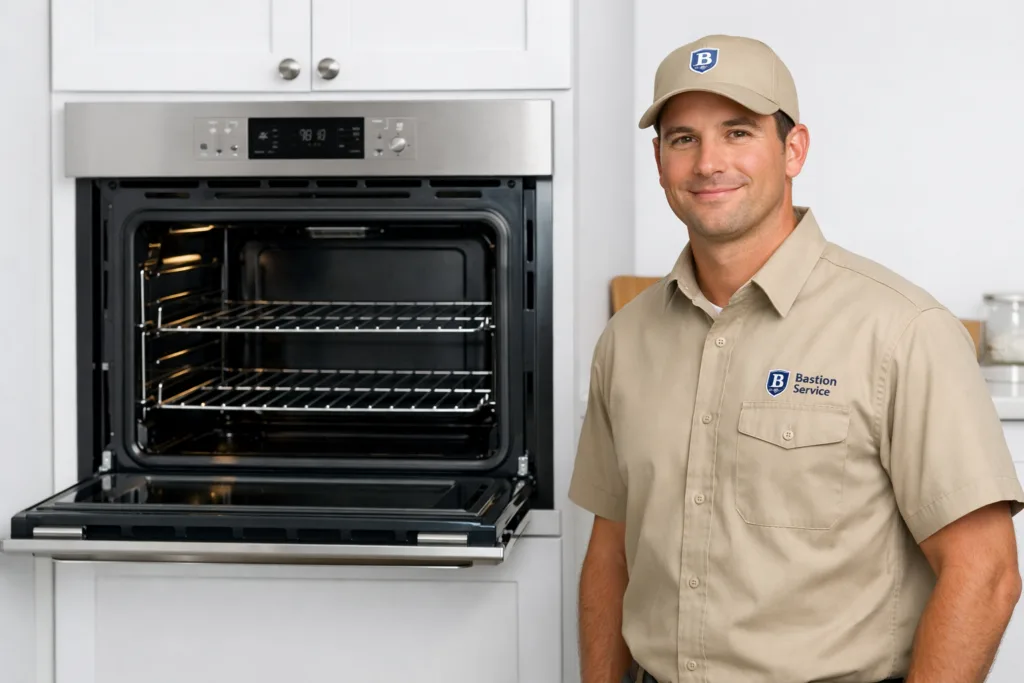
Wall ovens tend to fail in ways that look similar on the surface but come from very different causes underneath. A Summit unit that will not heat at all needs a different repair path than one that preheats slowly, overshoots the set temperature, or shuts off halfway through cooking. That is why symptom pattern matters so much before any parts are replaced.
Common Summit wall oven symptoms and what they can mean
Most service calls for Summit wall ovens in Palos Verdes Estates fall into a few recognizable categories. Paying attention to how the oven behaves can help narrow the problem faster and prevent unnecessary guesswork.
No heat in bake or broil
If the display turns on but the oven cavity never warms, the issue may involve a failed bake element, broil element, temperature sensor, control board, relay, wiring connection, or a safety component that has opened the circuit. In some cases, the oven appears normal from the outside while the heating circuit is not being energized at all.
If bake does not work but broil does, or the reverse, that detail matters. It can point to a specific heating circuit instead of a full control failure.
Slow preheat
When preheat takes far longer than it used to, the oven may still be producing some heat but not enough to perform normally. A weakening element, incorrect sensor feedback, or a control issue can all cause sluggish warm-up times. Homeowners often notice this first when weeknight meals suddenly take longer or recipes start missing their expected timing.
Uneven baking
Cookies browning too much on one side, casseroles cooking around the edges while staying cool in the center, or top racks baking differently from lower racks can indicate temperature regulation problems. These complaints may relate to heat output, sensor accuracy, door seal condition, or control calibration. Because the oven is still partly functional, this is a symptom many people live with longer than they should.
Temperature swings or incorrect temperature
If the oven runs hotter than the setting, cooler than expected, or cycles too widely, the sensor circuit and control response need to be checked. Some fluctuation is normal in any oven, but repeated undercooking, scorched food, or inconsistent results usually point to a fault rather than normal cycling behavior.
Display or keypad problems
Flashing errors, a keypad that does not respond, random shutdowns, or a unit that starts and stops unpredictably often suggest an electronic control or interface issue. Intermittent control problems can be especially frustrating because the oven may appear fine during one use and fail during the next.
Why similar symptoms can lead to different repairs
A wall oven that is not heating properly does not automatically need a heating element, just as a temperature problem does not always mean the sensor is bad. Electrical supply issues, loose connections, relay failures, damaged harnesses, and door-related problems can create nearly identical results from the homeowner’s perspective.
That is one reason replacing parts based only on a symptom can become expensive. A proper diagnosis separates a single failed component from a larger control or wiring problem and helps determine whether the oven is a good repair candidate.
Signs the oven should not keep being used
Some problems affect convenience. Others create enough risk that the appliance should be left off until it is checked.
- Burning electrical smell during heating
- Breaker trips when bake or broil starts
- Oven overheats or will not regulate temperature
- Control panel goes dark mid-cycle
- Unit will not shut off normally
- Visible wire damage or scorched areas
Continuing to use an oven with these symptoms can turn a single failed part into added wiring damage, control failure, or insulation problems. Even when the issue seems limited to poor baking performance, repeated use can make a minor fault more expensive over time.
What to note before scheduling Summit wall oven repair in Palos Verdes Estates
A few details from recent use can make troubleshooting much more direct. Before service, it helps to note:
- Whether the problem happens in bake, broil, or both
- Whether preheat finishes or stalls
- Any error code shown on the display
- Whether the temperature is always off by a similar amount
- Whether the problem is constant or intermittent
- Any clicking, buzzing, relay chatter, or unusual smells
- Whether the door closes fully and seals properly
These observations can help distinguish between a heat-production fault, a sensor issue, a control problem, or a power-related failure.
Repair or replace?
For many homeowners in Palos Verdes Estates, the real question is whether the oven should be fixed or replaced. Wall ovens often make sense to repair because they are built into the kitchen and replacing them can involve more than just the appliance itself. Fit, trim, cabinet opening dimensions, and installation time all matter.
Repair is often worthwhile when the issue is isolated to a component such as an element, sensor, latch, switch, wiring repair, or a specific control-related failure and the rest of the appliance is in solid condition. Replacement becomes more likely when there are multiple major faults, repeat electronic failures, severe internal wear, or limited part availability.
The age of the unit matters, but it should not be the only factor. A well-kept wall oven with one identifiable failure may still be a sensible repair, while a newer unit with recurring control issues may deserve a harder look.
What a thorough service visit should focus on
Good wall oven service is not just about finding a part to swap. It should confirm how the oven is heating, how the temperature is being sensed, how the control is responding, and whether the problem is isolated or affecting multiple systems. That approach gives homeowners a practical repair plan based on actual findings rather than assumptions.
For Summit wall ovens in Palos Verdes Estates, that usually means checking heating performance, sensor readings, control behavior, wiring condition, and any symptom tied to the door or latch system. Once the source of the fault is confirmed, it becomes much easier to decide whether the next step is repair now, limited use until scheduled service, or replacement.