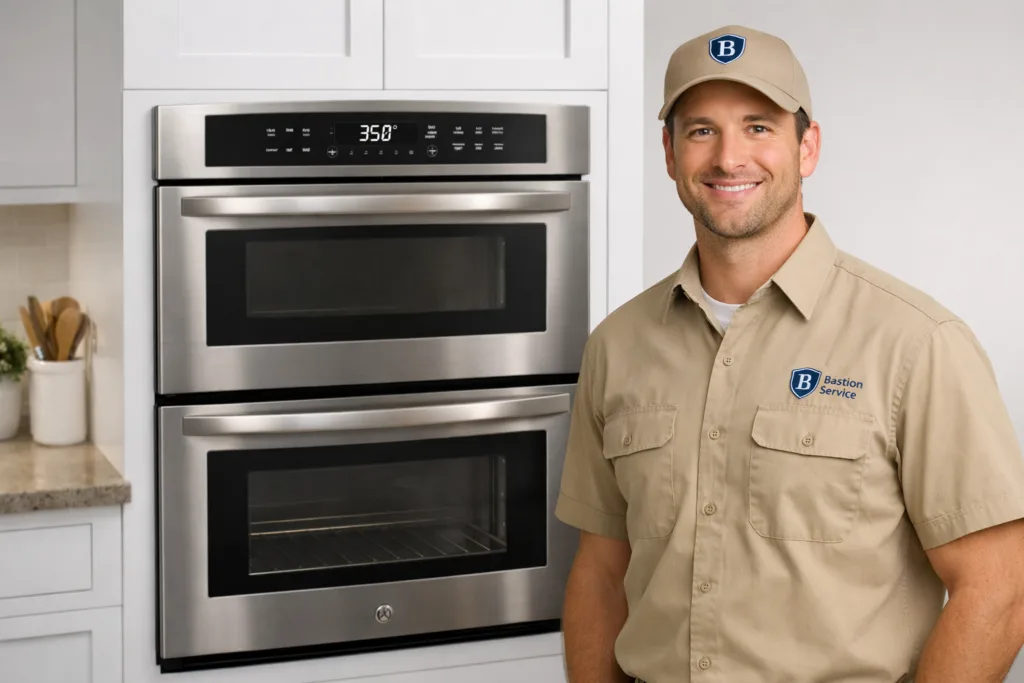
Wall oven problems are often more specific than they first appear. A unit that seems to have a simple heating issue may actually be dealing with a sensor fault, a weak element, a control failure, a door-latch problem, or wiring damage that only shows up once the oven is hot. For homeowners in Palos Verdes Estates, the most useful starting point is to match the repair approach to the exact way the oven is failing during normal cooking.
How GE wall oven problems usually show up in daily use
Built-in ovens tend to give warning signs before they stop working completely. Preheat may take longer than usual, baked foods may finish unevenly, the display may flash or beep unexpectedly, or the oven may shut off in the middle of a cycle. These symptoms matter because they help narrow the cause and determine whether the issue is likely confined to one part or affecting a larger heating or control circuit.
In many Palos Verdes Estates homes, the first complaint is not that the oven is completely dead. It is that cooking results have become unreliable. Cookies may brown too fast on one side, casseroles may need extra time, or the selected temperature may no longer match what the oven is actually doing. Those performance changes are often the clearest clue that service is needed.
Common GE wall oven symptoms and what they can mean
Not heating at all
If the display powers on but the oven never produces heat, the problem may involve the bake element, broil element, sensor circuit, relay function, incoming power issue, or the electronic control. On some models, one failed part can prevent normal heating even though lights, buttons, and the clock still work.
This symptom is usually more than a convenience issue. If the oven starts a cycle without developing proper heat, repeated attempts to run it do not solve the problem and can complicate diagnosis.
Slow preheat
A GE wall oven that eventually heats but takes far too long to preheat may have a partially failing element, a sensor that is reading inaccurately, or a control problem that is not energizing the heating system correctly. Slow preheat can also show up before a complete heat failure, which is why it should not be dismissed as normal aging.
If preheat times have changed noticeably, especially when using the same settings you have always used, that is often a meaningful service indicator.
Uneven baking or roasting
When one rack cooks faster than another or familiar recipes stop coming out consistently, the issue may involve temperature regulation, airflow, element performance, or calibration drift. A wall oven can still appear to work while cycling incorrectly enough to affect results meal after meal.
- Food browns too quickly on top but stays underdone inside
- Items near the back cook faster than those in front
- Baking times become inconsistent from one use to the next
- Roasts finish dry on the outside before the center is ready
Temperature swings
Some cycling is normal, but wide swings are not. If the oven overheats, drops heat too far, or produces inconsistent results during long bake cycles, the sensor, control, or heating circuit may be responding incorrectly. This is especially frustrating for baking, where even modest temperature errors can affect texture, rise, and doneness.
Error codes, flashing display, or random beeping
Recurring fault codes and unexplained beeping often point to sensor communication issues, control faults, overheating conditions, or intermittent electrical problems. Even if the oven resumes working after a reset, the underlying problem often remains. When the same code or behavior returns, it usually means the unit needs more than a temporary restart.
Shutting off during cooking
An oven that turns off mid-cycle can be dealing with a failing control, heat-sensitive electronics, loose wiring, or a protective shutdown caused by another fault in the system. If this only happens after the oven has been running for a while, that pattern can be especially helpful in identifying where the problem lies.
Door not closing, locking, or unlocking properly
Door and latch problems affect both performance and safety. A poor seal can let heat escape and make temperatures unstable. A stuck lock can leave the oven unusable after self-clean, while a door that does not close properly can strain hinges, seals, and surrounding components over time.
Forcing the door or repeatedly trying to run a failed latch cycle can make a smaller repair turn into a larger one.
Why self-clean often triggers wall oven problems
Many service calls begin after a self-clean cycle because that feature places heavy thermal stress on controls, sensors, latches, and nearby wiring. If a GE wall oven becomes unresponsive, locked, or erratic after self-clean, the problem may not be limited to the latch itself. High heat can expose weak electronic parts that were already close to failure.
If the oven is acting abnormally after self-clean, it is usually best not to keep retrying the feature until the appliance has been evaluated.
Signs the oven should not keep being used
Some symptoms are strong indicators to stop using the oven until service is scheduled. Continued operation in these cases can increase repair cost or create avoidable safety concerns.
- The oven overheats or burns food at normal settings
- The breaker trips during preheat or cooking
- The display cuts out or the unit shuts off unexpectedly
- There is a burning smell that does not seem related to normal cooking residue
- The door will not latch, unlock, or seal correctly
- Error codes return repeatedly after resets
If the appliance cannot be trusted to hold temperature or complete a normal cycle, regular use should wait until the cause is identified.
What helps make diagnosis faster
A wall oven can often be diagnosed more efficiently when the symptom history is specific. Before service, it helps to note what the oven is doing and when it happens.
- Does the problem happen during preheat, baking, broiling, or self-clean?
- Is the failure constant or intermittent?
- Does the display stay on when heat stops?
- Are there any fault codes, beeps, or flashing messages?
- Does the issue appear only after the oven has been hot for a while?
Those details can make a meaningful difference, especially with intermittent control or temperature-related complaints.
Repair or replace?
Many GE wall oven issues are still good repair candidates, particularly when the problem is limited to a heating element, temperature sensor, latch assembly, or isolated electrical fault. Replacement becomes a more serious consideration when there are multiple major failures, repeated electronic control issues, or repair costs that no longer make sense for the condition of the appliance.
Age matters, but it is not the only factor. A well-maintained wall oven with one defined failure may be worth repairing, while an older unit with recurring shutdowns, expensive control problems, and multiple worn components may be harder to justify. The best decision usually comes after the fault is narrowed down rather than guessed from the symptom alone.
What homeowners in Palos Verdes Estates should expect from service
A useful service visit should explain what is failing, whether the oven can be used safely in the meantime, and whether the recommended repair is sensible for the appliance’s overall condition. That matters more than simply naming the first part associated with the symptom.
For GE wall oven repair in Palos Verdes Estates, the goal is to restore normal cooking performance without unnecessary part swapping. When the symptom pattern is interpreted correctly, it becomes much easier to understand the next step and whether repair is the right long-term answer for the household.