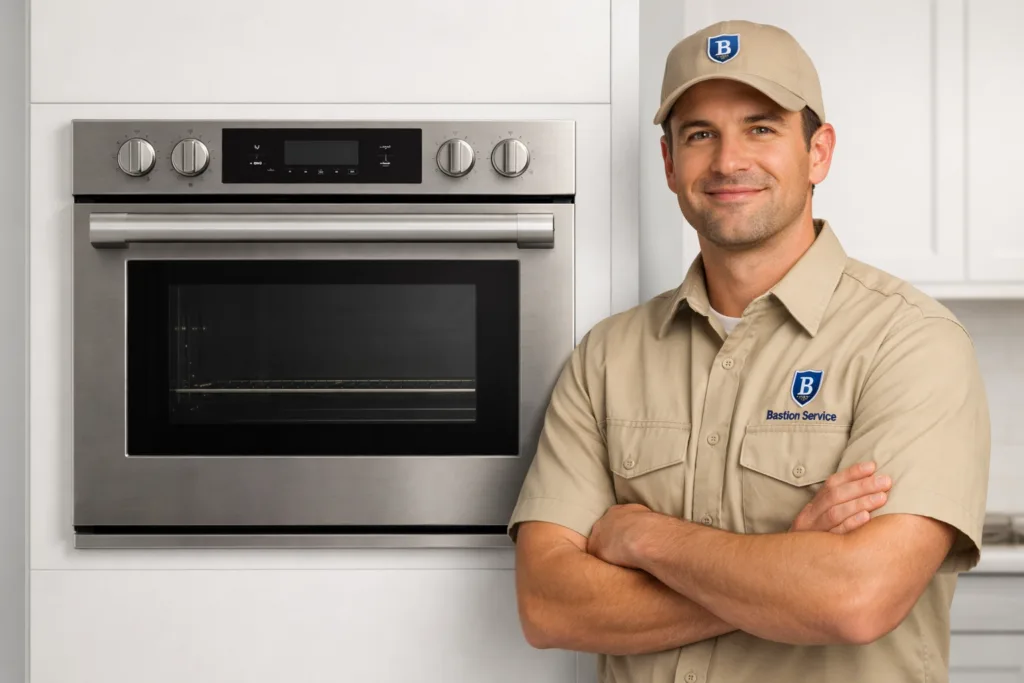
Premium ovens tend to show the same few symptoms for very different underlying reasons. A Thermador unit that runs cold, overshoots the set temperature, or flashes a fault code may be dealing with a heating problem, a sensor issue, an electronic control fault, or a door-seal problem that affects overall performance. That is why symptom-based testing matters before any parts are replaced.
Related Thermador and oven service paths in Palos Verdes Estates include Thermador Appliance Repair in Palos Verdes Estates, Oven Repair in Palos Verdes Estates, and Thermador Refrigerator Repair in Palos Verdes Estates.
Common Thermador oven problems and what they may indicate
Oven not heating
If the oven stays cold or never reaches the selected temperature, the fault may involve the bake circuit, broil circuit, igniter on gas models, temperature sensor, relay, or main control. In some cases, the oven appears to start normally but produces little actual heat. In others, preheat begins and then stalls. These patterns help narrow down whether the problem is with heat production, temperature feedback, or command signals from the controls.
Slow preheat
Long preheat times often start subtly. You may notice meals taking longer than usual or needing extra bake time before the issue becomes obvious. A weak igniter, underperforming element, sensor drift, or control problem can all cause slow warm-up. On convection models, airflow-related issues can also affect how quickly the cavity reaches and holds temperature.
Uneven baking
When one rack browns faster than another, cookies bake unevenly, or the center of dishes stays underdone, the oven may not be distributing or regulating heat properly. Causes can include sensor inaccuracy, inconsistent cycling, convection fan trouble, or heat loss from a worn gasket or misaligned door. Uneven baking is especially frustrating because the oven may still seem functional while producing unreliable results.
Temperature swings or overheating
An oven that runs hotter than the display setting can burn food, dry out baked dishes, and place extra stress on internal components. If the heat rises far above the target temperature, possible causes include a faulty sensor, stuck relay, or electronic control failure. Wide temperature swings can also point to a cycling problem where the oven is not responding accurately to temperature readings.
Error codes and display problems
Fault codes, blank displays, beeping, or buttons that stop responding usually mean more than a simple reset issue. Wiring faults, board communication errors, moisture exposure, or control failure may all be involved. If the panel works intermittently, the problem can still be significant because unstable controls affect heating accuracy and normal oven operation.
Door, hinge, and lock issues
A door that will not close tightly can let heat escape and make the oven seem weak even when the heating system is functioning. A damaged hinge, worn gasket, or latch problem may also affect safety and cooking consistency. If the door stays locked after a self-clean cycle or the lock motor behaves unpredictably, service is a better next step than forcing the mechanism.
What homeowners can check before scheduling repair
A few basic observations can make the problem easier to identify:
- Whether the oven fails in bake, broil, or both modes
- Approximate preheat time compared with normal use
- Whether the display shows an error code
- If the problem began after self-cleaning, a power interruption, or unusual noise
- Whether the door closes fully and seals evenly
- If the oven trips a breaker or shuts off during operation
These details help distinguish a simple single-part failure from a broader control or safety issue.
When to stop using the oven
Some symptoms should not be ignored. It is wise to stop using the oven if it overheats badly, will not shut off, trips breakers, produces a burning electrical smell, or repeatedly displays fault behavior. Continued use can worsen damage to boards, wiring, relays, and surrounding components.
For gas Thermador ovens, any persistent gas odor should be treated as a safety concern first. Stop using the appliance. If the smell is strong or does not clear, leave the area if necessary and contact the gas utility or emergency service before arranging appliance repair.
How Thermador oven issues are usually diagnosed
A useful service visit should determine more than the obvious symptom. The goal is to confirm which system is actually failing and whether the repair is sensible for the appliance. That often includes checking heating response, sensor readings, control output, door function, and visible signs of wear or heat stress.
This is particularly important on built-in and wall oven configurations, where symptoms can overlap. For example, poor baking performance may look like a failed element when the actual problem is inaccurate temperature feedback. Likewise, an error code may point to one component while the root cause is found in wiring or control communication.
Repair or replace: what usually affects the decision
In Palos Verdes Estates, many homeowners want to know whether their Thermador oven is still worth repairing. The answer usually depends on the age of the unit, the exact failed part, the overall condition of the appliance, and whether the issue appears isolated or part of a larger pattern.
Repair is often reasonable when the problem is limited to a single component such as an igniter, sensor, element, latch part, or specific control-related failure. Replacement may become more attractive when there are repeated electronic problems, multiple worn components, or signs that reliability is declining across several systems. The most helpful recommendation comes from testing the actual fault rather than guessing from symptoms alone.
What to expect from Thermador oven repair in Palos Verdes Estates
Household oven service should leave you with a plain-language explanation of what failed, what the repair involves, and whether continued use is safe in the meantime. For homeowners in Palos Verdes Estates, that kind of visit is most valuable when it turns confusing oven behavior into a specific repair path instead of trial-and-error parts replacement.
If your Thermador oven is no longer heating properly, preheating on time, or baking evenly, the next step is to have the failure identified based on the exact symptom pattern and appliance condition.