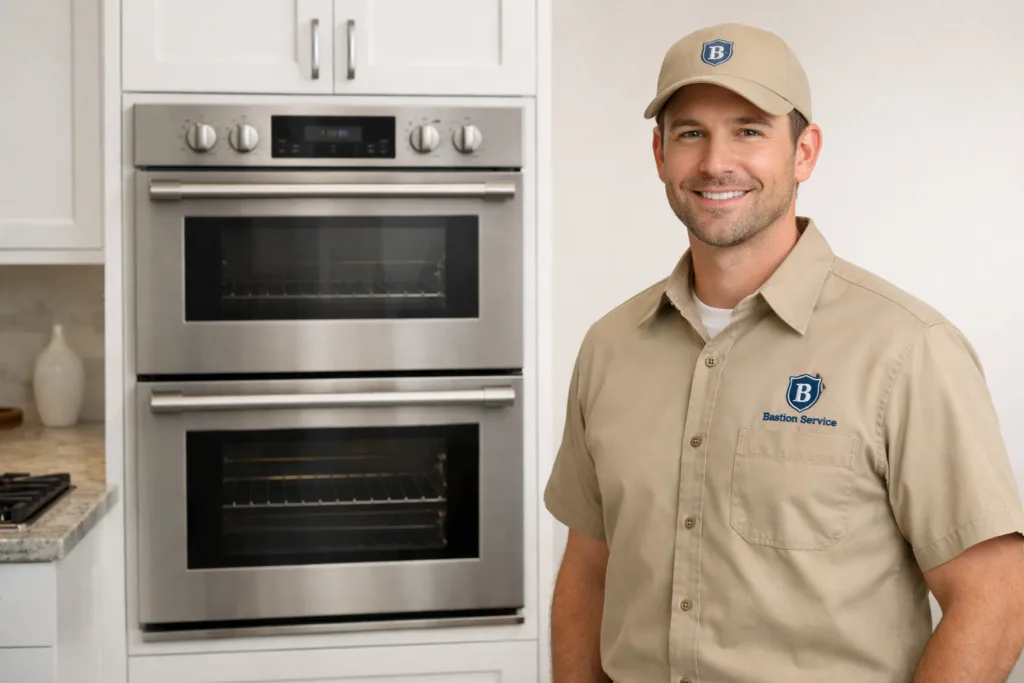
Thermador wall ovens can develop very different faults that look similar during everyday cooking. An oven that will not heat, takes too long to preheat, or bakes unevenly may have a problem with a heating element, temperature sensor, convection system, control board, door seal, or wiring. Pinpointing the actual failure matters because replacing the wrong part often leads to more expense without restoring normal performance.
Common Thermador wall oven problems in Mar Vista homes
In Mar Vista households, wall oven issues often show up first as inconsistent cooking results rather than a total breakdown. You may notice that cookies brown unevenly, casseroles need extra time, or the oven display appears normal while the cavity never reaches the set temperature. On Thermador models with advanced controls and multiple cooking modes, intermittent problems can be especially frustrating because the oven may work correctly one day and struggle the next.
These symptom patterns usually point to one of a few core areas: heat production, temperature feedback, airflow, door sealing, or electronic control. The details of how the oven fails help narrow the repair path.
Not heating at all
If the oven stays cold in bake or broil mode, the issue may involve a failed element, a blown thermal cutoff, damaged wiring, a relay failure, or an electronic control problem. In some cases, the display and lights still work, which can make the oven appear partially functional even though the heating circuit has failed.
A useful clue is whether one cooking mode works and another does not. For example, if broil heats but bake does not, the fault may be isolated to the bake circuit rather than the entire appliance.
Slow preheating
Long preheat times often mean the oven is producing some heat, but not enough to reach temperature on schedule. A weak element, a sensor that is reading incorrectly, or a control issue that is not energizing the heating system properly can all cause slow preheat. This symptom is easy to dismiss at first, but it often gets worse over time.
Uneven baking or temperature swings
Food that comes out overdone on top and undercooked in the center usually indicates an oven temperature problem rather than a recipe issue. Thermador wall ovens may bake unevenly because of sensor drift, partial element failure, poor convection airflow, or a door that no longer seals tightly. Temperature swings can also come from a control board that cycles heat inconsistently.
If dishes that used to be reliable now require constant adjustments, the oven is no longer performing within a normal range.
Error codes, beeping, or unresponsive controls
A flashing display, repeated beeping, or controls that stop responding can point to communication faults, latch problems, overheating, or a failing interface. Some errors lock out cooking completely, while others allow the oven to run in a limited or unreliable way. If the same code keeps returning after resetting power, the fault usually needs proper testing rather than trial-and-error use.
Door and latch issues
When the oven door will not close fully, will not unlock, or feels misaligned, temperature performance can suffer quickly. Heat loss from a poor seal can affect baking times and put extra strain on the heating system. Problems that begin after a self-clean cycle may involve the latch assembly, hinges, switches, or heat-stressed electronics.
What these symptoms can indicate
One reason wall oven repair can be tricky is that a single symptom does not always point to a single part. An oven that runs too hot may have a bad sensor, a calibration problem, or a relay that is sticking closed. An oven that appears dead may have a simple power interruption inside the unit rather than a major board failure. A noisy convection cycle could come from the fan motor, a fan blade issue, or heat-related wear affecting circulation.
That is why a symptom-based diagnosis is more useful than assuming the most expensive component has failed. The goal is to identify whether the problem is isolated and repairable or part of a broader pattern of breakdown.
Signs it is time to stop using the oven
Some wall oven problems are inconvenient but manageable for a short time. Others should push normal use to a stop. It is wise to pause use if you notice:
- Burning smells that do not clear quickly
- Repeated tripping of power during operation
- A control panel that becomes unusually hot
- A door that will not latch or seal correctly
- Erratic display behavior, flickering, or random shutdowns
- Recurring fault codes tied to temperature or latch operation
Continued use in these situations can increase stress on other components and turn a contained repair into a larger one.
When continued use may make the repair worse
Many homeowners keep using a wall oven as long as it eventually heats. The problem is that partial failures often put strain on related parts. A weak bake element can lengthen preheat cycles and overwork controls. A bad temperature sensor can cause overheating that affects wiring and boards. A worn door gasket can force the oven to run longer than it should, reducing efficiency and worsening cooking consistency.
If your Thermador wall oven has changed noticeably from one week to the next, it is usually smarter to address it before the failure becomes complete.
Repair versus replacement
Repair is often the better choice when the issue is limited to a serviceable part and the oven is otherwise in good condition. Built-in appliances add another layer to the decision because replacing them can involve cabinet fit, trim alignment, finish matching, and installation logistics. When the current oven still suits the kitchen and the fault is specific, repair can be the more straightforward option.
Replacement becomes more likely when there are multiple major issues at once, serious interior wear, repeated electronic failures, or model-specific parts concerns. The age of the appliance matters, but age alone does not decide the outcome. What matters more is whether the present problem is isolated or part of a continuing pattern.
What to note before scheduling service
Before arranging Thermador wall oven repair in Mar Vista, it helps to write down exactly how the oven is behaving. The most useful details include:
- Which modes are affected: bake, broil, convection, or all functions
- Whether the oven reaches temperature and then drops off
- Any error code shown on the display
- Whether the issue began after a power interruption or self-clean cycle
- Whether the problem is constant or intermittent
- If the door closes and seals normally
Those details can shorten the path to the right repair and help determine whether the problem is electrical, mechanical, or control-related.
What homeowners in Mar Vista usually want from the visit
Most households are not looking for a complicated explanation. They want to know what failed, whether the repair makes sense, and what to expect next. For a built-in appliance like a Thermador wall oven, that means understanding the symptom pattern, checking the components most likely tied to it, and deciding whether repair is a sensible way to restore normal cooking.
When the fault is identified correctly, the next step becomes much simpler: repair the affected system, avoid unnecessary parts replacement, and get the oven back to predictable everyday use.