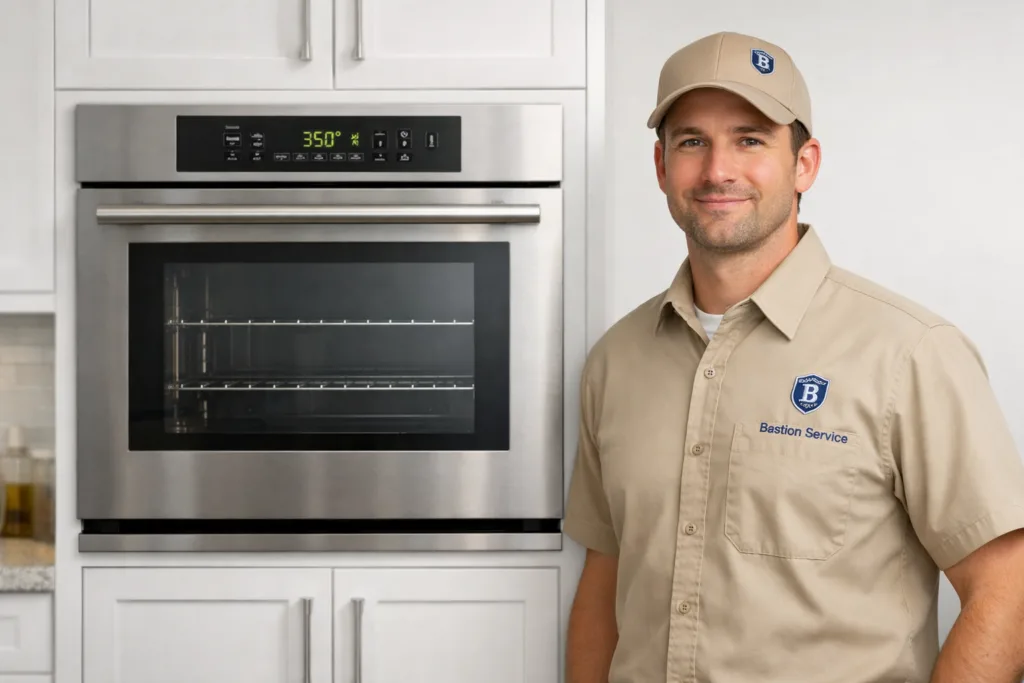
Wall oven problems are often easier to recognize in the kitchen than they are to explain. Maybe cookies suddenly brown on one side, casseroles need extra time every night, or the oven appears to preheat but never cooks the center of the dish correctly. With Summit wall ovens, those symptoms can point to different failures, so the best next step is to match the repair approach to the way the oven is behaving.
In many Mar Vista homes, the oven is used often enough that small changes show up quickly. A longer preheat, a door that no longer closes tightly, or a display that works one day and freezes the next usually means the problem is developing, not going away on its own.
How symptom patterns help narrow down the problem
Two ovens can seem to have the same issue while failing for completely different reasons. An oven that is “not heating” may actually be getting partial heat from only one circuit. An oven that “runs hot” may have a bad temperature sensor, a control problem, or a door seal issue that changes how heat is retained and measured.
Looking at the full symptom pattern usually gives the clearest direction. Helpful details include:
- Whether the oven reaches any heat at all
- If broil works but bake does not, or the reverse
- How long preheat now takes compared with normal use
- Whether the display stays on during the problem
- If the issue happens every cycle or only intermittently
- Whether the breaker trips, the unit shuts off, or an error code appears
Those clues help determine whether the failure is more likely in the heating system, sensor circuit, controls, door-latch assembly, or power supply.
Common Summit wall oven issues in Mar Vista homes
Oven will not heat at all
If the lights or display come on but the oven cavity stays cold, the cause may be a failed bake element, broil element, temperature sensor, relay, or control board problem. Power supply issues can also create this symptom, especially when the oven appears active but cannot produce usable heat.
On electric wall ovens, partial power conditions can be misleading. The clock and panel may still function even when the heating side of the appliance is not operating correctly.
Slow preheating
A Summit wall oven that takes much longer than normal to preheat may have a weak element, inaccurate sensor feedback, or a control issue affecting heat cycling. Homeowners sometimes notice this first as meals needing extra bake time instead of realizing preheat performance has changed.
Slow preheat should not be dismissed as normal aging without testing. When one component weakens, the oven may continue to work poorly for a while before failing more completely.
Uneven baking
Uneven results often show up as overbrowned tops, pale bottoms, or one rack cooking faster than another. This can happen when an element is not cycling correctly, the temperature sensor is drifting out of range, or heat is escaping around the door.
If you are rotating pans more often than you used to or relying on guesswork to avoid undercooked centers, the oven is no longer regulating heat the way it should.
Temperature swings
All ovens cycle to maintain temperature, but excessive swings can make cooking inconsistent from one use to the next. A failing sensor, control board fault, or relay problem may cause the oven to overshoot, undershoot, or recover too slowly after the door is opened.
This is one of the more frustrating symptoms because it can seem random. The same recipe may turn out fine one day and poorly the next, even at the same setting.
Error codes or control problems
When the control panel flashes an error, stops responding, or resets during use, the issue may involve the user interface, sensor readings, internal communication, or the main control. A power reset may occasionally clear a brief glitch, but repeated errors usually mean a real fault remains.
If the controls only work intermittently, or settings change unexpectedly, it is usually better to stop relying on the oven until the source of the problem is identified.
Door latch, hinge, or self-clean problems
A wall oven door that will not shut properly, will not unlock, or feels misaligned can affect both safety and cooking performance. Heat loss around the door can lead to poor temperature control, while latch failures can interfere with normal operation or leave the oven unusable after a cleaning cycle.
Door-related issues are not always just hardware problems. On some units, the control system and latch mechanism work together, so the repair may involve more than replacing a hinge or adjusting the door.
Breaker trips or oven shuts off mid-cycle
This symptom deserves prompt attention. Breaker trips can be associated with a shorted element, damaged wiring, moisture intrusion, or an internal electrical failure. An oven that loses power in the middle of cooking may also have a connection issue or failing control component.
If this is happening, continued use can increase damage and should be avoided until the appliance is checked.
Signs the oven should not keep being used
Some performance issues are inconvenient but not immediately hazardous. Others are a reason to stop and schedule service before using the oven again. It is wise to discontinue use if you notice:
- Repeated breaker trips
- A burning electrical smell
- Sparking, arcing, or visible heat damage
- A door that will not close or lock properly
- Error codes that return after reset
- Shutdowns during normal baking cycles
Even when the oven still partly works, partial failures can put extra stress on other components. What starts as one failing part can lead to additional electrical or control damage if the oven keeps being run.
What usually gets checked during wall oven diagnosis
A useful service visit should do more than confirm that the oven is malfunctioning. It should narrow the issue to the specific part, circuit, or operating condition responsible for the complaint. Depending on the symptom, that may include checking heating performance, sensor readings, power input, control response, wiring condition, and door or latch operation.
For homeowners in Mar Vista, the goal is simple: understand whether the issue is isolated and repairable, or whether the oven has broader wear that changes the value of repair. That kind of practical repair guidance is much more useful than replacing parts based on guesswork.
Repair or replacement depends on the actual failure
Many Summit wall oven problems are worth repairing when the failure is limited to one component or a small group of related parts. Heating elements, sensors, latches, switches, and some control-related faults can make sense to address when the rest of the oven is in solid condition.
Replacement becomes a more serious consideration when the oven has multiple major issues, repeated control failures, significant door or cavity wear, or part availability problems that make the repair path less realistic. Age alone does not decide it. Condition, symptom history, and the scope of the failure matter more.
Helpful steps before scheduling service
Before service, it can help to note exactly what the oven is doing. Try to write down the setting used, whether bake and broil behave differently, how long preheat takes, and any code shown on the display. If the issue is temperature-related, it is also helpful to know whether the problem happens every time or only during certain cooking modes.
Do not disassemble panels or continue testing the oven if it is tripping power, showing signs of electrical damage, or producing unusual smells. In those cases, preserving the current condition is often the safest way to support a faster and more accurate diagnosis.
Choosing service for a Summit wall oven in Mar Vista
When a wall oven begins acting unpredictably, the most important thing is not just getting it running again, but understanding why it failed and whether the repair makes sense for the appliance as a whole. That is especially true with temperature problems, intermittent shutdowns, and electronic control issues that can be misread if the symptom is taken at face value.
For Summit wall oven repair in Mar Vista, homeowners are usually best served by a diagnosis focused on the exact complaint, the condition of the appliance, and the repair path most likely to restore normal cooking performance without unnecessary parts replacement.