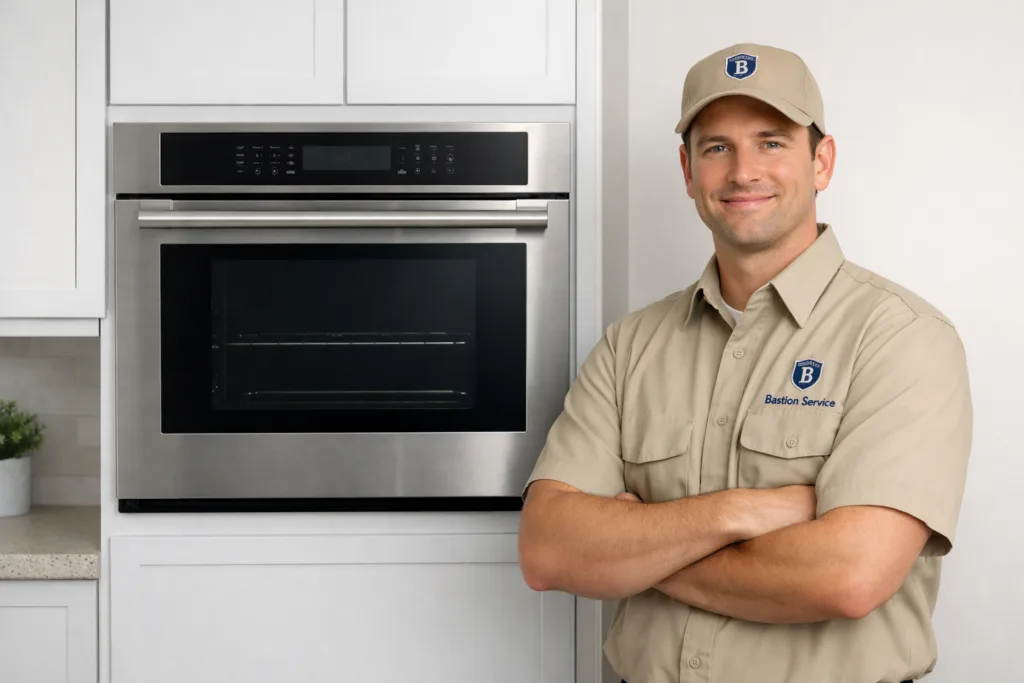
Built-in wall ovens can fail in ways that look similar on the surface but come from very different causes. If your Dacor unit is preheating slowly, baking unevenly, shutting off mid-cycle, or showing a fault on the display, the most useful next step is symptom-based testing so the actual failure is identified before any repair is approved.
What commonly goes wrong with a Dacor wall oven
Dacor wall ovens combine high-heat cooking components with electronic controls, temperature sensing, door-lock systems, and cooling parts that protect the cabinet and control area. When one part stops working correctly, the symptom may show up as poor cooking performance, confusing error messages, or a unit that seems to work only some of the time.
In many Mar Vista homes, the same oven is used heavily for weeknight meals, baking, and holiday cooking, so small changes are often noticed early. Longer preheat, food that browns unevenly, or a fan that suddenly sounds different can all be early signs that service is worth scheduling before the problem spreads.
Common symptoms and what they may indicate
Oven will not heat at all
If the control turns on but the cavity never gets hot, the issue may involve a failed bake element, broil element, thermal cutoff, control relay, temperature sensor, or incoming power problem. On some models, one cooking function may partially work while another does not, which is why a proper test matters more than replacing a part based on one symptom alone.
Slow preheat
Slow preheat often points to a weak heating circuit rather than a total failure. A partially failed element, a sensor reading out of range, or a control problem can all make the oven take much longer to reach temperature. Homeowners may first notice that familiar meals suddenly need extra time even though the set temperature has not changed.
Uneven baking or temperature swings
When one rack cooks faster than another, the top browns too quickly, or food comes out underdone in the center, possible causes include sensor drift, inconsistent element operation, airflow issues, or a control board that is not cycling heat correctly. These problems are especially frustrating because the oven may still appear to run normally while results become less predictable.
Error codes, blank screens, or unresponsive controls
A flashing code or frozen display can indicate control failure, keypad trouble, wiring issues, sensor faults, or communication errors between components. Some codes point to an overheating condition or door-lock problem, while others relate to temperature sensing. The code helps narrow the search, but it does not replace direct testing.
Door will not close, lock, or unlock properly
Door problems affect both performance and safety. Heat can escape from a poor seal, causing longer cook times and inconsistent temperatures. If the lock system fails, self-clean functions may not start correctly, or the door may stay locked after a cycle. Hinges, latch assemblies, switches, alignment, and lock motors are all possible causes.
Breaker trips or oven loses power during use
An oven that cuts out during baking or repeatedly trips electrical protection should not be ignored. A shorted element, damaged wiring, terminal problem, or failing control component may be drawing power incorrectly. Continued use can increase damage and may turn an intermittent issue into a complete failure.
Fan noise, excess heat, or cooling problems
Many wall ovens use cooling fans to protect electronics and surrounding cabinetry. If the fan runs very loudly, does not run when expected, or keeps running far longer than usual, the cause may be the fan motor, thermostat, sensor feedback, or control logic. Cooling faults can lead to overheating around sensitive electronic parts, so they are worth addressing promptly.
Why built-in oven repairs need careful diagnosis
Wall ovens are not as straightforward as freestanding units. Access often requires trim removal, careful handling of the built-in installation, and safe electrical isolation before testing begins. That matters because several failures can create the same kitchen symptom. For example, “not heating” could be a bad element, but it could also be a sensor problem or a relay on the control board that is no longer sending proper voltage.
For homeowners in Mar Vista, this matters most when deciding whether repair is worthwhile. A service visit should do more than name a likely part. It should clarify what failed, whether related wear is present, and whether the oven is a strong candidate for repair based on its overall condition.
Signs the problem should not wait
Some symptoms are inconvenient. Others suggest you should stop using the oven until it is checked. It is smart to pause operation if you notice:
- Repeated breaker trips
- Burning or electrical smells
- Visible sparking
- A door that will not lock or unlock as designed
- Power loss in the middle of a cycle
- Error codes that keep returning after reset attempts
These issues can sometimes damage additional components if the oven keeps running. A heating problem that starts as an occasional annoyance can end up affecting controls, wiring, or safety parts if left alone.
When repair usually makes sense
Many Dacor wall oven problems are still practical to repair, especially when the unit is otherwise in good shape and the failure is limited to a sensor, heating component, latch assembly, fan, or isolated electrical part. Built-in ovens also have installation value, so restoring the existing unit can be more sensible than replacing the entire appliance over a single failed component.
Repair decisions usually come down to a few straightforward points:
- What part actually failed
- Whether other systems show wear at the same time
- The age and condition of the oven overall
- Whether the repair restores reliable daily use
When replacement becomes the better option
Replacement may be the more reasonable path if the oven has repeated major electronic failures, multiple systems breaking down together, severe cavity or door wear, or repair costs that no longer fit the condition of the appliance. This is especially true when the symptom is only part of a broader pattern of declining performance.
A useful diagnosis helps make that decision less frustrating. Instead of guessing, you can compare the actual repair path against the likely benefit of keeping the built-in unit in place.
What homeowners can notice before service
You do not need to take the oven apart to provide helpful information. A few observations can make the symptom pattern clearer:
- Whether bake, broil, and convection all fail or only one mode does
- Whether preheat is slow every time or only occasionally
- If the issue appears after the oven gets fully hot
- Any fault code shown on the display
- Whether the cooling fan sounds different than usual
- If the breaker trips immediately or later in the cooking cycle
Details like these often help narrow the likely fault faster and can make the repair decision more straightforward for a busy household in Mar Vista.
What good service should accomplish
A worthwhile Dacor wall oven repair should explain the symptom in plain language, identify the failed component or system, and point out any related issues that may affect reliability. That gives you a realistic picture of what the repair solves now and what to watch for later.
For a home in Mar Vista, the goal is simple: restore stable heating, predictable cooking results, and safe operation without turning the process into a series of guesses. When the problem is diagnosed accurately, it becomes much easier to decide whether to repair the oven now or plan for replacement on your own timeline.