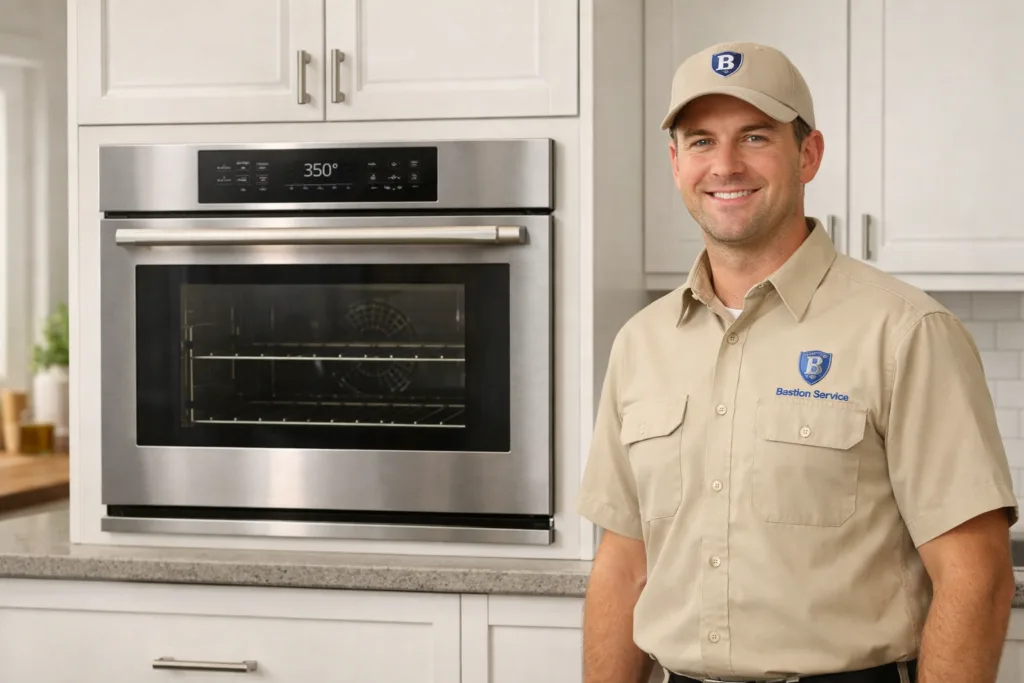
Common wall oven problems and what they can mean

A wall oven can fail in a few different ways, and the symptom pattern often says a lot about where the problem starts. If the oven powers on but does not reach the selected temperature, possible causes include a weak bake element, a failing igniter on gas models, a drifting temperature sensor, or a control issue that is no longer regulating heat correctly. When preheat becomes unusually slow, the appliance may still seem usable, but cooking results usually become less predictable.
Uneven baking is another frequent complaint in Mar Vista homes. Food may brown too fast on the top rack, stay pale on the bottom, or come out differently from one side of the cavity to the other. That can point to partial heating failure, poor temperature feedback, convection problems, or a door that is not sealing well enough to hold heat consistently. In kitchens where surface burners are also acting up, related cooking issues may overlap with Cooktop Repair in Mar Vista.
Some units appear to have power but will not begin a bake cycle at all. In those cases, the issue may involve the control panel, touchpad, thermal fuse, door latch system, wiring, or incoming power. If the display works but the cavity stays cold, the fault usually goes beyond a simple reset and needs component testing rather than guesswork.
Signs the oven should not keep being used
Not every problem is immediately hazardous, but some warning signs should not be ignored. If the breaker trips during preheat, the oven shuts off in the middle of cooking, or the controls flicker while heat is running, continued use can put more stress on electrical parts. A built-in unit that struggles to regulate temperature can also run longer than normal, which may increase wear on elements, relays, and wiring.
Stop using the appliance if there is a strong hot-wire smell, visible sparking, smoke unrelated to food residue, or obvious damage around the heating area. A wall oven that overheats the surrounding cabinet space or cannot close securely also deserves prompt attention. Households seeing the same kind of heat or performance issues in a standard kitchen oven may compare those symptoms with Oven Repair in Mar Vista.
Diagnosis should follow the exact symptom pattern
Effective wall oven service starts with what the appliance is actually doing, not with replacing the most common part first. An oven that never heats at all is different from one that heats only on broil, loses temperature after twenty minutes, or works some days and fails on others. The more specific the pattern, the easier it is to narrow the fault to the right system.
Helpful details include whether the display is normal, whether the interior light works, how long preheat takes, whether error codes appear, and whether the issue affects bake, broil, convection, or all functions. Those clues can separate a temperature sensor problem from a failing relay, weak igniter, damaged element, or supply issue. In kitchens with a combined oven-and-burner appliance, similar cooking complaints may be better matched with Range Repair in Mar Vista.
Symptoms that usually justify scheduling service
- Oven will not heat or takes far too long to preheat
- Temperature swings cause undercooked or overcooked meals
- Repeated fault codes return after resetting power
- Controls stop responding or start intermittently
- Door does not close, seal, or latch properly
- Breaker trips when bake or broil is selected
- One function works, but another does not
Even intermittent problems are worth attention. A wall oven that works only part of the time can be harder to trust than one that fails completely, especially for everyday meal prep, batch cooking, or holiday use.
Repair versus replacement for a wall oven
Many wall oven failures are repairable, particularly when the problem is limited to an igniter, heating element, sensor, switch, door component, or isolated electrical part. Repair decisions become more complicated when multiple systems are failing at once, the control has significant damage, or the unit has a long history of inconsistent performance.
Replacement is not always the simpler option with a built-in appliance. Cabinet fit, electrical requirements, trim, and installation dimensions all matter, which can make an accurate diagnosis especially valuable before a homeowner decides what to do next. If the fault is isolated and the rest of the appliance is in good condition, repair is often the practical path.
What makes wall oven service different from other cooking appliances
A wall oven has its own access challenges because it is built into cabinetry and relies on a dedicated installation. That affects how safely the appliance can be inspected, removed, tested, and reassembled. The failure itself may seem similar to a problem on another cooking appliance, but the repair process is often more involved because of the built-in design and the way heat is managed inside the cabinet opening.
That distinction matters when homeowners are comparing symptoms across the kitchen. Surface burner ignition, top-burner flame issues, and freestanding cooking problems are usually handled differently than wall oven cavity heating or control faults. If those symptoms are showing up on a separate appliance, they may align more closely with Stove Repair in Mar Vista.
What homeowners in Mar Vista can expect from the service process
Most households want the same basic answers: what failed, whether it is safe to keep using the oven, and whether the repair makes sense. A useful visit should focus on testing the affected functions, checking the parts tied to the symptom, and explaining the findings in plain language. That helps reduce wasted parts, repeat failures, and uncertainty about the next step.
For homeowners in Mar Vista, wall oven service is usually most helpful when it stays centered on the real kitchen problem at hand—no heat, slow preheat, uneven baking, control failure, or tripping power—so the recommendation fits how the appliance is actually being used at home.