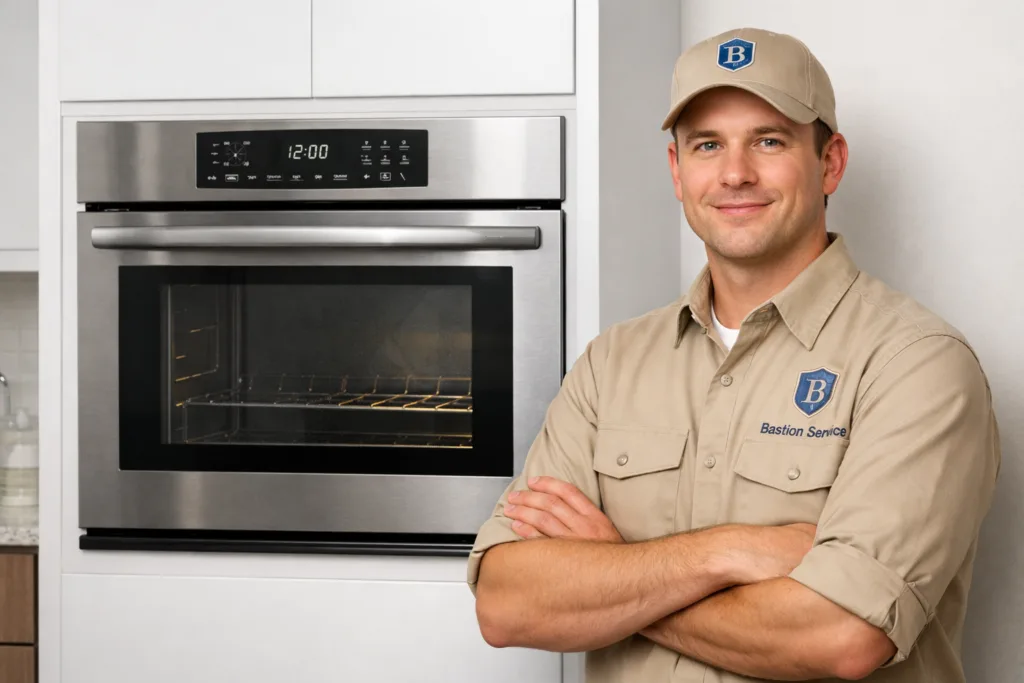
Wall oven problems rarely show up in only one way. A Frigidaire unit may still power on but fail to bake, drift far from the selected temperature, or stop mid-cycle after seeming normal during preheat. In many Mar Vista homes, the most efficient path is to match the symptom pattern to the most likely heating, sensor, latch, or control-related cause before deciding on repair.
Start with what the oven is actually doing
The same complaint can come from different failures. “Not heating” might mean no heat at all, weak heat, or heat that cuts in and out. “Uneven baking” could point to a failing bake element, a temperature sensor sending the wrong reading, a relay not cycling correctly, or a door that is not sealing as it should. A useful diagnosis looks at when the problem began, whether it happens on every cycle, and whether broil, bake, convection, lights, and the display are all behaving normally.
That matters because part-swapping based on guesswork can turn a manageable repair into a longer and more expensive one. Built-in wall ovens also have tighter access and more integrated controls than many freestanding units, so confirming the fault first is especially important.
Common Frigidaire wall oven symptoms
Oven will not heat at all
If the display works but the cavity stays cold, possible causes include a failed bake element, broil element problem, open thermal limiter, sensor fault, damaged wiring, or an electronic control issue. Some models appear normal on the panel even when the heating circuit is not completing properly.
If neither bake nor broil works, the problem often goes beyond a single element. If broil works but bake does not, that can narrow the issue to the bake circuit or a component specific to that function.
Slow preheat
A Frigidaire wall oven that eventually reaches temperature but takes far too long may have a weak element, inaccurate sensor feedback, or a control board problem that is not supplying heat correctly through the cycle. Homeowners often notice this first as recipes taking longer than expected or preheat times stretching well beyond what used to be normal.
Uneven baking or roasting
Food that burns on one side, browns too quickly on top, or stays pale underneath can indicate cycling issues, temperature regulation problems, or inconsistent heat delivery. In some cases, the oven is technically heating but not holding the selected temperature evenly enough for reliable results.
Temperature swings
Some fluctuation is normal during oven cycling, but large swings are not. If dishes are repeatedly overcooked one day and undercooked the next at the same setting, the sensor may be reading inaccurately, the control may be mismanaging the heat cycle, or the oven may need calibration after the underlying fault is addressed.
Display is on, but bake will not start
When the clock and touch controls respond but the oven will not begin cooking, the issue may involve the control board, keypad, relay, latch system, or a stored fault condition. Self-clean-related lock problems can also prevent normal operation even when the oven otherwise appears to have power.
Door will not unlock or self-clean caused a problem
After a self-clean cycle, some wall ovens develop latch, lock motor, or control issues that leave the door stuck or the oven disabled. Repeatedly forcing the door or hard resetting the unit can make the situation worse, especially if the underlying problem is in the lock assembly or control circuit.
Signs the problem may be electrical rather than mechanical
Not every heating complaint starts with the element itself. If the oven shuts off mid-cycle, trips a breaker, loses power intermittently, or shows error codes that come and go, the failure may involve wiring, terminals, relays, or the electronic control. These issues can be more than performance problems; they can also affect safe operation.
- Breaker trips when preheat begins
- Burning smell from the control area or wiring
- Intermittent power loss during baking
- Recurring fault codes after resets
- Oven overheats surrounding cabinetry or the door area
When those signs are present, continued use is not a good idea until the cause is identified.
When it makes sense to stop using the oven
Some problems are frustrating but limited to cooking performance. Others justify shutting the unit down right away. Stop using the oven if it is tripping breakers, producing an electrical or burning odor, failing to shut off normally, overheating, or showing lock and control behavior that seems erratic. If the oven is only baking inconsistently, service is still worth scheduling sooner rather than later because weak heating and sensor problems often progress into complete no-heat failures.
Repair or replacement depends on the fault, not just the age
Many Frigidaire wall ovens are worth repairing when the problem is isolated to a bake element, temperature sensor, door latch, igniter-free electric heating circuit component, or another defined part and the rest of the appliance is in good shape. Repair becomes harder to justify when there are multiple issues at once, repeated electronic control failures, significant interior or door damage, or a repair cost that approaches the value of replacement.
Age still matters, but it is only one factor. A newer oven with one confirmed failure is often a straightforward repair candidate. An older unit with ongoing temperature complaints, control glitches, and prior repair history usually calls for a more careful cost comparison.
What homeowners in Mar Vista should expect from a service visit
A worthwhile visit should do more than name a part. It should clarify whether the oven is heating properly, which component has failed, whether related parts were affected, and whether the appliance is safe to use before the repair is completed. For built-in ovens, access, fit, and wiring layout can all affect the repair approach, so accurate testing matters as much as the replacement part itself.
The goal is to leave you with a practical decision: repair now, monitor a minor issue, or replace the unit if the overall condition no longer supports a sensible fix. That helps restore normal cooking without unnecessary delay or guesswork.