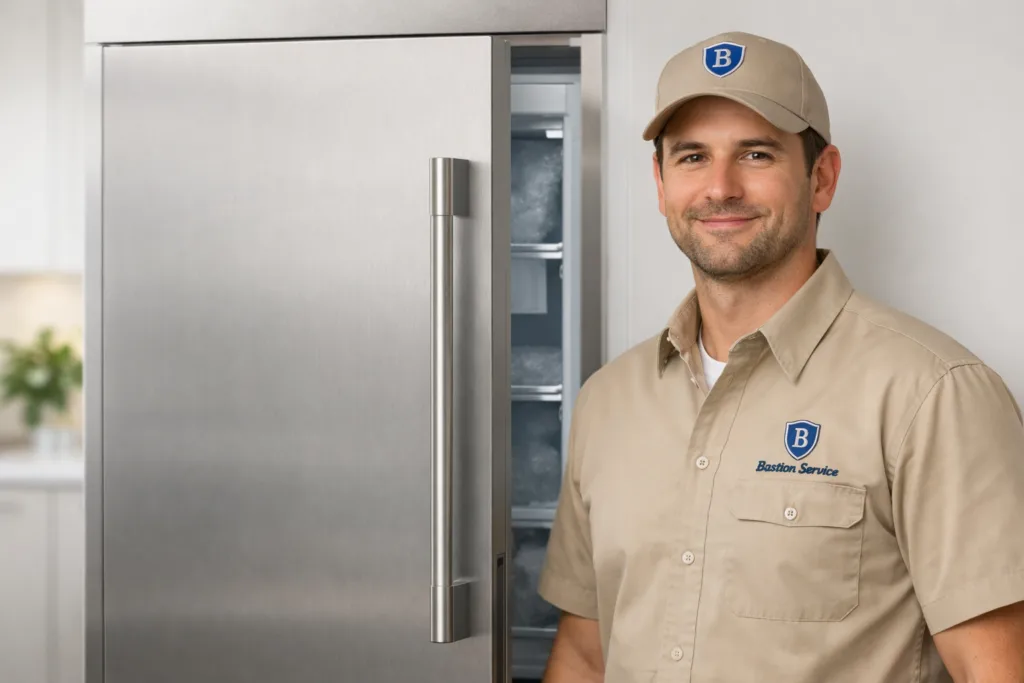
Temperature problems in a Thermador freezer rarely come from just one obvious cause. A cabinet that seems only slightly warm may actually have an airflow restriction, a defrost failure, a sensor issue, a weak fan motor, or a more serious sealed-system problem. Looking at the full symptom pattern helps separate a manageable repair from a larger cooling failure.
Common Thermador freezer issues in Mar Vista homes
Many freezer problems start with small warning signs: ice cream softens, packages feel slushy at the edges, frost thickens on shelves, or the appliance sounds different than usual. Those changes matter because they often appear before the freezer stops working completely.
Freezer not freezing properly
If food is no longer staying solid, the problem may involve poor air circulation, a failing evaporator fan, dirty condenser conditions, a defrost system fault, or an electronic control issue. In some cases, the compressor runs for long periods without bringing temperatures down enough. That usually means the repair path needs careful testing rather than a quick part swap.
Households often notice this problem first through texture changes in food, slow ice production, or items freezing unevenly. If only some sections of the freezer are warming up, that often points to airflow or fan-related trouble rather than a simple setting issue.
Frost buildup on walls, drawers, or food
Heavy frost can come from a worn door gasket, a door left slightly ajar, a defrost heater failure, a sensor problem, or a control board that is not initiating defrost when it should. As frost thickens, air movement drops and cooling becomes less consistent throughout the cabinet.
What looks like “too much ice” is often a sign that the freezer is losing efficiency. If frost returns quickly after being cleared, the source of the moisture or defrost interruption usually needs repair.
Water leaking under or inside the freezer
Water around the unit commonly points to a blocked defrost drain, thawing caused by unstable temperatures, or moisture entering through a poor seal. Even a small recurring leak deserves attention because it can create ice sheets inside the freezer or damage nearby flooring.
If water appears after periods of warming and refreezing, the cooling issue and the moisture issue may be part of the same fault rather than two separate problems.
Buzzing, clicking, rattling, or fan noise
A Thermador freezer should not suddenly become loud. New noises may come from an evaporator fan hitting ice, a condenser fan motor wearing out, compressor start components struggling, or vibration caused by loose mounting or panels. The exact type of sound matters.
- Clicking: can suggest trouble starting the compressor or an electrical control issue.
- Loud fan noise: may indicate ice interference or a failing fan motor.
- Buzzing or humming that changes: can point to compressor stress or airflow issues.
- Rattling: may be something simple, but it can also reflect a developing mechanical problem.
Why the symptom pattern matters
Two freezers can seem to have the same problem while needing very different repairs. A warm interior with heavy frost usually suggests a different path than a warm interior with no frost and a constantly running compressor. That is why the best repair decisions come from testing temperatures, airflow, fan operation, defrost function, and control response together.
This matters even more with intermittent complaints. If the freezer cools normally for a day and then warms up again, the issue may involve sensors, controls, or a component that fails only during part of the operating cycle. Intermittent behavior is often where guesswork becomes expensive.
Signs the problem is getting worse
Some households wait because the freezer is still “kind of working.” That can be risky when cooling performance is already slipping. A freezer that keeps running under poor conditions can put added strain on key components and increase the chance of food loss.
It is smart to arrange service when you notice any of the following:
- Frozen food softening or refreezing
- Frost returning quickly after removal
- The door not sealing tightly
- Long run times with little improvement in temperature
- Recurring puddles or ice buildup near the bottom
- New mechanical or fan-related noise
- Interior temperature swings from day to day
Repair versus replacement factors
Not every Thermador freezer problem leads to the same recommendation. A drain blockage, gasket issue, fan motor failure, or certain sensor and defrost faults may be well worth repairing if the freezer is otherwise in solid condition. More significant cooling failures can change that calculation, especially if the unit has a history of repeat problems or requires multiple major parts.
The most useful question is not simply whether a repair is possible, but whether it makes sense based on the freezer’s condition, the source of the failure, and the expected reliability after repair. That gives homeowners in Mar Vista a more realistic way to decide how to move forward.
What to do before service arrives
If the freezer is warming up, protect food first. Keep the door closed as much as possible and move sensitive items if temperatures are no longer safe. Do not scrape ice with sharp tools, since liners, coils, and internal components can be damaged easily.
If there is water on the floor, dry the area to prevent slipping and watch for continued leakage. If the freezer is making harsh clicking or grinding sounds, limiting use until it is inspected may help prevent further strain.
What Mar Vista homeowners should expect from a freezer repair visit
A useful service call should focus on identifying the exact fault behind the symptom, not just addressing the most visible result. For a Thermador freezer, that typically means evaluating temperature performance, airflow, frost pattern, fan operation, drain condition, controls, and how the system cycles. From there, the repair recommendation should be based on whether the likely fix is timely, cost-effective, and likely to restore stable freezing performance.
For households in Mar Vista, that kind of practical diagnosis is often the difference between solving the issue once and continuing to deal with soft food, frost, leaks, or repeat breakdowns.