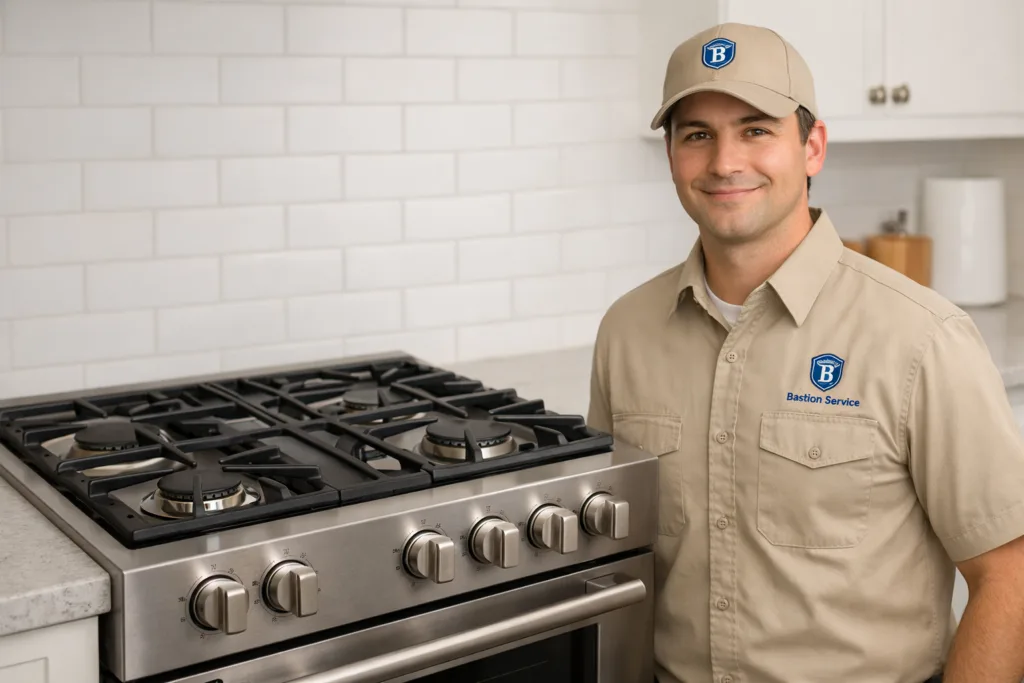
Cooktop problems are frustrating because the symptom you notice at the surface is not always the part that has actually failed. A burner that will not light, a zone that heats unevenly, or controls that respond inconsistently can each trace back to several different causes. That is why the most useful repair path starts with the exact pattern of failure rather than a guess based on one visible issue.
Start with the symptom pattern
Thermador cooktops can develop ignition, heating, surface, or control problems over time. In many Mar Vista homes, the difference between a straightforward repair and a drawn-out problem is whether the issue is narrowed down early. One burner behaving badly is often a different situation from all burners acting up at once, and an intermittent issue usually points in a different direction than a completely dead burner.
Useful details include whether the problem affects gas or electric cooking zones, whether it happens every time or only occasionally, and whether it began after a spill, cleaning, power interruption, or unusually heavy use. These small observations often help separate a minor burner-related fault from a switch, module, sensor, or wiring issue.
Common cooktop symptoms and what they may mean
- Burner will not ignite: Possible causes include a clogged burner port, misaligned burner cap, worn igniter, weak spark output, or a problem in the ignition circuit.
- Constant or repeated clicking: Moisture, residue, a stuck ignition switch, or a failing spark component can all cause ongoing clicking.
- Uneven flame or uneven heating: This may come from blocked ports, burner assembly issues, element wear, or a control problem affecting heat regulation.
- Cooktop powers on but does not heat properly: On electric-style units, the fault may involve an element, limiter, sensor, control, or power connection.
- Heat level does not adjust correctly: A faulty switch, sensor, or control component can cause a burner to stay too hot, run too cool, or ignore setting changes.
- Cracked glass or visible surface damage: Surface damage can affect safe use and may require a closer look before the cooktop is operated again.
Ignition problems on Thermador gas cooktops
Ignition trouble is one of the most common reasons homeowners call for cooktop service. Sometimes the cause is simple, such as a burner cap that is slightly out of place or ports blocked by cooking residue. In other cases, the burner keeps clicking without lighting because the igniter is weak, the spark path is inconsistent, or an ignition switch is staying engaged when it should not.
If only one burner is affected, the issue is often isolated near that burner assembly. If several burners click unpredictably or fail to light normally, the repair usually needs a broader inspection of the ignition system. Delayed lighting should not be ignored, especially when the burner takes multiple attempts to catch or behaves differently from the others.
When clicking is more than a nuisance
Clicking after cleaning can sometimes stop once moisture fully dries out. But clicking that continues during normal use, starts randomly, or happens even when a burner is already lit usually points to a part that needs attention. Besides being annoying, repeated clicking can signal a switch or spark issue that will not improve on its own.
Uneven heat and burner performance issues
A cooktop does not have to stop working completely to need repair. Many service calls begin with cooking results that are suddenly less predictable: pans taking too long to heat, one side of a burner cooking faster than the other, or temperature changes that no longer match the knob setting. These problems often show up before a burner fails entirely.
On gas models, uneven flame may be related to burner blockage, burner wear, or assembly problems. On electric cooking zones, poor heating can point to an element issue, a failing switch, or a control component that is no longer regulating output correctly. If the same burner keeps underperforming no matter what cookware is used, that usually indicates the problem is in the appliance rather than in the pan.
Control and response issues
Modern cooktops depend on more than just burners and ignition parts. When a Thermador cooktop starts responding erratically, the issue may involve the control side of the appliance. Symptoms can include a burner that stays hotter than expected, settings that do not change the heat level properly, or a surface element that cycles in a way that does not match normal cooking behavior.
Intermittent control problems are easy to put off because the cooktop may still work some of the time. The problem with waiting is that inconsistent performance can become harder on related parts and more disruptive to everyday cooking. A burner that overheats or fails to respond predictably is worth checking before it creates bigger frustration or damages cookware.
Cracked glass and surface damage
Visible damage deserves special attention. If the cooktop surface is cracked, chipped, or otherwise compromised, continued use may not be a good idea until the condition is evaluated. Surface damage can affect heat transfer, cleaning, and safe operation, and it may also indicate that impact or heat stress has affected nearby components.
Not every damaged surface leads to the same repair recommendation. The right next step depends on the size and location of the damage, the overall condition of the cooktop, and whether the underlying heating or control system is still in good shape.
When it makes sense to stop using the cooktop
Some symptoms are more urgent than others. It is wise to pause regular use when you notice any of the following:
- Delayed ignition or burners that do not light consistently
- Continuous clicking that does not stop after the surface is dry
- Burners overheating or failing to respond to normal settings
- Visible sparking, burning smells, or signs of heat damage
- Cracked glass or damaged cooking surface
These problems can move beyond simple inconvenience and may put added strain on the appliance if they are ignored.
Repair or replacement?
Many Thermador cooktop issues are worth repairing when the failure is limited and the rest of the unit is still in solid condition. That is especially true when the problem is tied to a specific burner, ignition component, switch, or control-related part and the cooktop has otherwise been performing well.
Replacement becomes more reasonable when there is significant surface damage, multiple major faults at the same time, repeated unrelated repairs, or heavy overall wear that suggests more failures are likely. For homeowners in Mar Vista, the most practical choice usually comes down to the age and condition of the cooktop, the specific parts involved, and whether the repair restores reliable day-to-day use.
Helpful notes to gather before service
Before scheduling service, it helps to note:
- Whether one burner or multiple burners are affected
- Whether the problem is constant or intermittent
- Whether it started after a spill, deep cleaning, or power issue
- Whether the symptom changes when the cooktop has been off for a while
- Whether there is visible damage, unusual odor, or abnormal noise
These details can make troubleshooting more efficient and help identify whether the fault is centered in the burner assembly, ignition system, electrical supply, or control section.
What homeowners in Mar Vista should expect from cooktop repair
Good service should do more than get a burner working once. The goal is to identify the failed component, check for related wear or secondary issues, and confirm that the cooktop returns to stable household use. That matters especially with recurring symptoms like clicking, weak heating, and erratic control response, where one failed part can sometimes affect the performance of another.
If your Thermador cooktop is no longer heating evenly, igniting reliably, or responding the way it should, symptom-based service is the best way to determine whether the problem is isolated, repairable, and worth addressing now.