




Thermador appliances often show the same outward symptom for very different reasons. A refrigerator that seems slightly warm, an oven that bakes unevenly, or a dishwasher that pauses mid-cycle can each involve controls, sensors, airflow, drainage, ignition, or worn mechanical parts. Looking at the full symptom pattern usually tells you more than the headline complaint alone.
For specific Thermador appliance paths in Brentwood, review Thermador Refrigerator Repair in Brentwood, Thermador Freezer Repair in Brentwood, and Thermador Dishwasher Repair in Brentwood.
How to read the symptom before deciding on repair
Homeowners in Brentwood can often narrow the issue by noting a few basics before service is scheduled:
- Did the problem appear suddenly or get worse over time?
- Is it constant, or does it happen only on certain cycles or settings?
- Did you notice a new noise, smell, leak, error code, or temperature swing at the same time?
- Does the appliance still run, but no longer perform normally?
Those details help separate a simple operating issue from a component failure. They also help determine whether continued use is merely inconvenient or likely to cause more damage.
Cooking appliances: when heat, ignition, or control behavior changes
Cooktop and range symptoms
Thermador cooktops and ranges may develop problems such as burners that will not ignite, repeated clicking, weak flame, uneven heating, or controls that respond inconsistently. Electric surfaces may heat too slowly, cycle poorly, or become hotter than expected. Gas models may struggle because of ignition faults, moisture around switches, burner misalignment, or flame-sensing issues.
If one burner behaves differently from the others, that can point to a more localized fault. If multiple burners act up at once, the cause may be broader, such as a control, power, or ignition system issue. Repeated ignition failure, especially when paired with odor or delayed lighting, is not something to keep testing casually.
Oven and wall oven performance issues
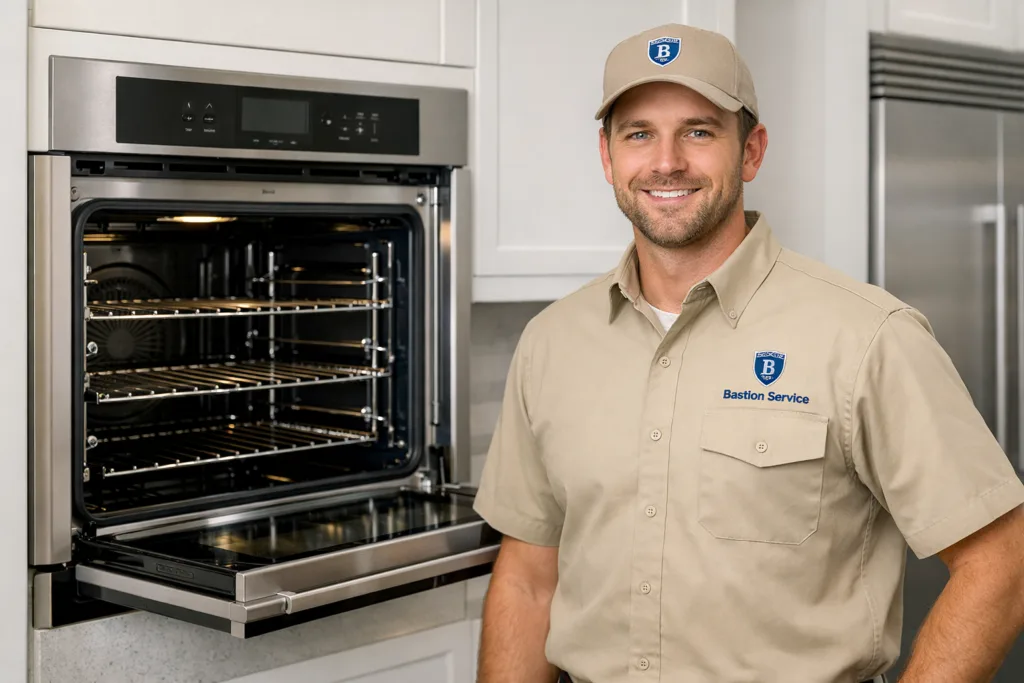
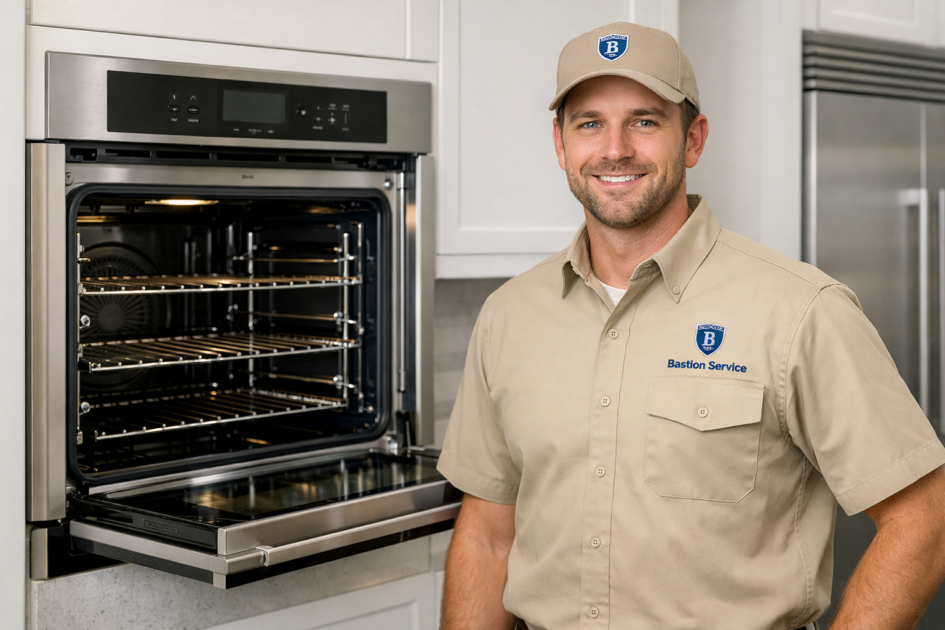
With Thermador ovens and wall ovens, the complaint is often less about whether the unit turns on and more about whether it cooks correctly. Slow preheating, uneven browning, inaccurate temperature, a weak broiler, unexpected shutoff, or a door that no longer seals well can all affect daily use.
In some cases, the fault is tied to a temperature sensor, heating element, convection fan, relay, or electronic control. In others, heat loss around the door changes cooking results enough that the appliance feels unreliable even though it technically runs. If recipes that used to work suddenly start coming out underdone on one side or overbrowned on another, the problem usually goes beyond normal variation.
Dishwasher problems that tend to get worse if ignored
A Thermador dishwasher should clean consistently, drain fully, and complete cycles without leaving water, odor, or residue behind. When it starts leaving dishes cloudy, stopping before the end of the cycle, leaking near the door, or holding standing water, the problem usually needs more than detergent changes or a quick reset.
Different symptoms often point in different directions:
- Dirty dishes after a full cycle: possible circulation, spray arm, loading, or wash-system issues
- Standing water: often related to drainage restriction, pump trouble, or control failure
- Leaks: may come from the door seal, connections, overfilling, or internal wear
- Odor buildup: commonly follows poor draining or repeated incomplete washing
If performance has changed over several cycles, it is usually smarter to address it early. Small drainage or seal issues can turn into cabinet-area moisture problems if the dishwasher keeps running in compromised condition.
Refrigerator and freezer issues usually need faster attention
Cooling problems are often the most time-sensitive because food preservation is involved. A Thermador refrigerator or freezer may show trouble through warmer compartments, soft ice cream, frost where it should not be, loud fan noise, constant running, leaking water, or ice maker failure.
These complaints can come from airflow blockages, evaporator or condenser fan issues, defrost faults, bad sensors, gasket leaks, water supply problems, or more serious sealed-system trouble. What matters most is whether the temperature is holding where it should. If food is softening, milk is warming, or frost is building unevenly, waiting too long can increase both food loss and repair complexity.
A freezer that still feels cold but no longer freezes solid is also worth taking seriously. That sort of “almost working” condition often means the appliance is under strain and losing ground rather than recovering on its own.
When the problem is intermittent
Intermittent appliance problems are some of the most frustrating. A range may ignite perfectly one day and fail the next. A refrigerator may cool overnight and drift warm by afternoon. A dishwasher may complete one load and stop during the next. Intermittent behavior often points to a failing sensor, control, switch, fan, connection, or moisture-related issue rather than a simple all-or-nothing breakdown.
For homeowners, the most useful step is to note exactly when the symptom appears. Does it happen during preheat, during draining, after the door opens, after a self-clean cycle, or only when more than one function is used? That kind of pattern can make diagnosis much more efficient.
Signs you should stop using the appliance until it is checked
Some symptoms are more than minor convenience problems. It is wise to stop using the appliance and arrange service if you notice:
- Burning smells or signs of overheating
- Repeated breaker trips
- Visible leaking that is spreading beyond the appliance area
- Gas ignition that repeatedly fails or delays
- Major temperature loss in a refrigerator or freezer
- Grinding, buzzing, or knocking noises that are clearly new
Continued use in these situations can increase part damage and make the eventual repair less straightforward.
Repair or replace? Start with condition, not frustration
Many Thermador appliance problems are still repairable even when the appliance feels unreliable. A single failed part, worn seal, bad sensor, ignition fault, or drainage issue can often be corrected without replacing the entire unit. That is especially true when the rest of the appliance is in good condition and the problem is limited to one system.
Replacement becomes a more realistic conversation when there are multiple major failures, repeat breakdowns across different systems, or a repair burden that no longer matches the appliance’s condition. The key is separating a fixable fault from a broader decline. A useful diagnosis should help you understand which of those situations you are actually dealing with.
What homeowners in Brentwood should have ready before service
If your Thermador appliance is still running at all, a few details can make the visit more productive:
- The model number if it is easy to access
- A short note about when the symptom started
- Any error code shown on the display
- Whether the issue happens every time or only sometimes
- Photos of leaks, frost buildup, or display behavior if the symptom comes and goes
That information helps connect the complaint to the likely system more quickly, especially with intermittent refrigerator, oven, and dishwasher issues.
A focused approach across the Thermador kitchen lineup
Whether the problem involves a refrigerator, freezer, dishwasher, cooktop, range, oven, or wall oven, the goal is the same: identify which system is actually failing and whether repair is the sensible next move. Good service should explain why the appliance is behaving the way it is, what risks come with continued use, and what it would take to restore normal performance in a Brentwood home.


