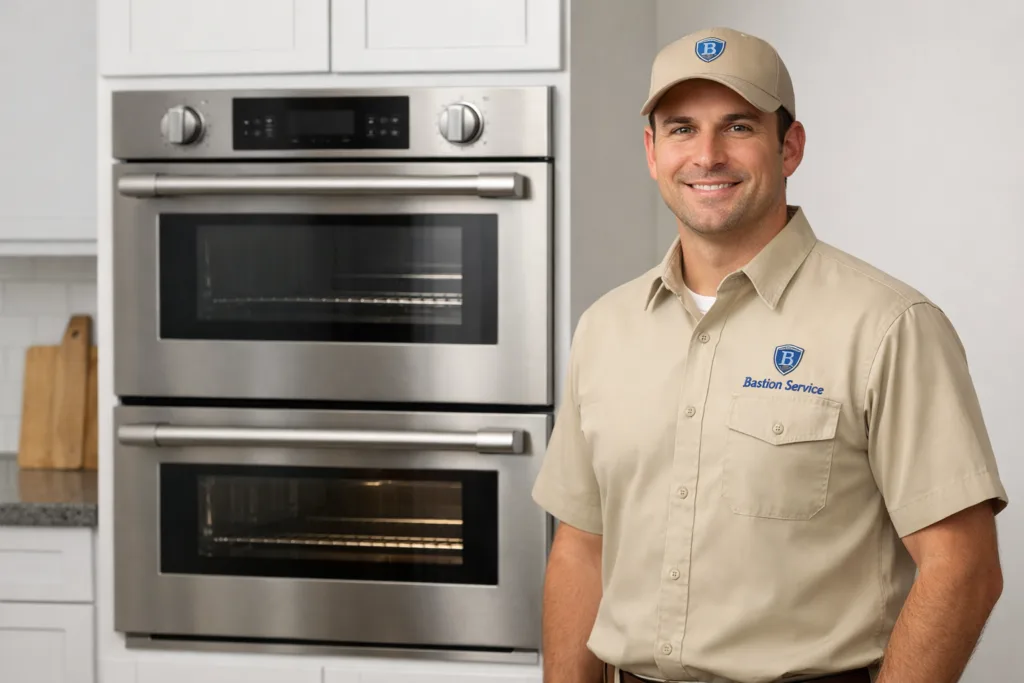
Cooking problems often start subtly: cookies browning too fast on the back edge, a roast taking far longer than expected, or a preheat cycle that seems to drag on every time. With a Thermador oven, those changes usually point to a specific component or control issue rather than “old age” in general. Looking at the exact symptom pattern helps narrow down whether the problem is related to heat production, temperature reading, airflow, door sealing, or the electronic controls that coordinate the cycle.
Common Thermador oven problems homeowners notice first
Some oven failures are obvious, while others show up as inconsistent cooking results for weeks before the appliance stops working properly. In Brentwood homes, the most common complaints tend to fall into a few recognizable categories.
Not heating at all
If the oven turns on but never gets hot, the cause may be different depending on the configuration. Electric models may have a failed bake or broil element, a relay issue, wiring damage, or a power-supply problem. Gas models may have a weak igniter that glows but does not draw enough current to open the gas valve consistently. In either case, the control panel can appear normal even though the oven cannot produce usable heat.
Slow preheating
A long preheat cycle can point to a heating component that is still functioning but no longer performing at full strength. A weak igniter, partially failed element, sensor drift, or a convection-related problem can all make the oven take much longer to reach the set temperature. Homeowners often notice this first when recipes that used to be routine suddenly run behind schedule.
Uneven baking
When one side of a tray cooks faster than the other, or the top of a dish finishes before the center, the issue may involve poor heat circulation, a failing convection fan, calibration errors, or a door gasket that is allowing heat to escape. Uneven results do not always mean the oven is far off temperature overall; sometimes they indicate that the heat is not being distributed the way it should be.
Temperature swings
All ovens cycle on and off to maintain heat, but wide swings can lead to scorched edges, underdone centers, and unreliable baking. A faulty sensor, control board issue, relay problem, or calibration error may cause the temperature to overshoot or drop too far before the next heating cycle begins. This kind of problem is especially frustrating because the oven still “works,” just not predictably.
Display, keypad, or control issues
If settings do not respond, the display goes blank, or error codes appear repeatedly, the problem may be in the user interface, electronic control, wiring connections, or another internal component reporting a fault. Control-related issues can also affect heating, timing, and self-clean functions even when the oven still powers on.
What specific symptoms can indicate
Different parts can create similar complaints, which is why symptom-based diagnosis matters. A few examples:
- Preheat starts normally but stalls: often associated with a weak igniter, failing element, or relay problem.
- Food cooks faster on one rack than another: may indicate airflow or convection trouble, or a temperature inconsistency across the cavity.
- The oven says it reached temperature, but food stays undercooked: can point to sensor drift or inaccurate temperature regulation.
- The unit shuts off during a cycle: may involve overheating protection, a control failure, or an electrical interruption.
- Error codes appear after preheating or during self-clean: often tied to sensor, latch, fan, or control faults.
This is also why replacing parts based on guesswork can get expensive quickly. Two ovens with the same “not heating” complaint may need entirely different repairs.
Door, latch, and self-clean problems
Oven performance is not only about the heat source. If the door does not close squarely, the gasket is worn, or the latch mechanism is not operating correctly, cooking temperatures can become inconsistent and preheat times can increase. Self-clean problems are another common sign that something else is wrong, especially when the door remains locked, the cycle will not begin, or the oven reports a fault afterward.
Because self-clean uses very high heat, it can expose existing weakness in sensors, control components, cooling fans, and door-lock assemblies. If problems begin right after a self-clean cycle, that timing is worth noting when service is scheduled.
When continued use can make the problem worse
Some issues are more than an inconvenience. Repeated failed ignition, overheating, breaker trips, burning smells, or shutdowns in the middle of cooking should not be ignored. Continuing to use the oven in that condition can increase stress on other components and turn a limited repair into a broader one.
It is best to stop using the oven and arrange service if you notice:
- the appliance trips power more than once
- the oven overheats or burns food at normal settings
- the door will not close or lock correctly
- the control panel behaves unpredictably
- the same error code returns after being cleared
- the unit shuts off before cooking is complete
For gas oven concerns, delayed ignition or failure to light should be addressed promptly. If there is a strong or persistent gas odor, stop using the appliance and address the gas concern first before arranging appliance service.
Repair or replace: what usually makes sense
Many Thermador oven issues are worth repairing, especially when the problem is isolated to one heating, sensing, ignition, fan, or control-related component. Repair tends to make the most sense when the oven is otherwise in solid condition and the fault is specific rather than widespread.
Replacement becomes a more serious consideration when there are multiple major failures at once, recurring electronic issues, heavy wear across several systems, or repair cost that approaches the value of keeping the current unit in service. Age alone does not decide it; the bigger question is whether the repair is likely to restore reliable daily cooking without chasing one problem after another.
What homeowners can note before service
A few observations can make troubleshooting faster and more accurate. Before your appointment, it helps to note:
- whether the oven is gas or electric
- if the issue affects bake, broil, convection, or all modes
- how long preheating takes compared with normal
- whether the display shows a code or resets on its own
- if the problem began after a power outage or self-clean cycle
- whether the issue is constant or intermittent
Even simple details like “the top browns but the center stays pale” or “it reaches 350 on the display but cooks like 275” can be useful because they point toward different failure paths.
Thermador oven service in Brentwood with the right focus
For residential Thermador oven repair in Brentwood, the goal is to restore normal cooking performance, not just get the display to light up again. That means identifying why the oven is heating poorly, cycling incorrectly, or misreading temperature, then weighing whether the repair is straightforward and worthwhile for the household. A practical repair guidance process should leave you knowing what failed, how it affects daily use, and whether the recommended repair is likely to solve the actual complaint.
Why symptom patterns matter with premium ovens
Thermador ovens are built for precise cooking, so relatively small faults can show up in noticeable ways. A minor sensor issue may cause repeated baking frustration long before the oven completely fails. A weakening igniter may still light sometimes, but create long delays and inconsistent results. A convection problem may only be obvious on multi-rack cooking or longer roasting cycles.
That is why the most useful service approach is based on how the oven behaves in real use: what happens during preheat, how it cycles once hot, whether the temperature stays stable, and how the controls respond through the full cooking process. When those patterns are understood, homeowners can make a more confident decision about repair timing and next steps.