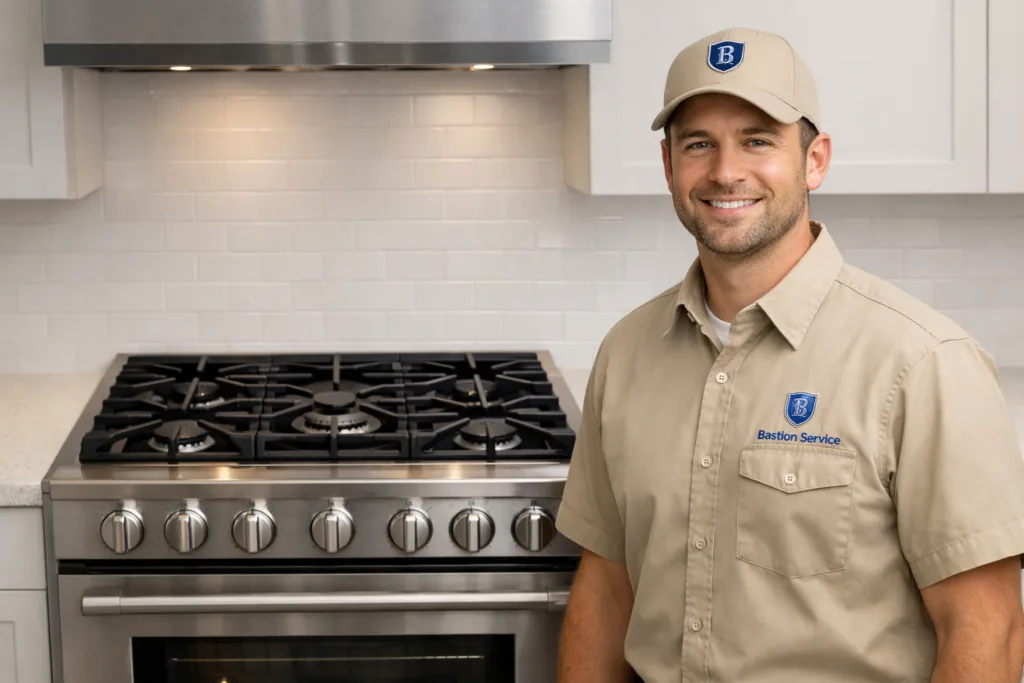
Cooking problems usually show up first as small inconsistencies: a burner that takes too long to light, a flame that looks uneven, or a heating zone that no longer matches the selected setting. On a Thermador cooktop, those symptoms can come from different systems, so the smartest next step is to match the symptom pattern to the likely failure before assuming a part needs to be replaced.
Common Thermador cooktop issues homeowners notice first
Cooktops tend to give warning signs before a complete failure. Paying attention to how the unit behaves from one meal to the next can help narrow down whether the problem involves ignition, heat regulation, controls, or the cooking surface itself.
Burner will not ignite
On gas models, a burner that clicks but does not light may have a misaligned cap, blocked burner ports, moisture around the igniter, or a fault in the ignition circuit. If only one burner is affected, the problem is often localized. If multiple burners stop igniting correctly, the issue may involve a shared component or supply-related condition.
If you notice a strong or persistent gas smell, stop using the cooktop until the safety issue is addressed. A burner that fails to light consistently should not be treated as a minor inconvenience.
Clicking continues after the flame is lit
Constant clicking after ignition is a common complaint on premium gas cooktops. In some cases, cleaning and drying the burner area resolves it. In others, the symptom points to an ignition switch problem, contamination around the electrode, or a spark module fault. When the clicking becomes routine, it usually means the ignition system is no longer operating normally.
Burner heats weakly or unevenly
Uneven flame or poor heat output can make simple cooking tasks unpredictable. A pot may boil slowly on one side, or food may brown unevenly because the heat pattern is no longer balanced. On gas units, that can indicate obstruction, burner assembly wear, or regulation issues. On electric or induction-style cooking zones, weak heating may point to a failing element, sensor, relay, or control component.
Heat level does not match the setting
If low heat acts too hot, or a burner seems stuck at one level, the cooktop may have a switch or control issue rather than a burner problem. This is especially important on Thermador models with more advanced electronic controls, where a response problem can look like a heating failure even though the root cause is in the control system.
Intermittent operation
A cooktop that works normally one day and acts up the next often has an underlying electrical or heat-related fault. Loose connections, failing switches, and components that break down only after warming up can all create inconsistent performance. In Brentwood homes, this often shows up during longer cooking sessions when the unit has been running for a while.
How symptom patterns help identify the likely repair path
Not every cooktop problem means the same thing. Grouping the symptom correctly helps determine whether the issue is isolated, shared across the unit, or serious enough to make continued use a bad idea.
- One burner not lighting: often tied to that burner’s cap, electrode, wiring, or switch path.
- Several burners not lighting: may indicate a spark module problem, power issue, or another shared fault.
- One cooking zone not heating: commonly linked to an element, connection, or zone-specific control failure.
- Burner overheats or will not regulate: may point to a bad switch, relay, sensor, or control board issue.
- Repeated clicking: often signals moisture, contamination, misalignment, or failure in the ignition system.
- Cracked glass or surface damage: can affect both safety and whether repair is still worthwhile.
Signs the cooktop should not be used until it is checked
Some symptoms are more than performance issues. They raise safety concerns or increase the chance of further damage if the unit stays in regular use.
- Persistent gas odor
- Visible sparking where it should not occur
- A burner that remains on too high or does not respond to adjustment
- Scorching, burning smells, or signs of overheated wiring
- Cracked glass on the cooktop surface
- Intermittent power loss during operation
When these symptoms appear, the goal is not just restoring convenience. It is making sure the appliance is safe to operate and that a smaller fault does not turn into a broader failure.
When repair usually makes sense
Many Thermador cooktop problems are repairable when the failure is limited to one system. Igniters, switches, electrodes, some elements, wiring repairs, and certain control-related parts are often reasonable repairs when the rest of the appliance is in good condition.
Repair is usually worth stronger consideration when:
- the problem is limited to one burner or one control function,
- the cooktop surface and frame are still in solid condition,
- the unit has otherwise been operating reliably, and
- the symptom points to an identifiable component rather than widespread failure.
When replacement may be the better decision
Replacement becomes more relevant when the cooktop has major physical damage, repeated electronic failures, or a repair path that no longer makes sense relative to the condition of the appliance. A cracked surface, multiple failing systems, or hard-to-source parts can all shift the decision away from repair.
For homeowners in Brentwood, the choice often comes down to whether the fix restores normal daily cooking with confidence or simply keeps the unit going temporarily. A good service assessment should help separate those two outcomes clearly.
What to expect from a proper service evaluation
A useful visit should confirm whether the issue is isolated to a single burner, tied to the ignition system, or connected to a broader control problem. That means checking real operating behavior, not just reacting to the first symptom described. On a Thermador cooktop, that can include testing ignition consistency, heat output, response to setting changes, and the condition of visible components.
Once the failed system is identified, the next step is much easier to judge: proceed with repair, stop using the unit until a safety issue is corrected, or consider replacement if the overall condition no longer supports a sensible fix. That kind of focused evaluation helps Brentwood homeowners make a practical repair decision without guessing at the cause.