




Thermador appliances are built for high performance, but when something changes at home, the symptom does not always point to a single cause. A warm refrigerator may be dealing with airflow trouble, frost buildup, a fan problem, or a more serious cooling fault. An oven that bakes unevenly might have a sensor issue, a heating problem, or a control problem. Starting with the symptom pattern usually leads to the smartest repair decision.
For specific Thermador appliance paths in El Segundo, review Thermador Refrigerator Repair in El Segundo, Thermador Freezer Repair in El Segundo, and Thermador Dishwasher Repair in El Segundo.
How symptom-based diagnosis helps
Many appliance complaints sound simple at first: leaking, not heating, not cooling, making noise, not draining, or not turning on. In practice, those symptoms can overlap across very different parts and systems. Looking at when the problem started, whether it happens every cycle, and whether it is getting worse helps narrow the likely cause.
In El Segundo homes, that matters because waiting too long can turn a limited repair into a larger one. A dishwasher with a small leak can affect flooring or cabinets. A refrigerator with inconsistent temperatures can lead to food spoilage. A range with unreliable ignition can quickly go from annoying to unsafe for daily use.
Common Thermador refrigerator and freezer symptoms
Cooling problems are often the most urgent because they affect food storage right away. A Thermador refrigerator or freezer may show trouble through rising temperatures, frost accumulation, loud fan noise, water under the unit, or sections that cool differently from each other.
Some of the most common symptom patterns include:
- Fresh food section feels warm while the freezer still seems cold
- Freezer develops heavy frost or ice buildup
- Compressor seems to run constantly
- Interior airflow feels weak
- Ice maker slows down or stops
- Water appears near the base of the unit
These signs may relate to door sealing, defrost function, fan operation, drainage, control issues, or sealed-system problems. If temperatures are unstable, it is usually best not to assume the appliance will correct itself. A short delay can mean lost groceries and extra strain on key components.
Dishwasher problems that often start small
Dishwasher issues tend to begin as performance complaints before they become full failures. Dishes may come out cloudy, wet, gritty, or still dirty. The cycle may stop mid-stream, water may remain in the tub, or the machine may hum without washing properly.
On Thermador dishwashers, homeowners often notice:
- Poor cleaning from weak wash action or blocked spray paths
- Slow or incomplete draining
- Leaks at the door, underneath, or during certain cycles
- Grinding, buzzing, or unusual pump noise
- Drying performance that drops off suddenly
Not every poor wash result means a major part has failed. Sometimes the problem is circulation-related, sometimes it involves drainage, water fill, or a sealing issue. The key is whether the symptom is occasional or now happening on most cycles. Repeated leaks or standing water should be addressed promptly before damage spreads beyond the appliance itself.
Cooktop and range issues that should not be ignored
Cooking appliances often show intermittent symptoms before they stop working consistently. Burners may click repeatedly, fail to ignite on the first try, heat unevenly, or respond unpredictably to control changes. Electric elements may cycle incorrectly or fail to reach the expected temperature.
With Thermador cooktops and ranges, common warning signs include:
- Burners that spark but do not light reliably
- Continuous clicking after ignition
- Flame that appears weak or uneven
- Heating zones that run too hot or not hot enough
- Controls that feel inconsistent or unresponsive
These symptoms can point to ignition parts, switches, burner alignment, electrical faults, or control failure. If a burner behaves differently from one use to the next, it is worth having it checked before normal cooking routines continue.
Oven and wall oven performance problems
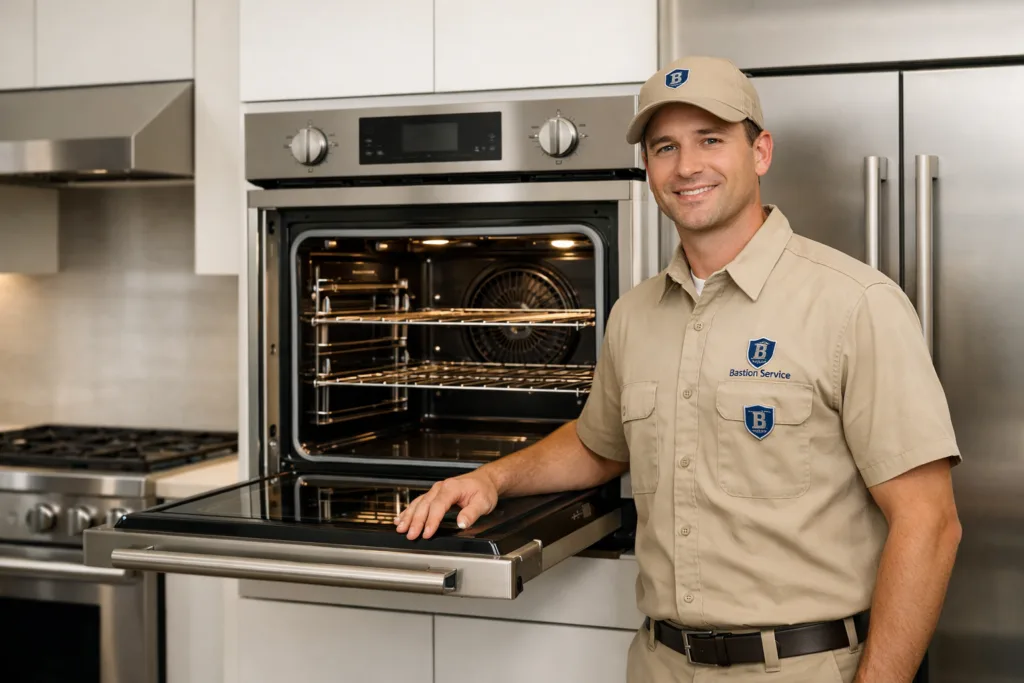
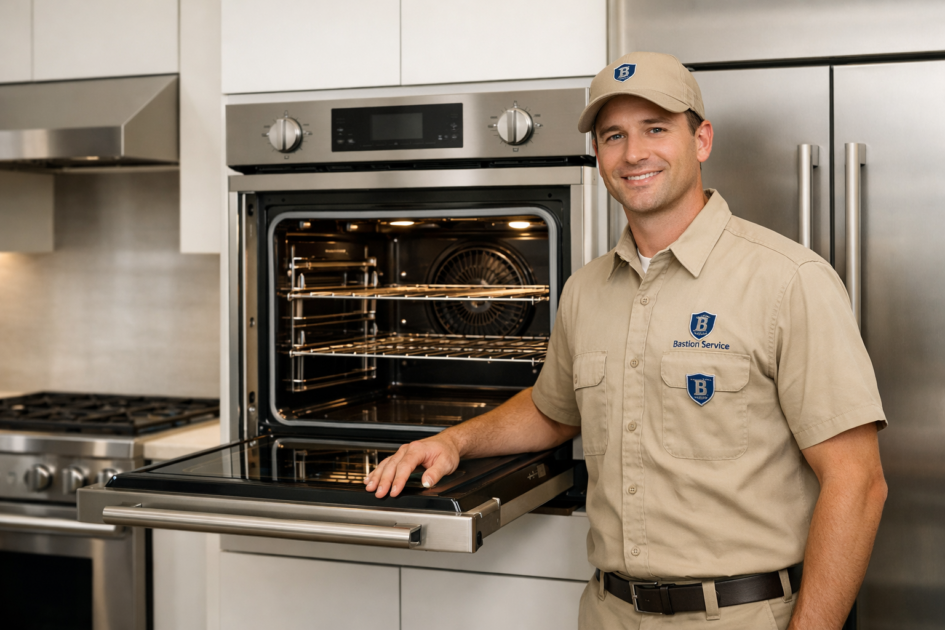
Oven complaints are often tied to cooking results. Food may brown unevenly, take much longer than expected, or come out undercooked even though the display shows the right temperature. In other cases, the problem is more obvious, such as no heat, a fault code, or a door that will not close properly.
Typical Thermador oven and wall oven symptoms include:
- Slow preheating
- Temperature that drifts during baking
- Broil or bake function not working
- Error messages or control irregularities
- Cooling fan noise that seems abnormal
- Door, hinge, or latch issues
These can relate to sensors, elements, relays, controls, fans, or calibration drift. If meals are consistently coming out wrong, the appliance is already telling you something has changed. That is usually the point where diagnosis becomes more useful than trial and error.
When to stop waiting and schedule service
Some appliance issues remain stable for a while, but many do not. If the same problem keeps returning, the pattern matters more than a single event. Service is usually worth scheduling when:
- The appliance still runs, but no longer runs normally
- A leak, noise, or temperature problem keeps repeating
- Performance is affecting daily cooking, cleaning, or food storage
- An error code appears more than once
- One symptom starts causing others, such as poor cooling plus frost, or poor washing plus draining trouble
In a household setting, recurring symptoms are often the clearest sign that the issue is not random. A small fault can place stress on motors, fans, boards, seals, or heating parts over time.
Signs continued use may cause more damage
There are times when an appliance should not simply be monitored. Prompt attention is especially important when you notice water escaping, repeated failed ignition, overheating, breaker trips, strong burning odors, or unstable refrigerator temperatures.
Those conditions can increase wear on internal parts and may also affect surrounding surfaces in the kitchen. For homeowners in El Segundo, the main concern is not just restoring function, but preventing a manageable repair from turning into a more expensive problem.
Repair or replace?
For many Thermador appliances, repair is still the sensible next step when the issue is isolated and the rest of the unit is in solid shape. Problems involving a sensor, fan, igniter, pump, latch, or control-related component may be repairable without suggesting the whole appliance is near the end of its useful life.
Replacement becomes more likely when there is a long history of major failures, severe cooling-system trouble, extensive internal damage, or a combination of age and high repair cost. The helpful first step is to determine whether the current symptom reflects one failed part or a broader pattern of decline.
What homeowners usually want to know first
Most people are trying to answer a few practical questions:
- What is the most likely cause of the symptom?
- Is the appliance safe to keep using?
- Is this probably a targeted repair or a larger issue?
- Will waiting make the problem worse?
That is why symptom-based evaluation matters across refrigerators, freezers, dishwashers, cooktops, ovens, wall ovens, and ranges. The goal is not to guess from a single noise or error. It is to connect the complaint to the actual failing system and decide on the next step with confidence.
Choosing the right next step for a Thermador appliance in El Segundo
If your appliance has shifted from occasional inconvenience to repeatable performance trouble, that usually means the problem is developed enough to evaluate properly. Whether the issue involves cooling, drainage, ignition, heating, or controls, the most useful approach is to address the actual symptom pattern rather than assume every failure means replacement.
For Thermador appliance repair in El Segundo, homeowners are usually best served by looking at what the appliance is doing now, how fast the problem is progressing, and whether continued use risks food loss, water damage, or unreliable cooking results.


