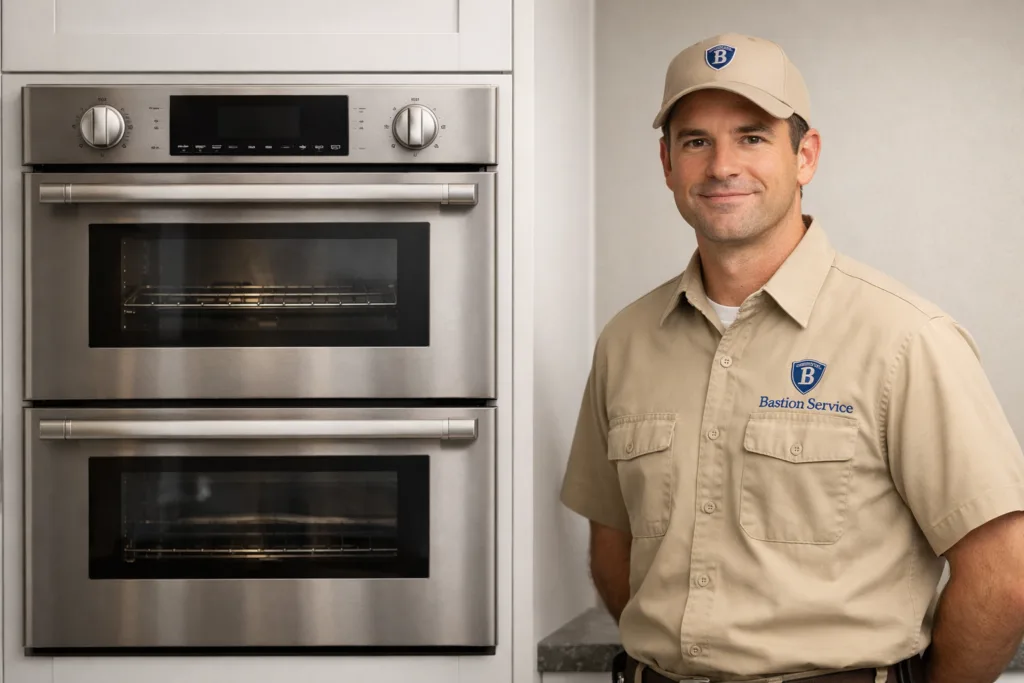
Oven trouble is rarely just one problem with one obvious cause. On a Thermador unit, slow preheat, uneven baking, error codes, or a blank display can all trace back to different components in the heating, sensing, control, or door system. The most helpful first step is matching the repair path to the exact symptom pattern instead of guessing based on the first thing that seems wrong.
What common Thermador oven symptoms usually point to
Not heating at all
If the oven powers on but never produces usable heat, the failure may involve the bake element, broil element, igniter on a gas model, temperature sensor, relay, or electronic control. In some cases the display and lights work normally, which makes the issue feel confusing because the appliance appears functional until cooking begins.
This is usually noticed when preheat never completes, food stays raw, or the cavity feels only slightly warm after several minutes. A full loss of heat should be addressed promptly because repeated attempts to force a cycle can add stress to already failing components.
Slow preheating
A Thermador oven that eventually gets hot but takes much longer than it used to may have a weak igniter, partially failing element, drifting sensor, or control issue affecting how heat is cycled. Slow preheat is easy to tolerate for a while, but it often shows up before a more complete heating failure.
Homeowners in El Segundo often notice this first through routine use: dinner taking longer, recipes needing extra time, or the oven sounding active without reaching the expected temperature. When that pattern becomes consistent, testing the heating system makes more sense than recalibrating recipes around the problem.
Uneven baking or temperature swings
If one rack cooks faster than another, cookies brown on one side only, or casseroles come out underdone in the center, the issue may involve temperature sensing, convection airflow, heating cycle imbalance, or a door that is not sealing well. A unit can still reach the set temperature and yet perform poorly during the actual bake cycle.
Temperature swings are especially frustrating because they create inconsistent results from one meal to the next. That usually means the concern is not user error but a part or system that is drifting out of normal range.
Overheating or burning food
An oven that runs hotter than the selected setting can be caused by a faulty sensor, a relay sticking closed, a control fault, or calibration drifting beyond a minor adjustment. If pans are suddenly scorching, roasting times have become much shorter, or the oven seems to keep heating past the target temperature, it should be checked before continued use damages cookware or internal parts.
Control panel problems and error codes
When the touch panel responds inconsistently, the display flashes codes, or settings fail to start the selected mode, the problem may involve the user interface, main control, wiring, sensor input, or communication between boards. Error codes are helpful, but they do not always identify the failed part by themselves. They often point to a system that still needs proper testing.
Intermittent control issues can also be tied to heat buildup, moisture, or a failing connection. That is why a fault that disappears for a day or two should still be taken seriously if it keeps coming back.
Door, latch, and self-clean issues
If the oven door will not close evenly, will not unlock, or the self-clean cycle stops midway, the fault may involve hinges, latch components, alignment, or the related control circuit. These problems matter for more than convenience. A poor seal can affect temperature stability, extend cook times, and make the oven seem weaker than it actually is.
Signs the problem is getting worse
Some oven faults stay relatively stable for a while, but others tend to spread. A weak igniter may turn into a no-heat condition. A drifting sensor can lead to bigger temperature errors. A relay or control issue can move from occasional overheating to unreliable operation across multiple cooking modes.
Watch for changes like these:
- preheat time increasing from week to week
- recipes finishing much earlier or much later than normal
- the oven shutting off mid-cycle
- the display resetting or going blank during use
- the door no longer closing flush
- new error codes appearing after the oven has already shown performance issues
Once symptoms begin to stack together, repair usually becomes easier to justify because the appliance is no longer providing predictable cooking results.
When to stop using the oven and schedule service
It is wise to stop using the unit if the oven overheats, fails to regulate temperature, loses power while baking, or shows repeated control faults. The same goes for a gas model with delayed ignition or any concerning ignition behavior. If there is a strong or persistent gas smell, stop using the appliance and handle safety first before arranging repair.
Service is also a good idea when the issue seems minor but keeps repeating. An oven that works normally every third or fourth use is still unreliable, and intermittent failures often become harder on surrounding components over time.
Repair or replacement: how the decision usually works
Many Thermador oven problems are still good repair candidates, especially when the failure is isolated to a sensor, igniter, heating element, fan motor, latch assembly, or specific control-related part. Built-in and premium ovens often make repair worthwhile when the rest of the appliance is in solid condition.
Replacement becomes more likely when there are multiple major failures, heavy overall wear, poor parts availability, or repair cost approaching the value of restoring dependable operation. Age matters, but condition matters more. A well-kept oven with one confirmed failure may be worth fixing, while a unit with repeated electronic issues and broader wear may not be the best long-term investment.
What a useful service visit should accomplish
A productive appointment should do more than make the oven heat once and call it done. It should identify which system is failing, explain how that fault connects to the symptoms you are seeing, and outline whether repair is practical for the appliance’s condition.
That matters on Thermador ovens because the same complaint can come from different causes. “Not heating,” for example, may mean an igniter problem on one model, a sensor issue on another, and a control or relay failure on a third. Good diagnosis helps avoid replacing the wrong part and ending up with the same complaint after the visit.
Why prompt oven repair matters in an El Segundo home
An unreliable oven affects more than one meal. It can lead to wasted groceries, repeated cooking attempts, disrupted routines, and understandable hesitation every time you use it. For households in El Segundo that rely on the oven throughout the week, restoring stable performance means getting back consistent temperatures, normal preheat behavior, and cooking results you can trust.
When symptoms are caught early, the repair path is often simpler. Waiting through weeks of inconsistent baking, shutdowns, or control issues can turn a contained problem into a more expensive one.